Office Depot Group rebrands as the company pivots to unify its retail and B2B operations under a singular legacy identity

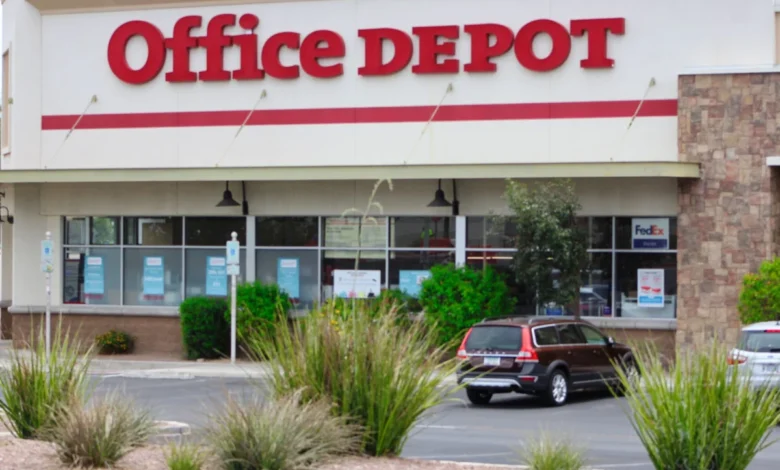
In a significant strategic realignment, the parent company formerly known as The ODP Group has officially rebranded as Office Depot Group. This move, which marks the sunsetting of its B2B distribution name, ODP Business Solutions, in favor of Office Depot Business, represents a calculated attempt to leverage the brand’s four-decade history to bridge the gap between its consumer-facing retail stores and its expansive enterprise distribution network. By consolidating its disparate business units under a single, globally recognized banner, the company aims to eliminate customer confusion and capitalize on the long-standing equity associated with the Office Depot name.
A Legacy Reimagined: The Shift in Corporate Strategy
The decision to return to the Office Depot moniker is a departure from the company’s previous efforts to distinguish its B2B operations from its retail footprint. For years, the firm operated under the ODP Group umbrella, attempting to signal a transformation into a more diversified business services organization. However, market research and internal assessments appear to have convinced leadership that the power of the legacy brand outweighs the perceived benefits of the "ODP" acronym.
Craig Gunckel, CEO of Office Depot, emphasized that the rebranding is not merely a cosmetic change but a foundational shift in how the company presents itself to the marketplace. In a public statement via LinkedIn, Gunckel noted that the brand recognition built over 40 years is an asset that cannot be replicated. By aligning the B2B and retail segments under the Office Depot Group name, the company intends to streamline its marketing, digital presence, and customer service initiatives. The transition will be phased in over the coming weeks, with the new branding appearing across the company’s website, official communications, and social media channels.
Historical Context and Evolution of the ODP Entity
To understand the magnitude of this transition, one must look at the evolution of the organization over the last decade. The company has navigated several turbulent periods, including the failed 2013 attempt to merge with rival Staples and the subsequent restructuring that saw the firm pivot heavily toward the B2B sector.
The creation of "ODP Business Solutions" was originally intended to help the company shed its image as a dying brick-and-mortar office supply store. The goal was to position the entity as a technology-enabled business services provider. However, the market’s perception often lagged behind this transformation. By reverting to the Office Depot name, the company is effectively acknowledging that while the "Office Depot" name carries a legacy of retail, it also holds the brand trust necessary to compete in the complex world of B2B procurement.
The current corporate structure—ranked No. 24 in the Digital Commerce 360 Top 2000 Database—remains the second-largest retailer in the office supplies category, trailing only Staples. This positioning highlights the inherent tension in the brand: it is a dominant force in retail, yet it seeks to be viewed as a sophisticated partner for enterprise-level operations.
Market Analysis: The Risks of Legacy Branding
While the consolidation of the brand is intended to create unity, industry experts suggest that the move is not without risks. A primary concern among analysts is the potential for "brand dilution." When a company is deeply entrenched in the minds of consumers as a destination for school supplies and printers, pivoting to be seen as a provider of complex, integrated business solutions can be a difficult cognitive leap for potential clients.
Alys Reynders, chief marketing officer at the operations platform Quickbase, notes that procurement officers have spent decades forming specific associations with the Office Depot brand. "One big concern is that procurement officers have already built four decades of connotations to the Office Depot brand as a brick-and-mortar entity, which could dilute the identity of the company and its perceived areas of expertise," Reynders explains. She suggests that if the brand is too strongly linked to its retail past, clients may underestimate the depth of the company’s capabilities in logistics, supply chain management, and digital B2B solutions.
However, Reynders also acknowledges that if executed effectively, this move could solve the fragmentation that has plagued the company’s marketing efforts. By operating under a single name, the company can avoid the overhead and confusion associated with maintaining multiple brand identities, provided that the marketing team can successfully redefine what the "Office Depot" name means in a modern context.
The Challenge of Modernizing the B2B Identity
The challenge for the Office Depot Group is to evolve the brand from a static supplier to an active business partner. Shailendra Pratap Jain, a professor of marketing at the University of Washington’s Foster School of Business, frames the rebrand as a test of the company’s ability to change its value proposition.
"Renaming ODP Business Solutions as Office Depot Business gives the company immediate familiarity and legitimacy," Jain observes. "It also creates a strategic challenge: can a brand strongly associated with retail office supplies stretch credibly into a broader B2B solutions and distribution identity?"
According to Jain, the success of this rebrand will hinge on whether the company can successfully transition its public image from "the place where businesses buy office supplies" to "the company that helps businesses operate." This is a profound shift that requires more than just a name change. It requires a fundamental alignment of the company’s product mix, pricing strategy, distribution logistics, and promotional tactics.
Industry Implications and Future Outlook
The broader implications of this move extend to the entire office supplies industry. As demand for traditional office products—such as paper, ink, and binders—continues to fluctuate due to the rise of remote and hybrid work environments, companies in this sector are under immense pressure to diversify their revenue streams.
For Office Depot Group, this rebranding is a signal to investors and the market that they are committed to their current trajectory. It suggests that they are no longer trying to hide their retail origins, but rather, they are attempting to embrace them as a foundation for future growth. Whether this "return to the past" acts as a springboard for future success or a anchor that weighs down the company’s aspirations will be determined by its performance over the next several fiscal quarters.
The company’s ability to integrate its digital ecommerce capabilities with its legacy retail infrastructure will be the ultimate litmus test. As competition in the B2B ecommerce space intensifies—particularly from global giants and specialized e-procurement platforms—the Office Depot Group must prove that its name carries the technological authority required to serve the modern enterprise.
Conclusion: A Strategic Pivot
The decision to rebrand as Office Depot Group is a bold, if somewhat nostalgic, play. It is an admission that the company’s previous efforts to rebrand itself away from its namesake were, at least in part, insufficient to capture the market share it desired. By leaning into its 40-year history, the company is betting that the trust and recognition it has earned with generations of customers will provide the necessary foundation to modernize its business for the next generation of commerce.
As the company rolls out its new identity across its digital and physical touchpoints, the business community will be watching closely. The success of this transition will depend not on the name on the door, but on the ability of the Office Depot Group to deliver high-value, integrated services that justify its claim as an essential partner for the modern business. The "Office Depot" name is undeniably powerful; the question remains whether it is flexible enough to encompass the company’s future ambitions.