Office Depot parent company rebrands as Office Depot Group to unify retail and business-to-business operations under a single legacy identity.

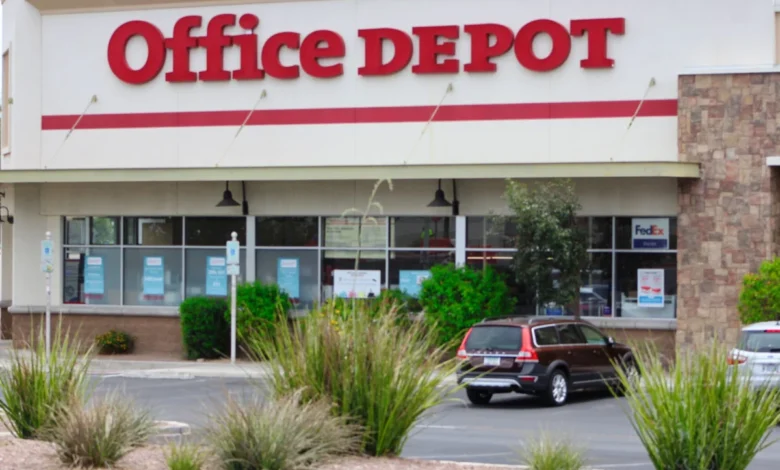
In a move designed to consolidate its market position and streamline brand architecture, The ODP Group has officially rebranded as the Office Depot Group. This strategic pivot involves retiring the "ODP Business Solutions" moniker, replacing it with the more recognizable "Office Depot Business." By unifying its retail footprint and its substantial business-to-business (B2B) distribution network under the singular, four-decade-old Office Depot banner, the company is attempting to leverage its long-standing consumer recognition to bolster its enterprise services.
A Chronology of Corporate Evolution
The history of the organization is defined by constant adaptation. Founded in 1986, Office Depot quickly became a household name in the retail landscape. However, the company’s trajectory over the last decade has been marked by complex restructuring efforts. In 2013, Office Depot merged with OfficeMax, a deal intended to create a retail giant capable of competing with the growing dominance of e-commerce and big-box retailers.
By 2022, the company, then operating under the umbrella of The ODP Group, began a process of spinning off its various business units into distinct segments to improve operational efficiency. The B2B arm was christened "ODP Business Solutions," a name intended to distinguish it from the retail consumer experience. Now, in 2024, leadership has determined that the separation of names may have created unnecessary friction in the customer journey. By reverting to the Office Depot brand across all touchpoints, the firm is seeking to simplify its value proposition to stakeholders, employees, and corporate clients alike.
Market Standing and Competitive Landscape
According to data from the Digital Commerce 360 Top 2000 Database, Office Depot currently holds the 24th position among North American online retailers. This ranking, based on annual e-commerce revenue and operational scale, underscores the company’s significant digital footprint. Within the specialized office supplies category, Office Depot remains the second-largest retailer, trailing only its long-time rival, Staples.
The competitive pressure in this sector is immense. The traditional office supplies market has faced a secular decline as organizations digitize workflows and remote work becomes a permanent fixture of the corporate world. For Office Depot, maintaining relevance requires more than just selling pens and paper; it requires positioning the company as an essential partner in modern office logistics, IT procurement, and facility management. This is the core challenge behind the rebrand: transitioning from a "supplier of goods" to a "partner in operations."
Leadership Perspective on Brand Equity
Craig Gunckel, CEO at Office Depot, has framed the rebranding as a necessary reclamation of the company’s heritage. In a recent statement released via professional channels, Gunckel emphasized that the 40-year history of the brand represents an intangible asset that no amount of advertising spend can replicate.
"Office Depot is a brand with more than 40 years of history behind it—the kind of recognition that can’t be built overnight, only earned over decades by showing up for our customers, our partners, and the communities we serve," Gunckel noted. Company officials have indicated that the transition will be comprehensive, with the new branding appearing across all corporate websites, internal communications, and social media channels over the coming weeks. The intent, according to leadership, is to foster a sense of continuity that stabilizes the brand during a period of ongoing structural transformation.
The Risks of Legacy Alignment
While the decision to consolidate under a single, well-known name is logical from a marketing perspective, industry analysts suggest that the strategy is not without peril. A primary concern is the potential for "brand dilution."
Alys Reynders, chief marketing officer at the operations platform Quickbase, notes that procurement officers have spent decades associating the name "Office Depot" with a physical retail experience—walking into a store to buy printer paper or office chairs. "One big concern is that procurement officers have already built four decades of connotations to the Office Depot brand as a brick-and-mortar entity," Reynders explains. "This could limit what clients believe the firm can and cannot do for them."
If the market continues to perceive the company strictly as a retail store, it may be difficult for the B2B division to win contracts for complex, high-value enterprise services. There is a risk that the "Office Depot" label could act as a conceptual anchor, preventing the company from being viewed as an innovative, technology-driven distribution and logistics provider.
Strategic Implications for B2B Operations
The shift to "Office Depot Business" serves as a test of the company’s ability to pivot its core identity. Shailendra Pratap Jain, a professor of marketing at the Foster School of Business at the University of Washington, views the rebrand as a double-edged sword.
"Renaming ODP Business Solutions as Office Depot Business gives the company immediate familiarity and legitimacy," Jain observes. "However, it creates a strategic challenge: can a brand strongly associated with retail office supplies stretch credibly into a broader B2B solutions and distribution identity?"
According to Jain, the success of this rebrand will not be determined by the name change itself, but by the operational changes that follow. To succeed, the company must effectively communicate a shift in its business model: moving from the transactional business of "selling office supplies" to the relational business of "helping companies operate." This requires a shift in product mix, pricing strategies, and customer support models that reflect the needs of large-scale corporate entities rather than individual consumers.
Future-Proofing the Business
The rebrand is essentially an exercise in simplifying a complex corporate narrative. By stripping away the "ODP" nomenclature, the firm is betting that the emotional and historical weight of the Office Depot name will provide a stronger foundation for growth than a modern, sterile corporate acronym.
However, the real-world performance of this strategy will be monitored closely by investors and competitors. If the company can successfully leverage its brand heritage to win new B2B accounts, the move will be seen as a masterstroke of brand consolidation. Conversely, if the legacy of the retail store acts as a barrier to innovation, the firm may find that the brand identity it worked so hard to preserve is, in fact, an impediment to the evolution required in a digital-first economy.
Looking Ahead
As the transition rolls out, the company faces several key performance indicators (KPIs) that will determine its success:
- Brand Sentiment Analysis: Tracking whether B2B customers perceive the brand as more professional or if they remain tied to the "retail store" association.
- Market Penetration: Evaluating whether the new brand name facilitates easier entry into new service segments like IT managed services or facility maintenance.
- Internal Alignment: Assessing whether the unified brand helps to reduce administrative friction between the retail and B2B divisions, leading to cost synergies.
The transition to Office Depot Group represents a high-stakes bet on the power of legacy. In a corporate world that often favors rebranding to signal a "clean break" from the past, Office Depot is choosing to double down on its history. Whether this path leads to a successful turnaround or a struggle with outdated perceptions remains the central question for the organization as it enters this new chapter of its 40-year journey. For now, the company’s future hinges on its ability to prove that it is not just the "place where businesses buy office supplies," but a vital, modern partner in the global business ecosystem.