The Email Playbook Every Digital Product and Course Creator Actually Needs: Mastering Trust, Education, and Relationship for Sustainable Growth


The landscape of online commerce presents a stark dichotomy between the marketing of physical goods and intangible digital offerings. While a tangible product inherently communicates its value through sensory experience—its design, texture, and perceived quality—digital products and online courses operate in an entirely different dimension. Here, the product cannot be held, felt, or admired in a physical sense. Instead, its value is a promise, an expectation of transformation or knowledge, meticulously crafted and conveyed through communication channels, with email emerging as the undisputed linchpin of this entire sales ecosystem. This fundamental difference necessitates a distinct strategic approach, prioritizing trust, education, and relationship-building over immediate transactional pitches, a paradigm shift that savvy creators are now embracing to cultivate loyal audiences and drive sustainable revenue.
The Foundational Shift: Email as the Core Funnel for Digital Offerings
For traditional e-commerce brands, email marketing often serves as a powerful retention tool. Its primary functions include nudging existing customers toward repeat purchases, recovering abandoned shopping carts, announcing new product lines, and fostering brand loyalty through curated updates and exclusive offers. The customer journey typically involves browsing a product page, adding items to a cart, and then receiving email prompts to complete the transaction or return to the store. The physical product itself, often supported by high-quality imagery and descriptions, does much of the heavy lifting in conversion.
However, for creators of digital products—be it online courses, e-books, software, templates, or membership programs—email is not merely a supplementary tool; it frequently constitutes the entire sales funnel. The initial touchpoint might be a podcast appearance, a viral social media post, or a referral, piquing curiosity but rarely leading to an immediate purchase. The crucial next step is to convert that curiosity into an opt-in for a free resource, a webinar, or a newsletter. Once a prospect is on the email list, the subsequent relationship cultivated through a carefully orchestrated email strategy almost single-handedly determines their progression from a curious subscriber to a paying customer. There are no physical items to browse and abandon, no retargeting pixels doing the primary heavy lifting in a tangible sense. The entire weight of persuasion rests on the quality and consistency of the emails sent, each message designed to earn trust, provide value, and progressively guide the subscriber towards a purchasing decision. Industry data consistently supports the efficacy of this approach; reports from the Direct Marketing Association often cite email marketing as delivering an average return on investment (ROI) of $42 for every $1 spent, a figure often higher for digital products where margins are typically larger and the sales cycle is more relationship-driven.
Beyond the Opt-In: Crafting a Value-Driven Customer Journey
A common misstep among new digital product creators is to view the lead magnet—a free checklist, a mini-course, or an exclusive training—as the culmination of the value exchange. While a compelling lead magnet is indeed essential for securing an email address, it represents merely the opening chapter of a much longer narrative. The true strategy unfolds after the opt-in. The lead magnet earns the initial permission to communicate; the subsequent welcome sequence earns the subscriber’s sustained attention; and the ongoing nurture content ultimately earns the sale.
Leading platforms and successful creators, such as Foundr, exemplify this philosophy. Their free trainings, strategically positioned at the top of their funnel, are not simply lead generation tools. They are meticulously designed as genuine, valuable educational experiences that serve as the initial conversations with aspiring entrepreneurs. By consistently delivering high-quality, actionable content, Foundr establishes itself as a credible authority. This sustained provision of free value builds a deep reservoir of trust. By the time a subscriber is introduced to Foundr+, their comprehensive membership platform offering over 30 courses and a thriving community of 30,000+ founders, they have typically consumed enough free content to already have a strong belief in the brand’s expertise and commitment to their success. The subsequent offer of a low-risk entry point, such as a $1 trial, then becomes a natural, almost inevitable, next step, dissolving the final barriers to conversion. This sequence—from abundant free value to established trust, culminating in a low-risk commitment—underscores the power of a relationship-first approach. Studies indicate that personalized welcome email series can boost engagement rates significantly, with open rates often exceeding 50% and click-through rates (CTRs) far surpassing those of general promotional emails, setting a strong foundation for the subsequent nurture phase.
The Art of Nurture: Building Belief Through Progressive Storytelling
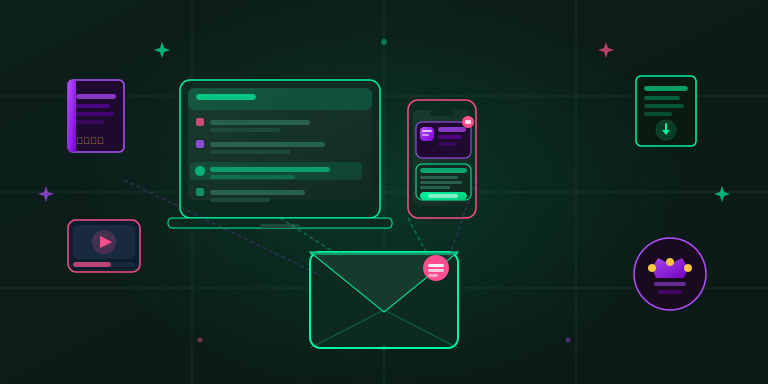
The overarching objective of a nurture sequence extends far beyond merely filling a subscriber’s inbox. It is a carefully calibrated process aimed at progressively building belief: belief that the problem the subscriber is experiencing is real and significant, that the creator’s proposed approach to solving it is credible and effective, and that the offered course or digital product represents the logical, most impactful next step for anyone committed to achieving tangible progress.
The most effective nurture sequences typically follow a well-defined narrative arc. They commence by articulating and validating the specific problem or pain point that the audience is currently grappling with, demonstrating empathy and understanding. This initial connection is crucial for establishing relevance. Subsequently, the narrative shifts to paint a vivid picture of the desirable future state—what is truly possible on the other side of overcoming this problem, highlighting transformation and aspiration. This vision-casting motivates and inspires. Finally, the sequence integrates compelling proof points, which can include student success stories, detailed case studies, testimonials, or the creator’s personal journey and expertise. This evidence serves to solidify credibility and demonstrate tangible results. By the time a subscriber who has journeyed through this carefully constructed arc encounters the explicit mention of the course or product, they are not perceiving it as an unsolicited sales pitch. Instead, they are reading a confirmation of a decision they have already, in essence, begun to make internally, having been thoroughly convinced of the problem, the solution’s potential, and the creator’s capability.
The optimal length of a nurture sequence is not fixed but is strategically determined by the price point and complexity of the digital product. A low-cost item, such as a $49 e-book, might effectively convert after a concise series of three or four emails. Conversely, a flagship online course, a high-ticket coaching program, or a comprehensive membership platform demands a more extensive runway. Such offerings often require six to ten emails, delivered thoughtfully over several weeks, before the cart officially opens for enrollment. This extended period allows for deeper trust-building, comprehensive objection handling, and the thorough establishment of value, justifying the higher investment required from the subscriber. Research by marketing analytics firms often shows that longer nurture sequences, particularly for higher-value products, can lead to significantly higher conversion rates, sometimes by as much as 20% or more, compared to shorter, less comprehensive approaches, underscoring the critical role of sustained engagement.
The Strategic Imperative of Launch: Igniting Action with Purposeful Urgency
When the enrollment period for a digital product opens, the rules of engagement shift dramatically. The measured, value-first approach that characterizes an effective nurture sequence, while foundational, is insufficient to carry a launch on its own. A launch window is by its very nature a contained period characterized by a heightened sense of urgency and opportunity, and the email communications must dynamically match and amplify this energy.
Launch emails should immediately captivate. Instead of leading with a dry list of features, the initial launch message should open with a compelling story—a narrative that resonates deeply with the audience’s aspirations or struggles, illustrating the transformative power of the product. The subsequent emails within the launch sequence are critical for directly addressing and dismantling potential objections. Is a prospective student concerned about time constraints? The emails can showcase examples of how previous students successfully integrated the course into demanding schedules, perhaps around a full-time job or family commitments. Is there skepticism about the product’s applicability to their unique situation? Share a powerful result or testimonial from someone who possessed a similar background or faced identical challenges just months prior. This targeted objection handling is vital for overcoming inertia.
Crucially, the launch sequence must conclude with an unwavering commitment to honesty regarding deadlines. A deadline that is genuine and explicitly stated fosters legitimate urgency, prompting decisive action. Conversely, manufactured or ambiguous urgency collapses the moment a subscriber attempts to test its validity, eroding trust. Authentic urgency, rooted in genuine limited availability or promotional periods, requires no embellishment. In the final 48 hours leading up to the cart closing, sending an email a day is not considered excessive. By this stage, the segment of subscribers who are genuinely interested and poised to enroll are actively anticipating these reminders, often using them as their final prompt to make a purchase. The average conversion rate during a well-executed launch sequence can see significant spikes, with many creators reporting 5-10% of their engaged list converting, far exceeding standard promotional email benchmarks.
The Unsung Heroes: Post-Purchase Engagement and Customer Lifetime Value
A significant, yet frequently overlooked, misstep made by many digital product creators occurs after the cart closes and the sales page is taken down: they go silent. This cessation of communication after the sale is a critical error, as the post-purchase experience holds immense potential for building profound goodwill and significantly enhancing customer lifetime value (CLTV).
A simple, empathetic check-in email sent approximately a week after purchase, inquiring about the student’s initial experience and progress, generates a disproportionate amount of positive sentiment. Most buyers are unaccustomed to such proactive engagement from a creator once the transaction is complete, making this gesture a powerful differentiator. Furthermore, the implementation of progress-based emails—messages that acknowledge specific milestones achieved within the course, offer encouragement to students who might be falling behind, or provide supplementary resources—has a direct and measurable impact on course completion rates.
Completion rates are not merely vanity metrics; they are fundamental to the long-term success of a digital product business. A student who successfully completes a course and achieves a tangible, positive result becomes the most invaluable marketing asset a creator can possess. These satisfied individuals are the authentic voices behind compelling testimonials, the enthusiastic referrers who organically expand the creator’s audience, and, critically, the most likely candidates to purchase subsequent offerings. Foundr exemplifies this commitment with its 90-day results guarantee for Foundr+. Such a bold commitment is only viable when the post-purchase experience is robust enough to genuinely deliver on its promise of student success. The strategic deployment of post-purchase emails is a cornerstone of how this level of consistent delivery and student support is achieved. Studies by firms like Bain & Company consistently show that increasing customer retention rates by just 5% can increase profits by 25% to 95%, underscoring the profound financial impact of sustained post-purchase engagement.
Technological Enablers: Automation and Personalization in the Digital Age
The sophisticated, multi-stage email strategies required for successful digital product sales would be incredibly resource-intensive, if not impossible, without the aid of advanced email marketing platforms. These platforms are the technological backbone that enables creators to execute complex nurture sequences, manage high-energy launch flows, and deploy crucial post-purchase follow-ups without constant manual intervention. Key features like automation workflows allow for emails to be triggered based on subscriber actions (e.g., signing up for a lead magnet, completing a lesson, or visiting a sales page), ensuring timely and relevant communication.
Segmentation capabilities are equally vital, allowing creators to categorize their audience based on various criteria such as engagement level, purchase history, demographic data, or expressed interests. This granular segmentation ensures that the right message reaches the right subscriber at precisely the right stage of their journey, maximizing relevance and effectiveness. The integration of artificial intelligence (AI) is further enhancing personalization, enabling dynamic content adjustments and optimized send times, which further elevate the impact of each email.
Omnisend, for instance, is built specifically to support these intricate requirements. It offers robust automation tools for crafting detailed nurture sequences, managing dynamic launch campaigns, and scheduling critical post-purchase follow-ups. Its advanced segmentation features ensure that messages are highly targeted, resonating more deeply with individual subscribers. For creators considering a switch from another platform, Omnisend simplifies the transition with a free migration service, moving all existing flows, lists, and templates within five days. This ease of transfer, combined with competitive pricing—often resulting in up to 35% savings for founders, with SMS services starting at just $0.007 per message—makes it an attractive option for optimizing email marketing efforts. Foundr readers are also extended a special offer of 50% off their first three months using the code FOUNDR50 upon signup, incentivizing the adoption of a more strategic and audience-centric email program.
The Enduring Power of Owned Audiences: A Sustainable Business Model
In an online entrepreneurial landscape increasingly dominated by ever-changing algorithms and unpredictable platform policies, building a digital product business founded on email marketing stands out as one of the most durable and resilient models. This approach grants creators direct access to their audience, independent of the whims of social media giants or search engine ranking fluctuations. It does not evaporate when a platform alters its rules or faces technical outages. Instead, its growth and stability are in direct proportion to the quality of the relationships fostered and the value consistently delivered to the people on the email list.
The most successful digital product creators are not simply sending a higher volume of emails. Their strategy is rooted in sending better emails—messages that are thoughtfully crafted, impeccably timed, and strategically segmented to reach subscribers who have already established a foundational level of trust. This precision ensures that each communication is not only opened but actively anticipated, reinforcing the relationship rather than eroding it. Owning an email list provides an unparalleled strategic advantage, offering a direct communication channel that bypasses intermediaries and allows for deep, authentic engagement. This fosters a sustainable business model, resilient against external changes and built on the most valuable asset any online business can cultivate: a loyal, engaged community. The long-term implications are profound, enabling creators to build enduring brands and generate consistent revenue streams by prioritizing genuine connection and value delivery over fleeting trends or algorithmic dependencies.
Related posts: