Salesforce Joins Elite Roster of U.S. Department of Commerce Super Intelligence Export Consortiums to Drive Global Technology Adoption

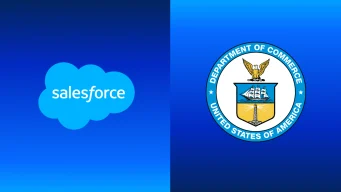
The United States Department of Commerce has officially selected Salesforce as one of 33 foundational members of its new American Super Intelligence (SI) Exports Program. This strategic designation, announced on November 19, 2026, marks a significant pivot in how the federal government facilitates the international expansion of domestic artificial intelligence capabilities. By including Salesforce in this exclusive cohort, the Department of Commerce aims to leverage the company’s massive footprint in CRM and enterprise data management to export advanced, governed AI solutions to foreign markets, thereby reinforcing American technological hegemony in the rapidly evolving intelligence landscape.
The program is designed to streamline the export of complex "SI packages"—integrated technology bundles that combine hardware, software, and regulatory frameworks. For Salesforce, this designation provides a direct pipeline to foreign buyers through the U.S. and Foreign Commercial Service, granting the company priority access to government-to-government engagement, expedited export control reviews, and priority routing for federal financing referrals.
A Strategic Pivot in Technological Diplomacy
The American SI Exports Program represents the latest iteration of U.S. efforts to counter the rising influence of foreign-state-backed AI initiatives. Over the past several years, the geopolitical landscape regarding advanced computing and data intelligence has shifted from purely commercial competition to a state-led industrial policy.
The U.S. government recognizes that while individual American firms lead the world in generative AI and agentic software, the "export" of these systems is often hampered by regulatory fragmentation, security concerns, and the complexities of international data sovereignty. By curating a list of 33 designated consortia, the Department of Commerce is effectively "packaging" U.S. technology to make it more digestible for foreign governments and large-scale enterprise entities that are hesitant to adopt disparate, high-risk solutions.
Salesforce’s role in this consortium is unique. Unlike pure-play infrastructure or hardware providers, Salesforce offers a "governed" ecosystem. As nations look to digitize their public sectors, they face a trilemma: the need for rapid digital transformation, the pressure to adopt AI, and the necessity of keeping sensitive citizen data within national borders. Salesforce’s platform-centric approach, which emphasizes the integration of human workers with autonomous AI agents, is designed to resolve this tension.
Historical Context and Institutional Capability
Salesforce’s selection by the Department of Commerce is not an isolated event but rather the culmination of a two-decade-long expansion into the public sector. The company’s trajectory in government services provides the necessary institutional foundation for this new export mandate.
- 2006–2015: Salesforce focuses on foundational cloud adoption for U.S. federal agencies, moving away from legacy on-premise infrastructure.
- 2016–2020: The company scales its Government Cloud offerings, achieving critical FedRAMP authorizations that set the standard for security in cloud-based public administration.
- 2021–2024: Salesforce begins integrating AI-driven analytics into its public sector modules, helping agencies in all 50 states manage crisis response, healthcare coordination, and infrastructure projects.
- 2025: With the rise of agentic AI, Salesforce pivots its enterprise platform to focus on "agentic enterprises," where autonomous AI agents perform high-level tasks within a secure, gated environment.
- 2026: The Department of Commerce designates Salesforce as a core partner for the American SI Exports Program.
Today, Salesforce technology is embedded in the operational backbone of over 60 U.S. federal agencies and serves as the operational engine for all 15 U.S. Cabinet-level departments. This extensive footprint ensures that the technology being exported through the new program is "battle-tested" in the most demanding regulatory environments in the world.
The Anatomy of the Salesforce SI Package
The core of the consortium offering is not merely a single software product but a unified ecosystem. Salesforce’s contribution to the American SI Exports Program revolves around three distinct pillars:
- Governed Data Infrastructure: The system utilizes a "Data Cloud" architecture that allows for the harmonization of siloed information. For international partners, this means the ability to integrate fragmented government databases into a single source of truth without compromising the sovereignty of the underlying data.
- Agentic Enterprise Framework: Salesforce provides a secure environment for deploying AI agents. These agents are trained on specific operational datasets and adhere to strict ethical and operational boundaries. By packaging these agents, the consortium can offer foreign governments "turnkey" digital workers capable of handling citizen inquiries, tax processing, or logistics management.
- Model Choice and Control: Recognizing that different nations have varying requirements for AI governance, the Salesforce package allows users to switch between proprietary and open-source models while maintaining a consistent management layer. This flexibility is a primary selling point for the Department of Commerce, as it provides an alternative to restrictive, "black-box" AI systems offered by competing global powers.
Industry and Government Perspectives
The selection of Salesforce has drawn attention from both technology analysts and geopolitical strategists. Market observers note that the move is designed to create a "Goldilocks" effect: the technology is advanced enough to be competitive, yet sufficiently governed to be politically palatable in foreign jurisdictions.
Kendall Collins, President and CEO of Missionforce and Government Cloud at Salesforce, emphasized that the goal of the program is to move beyond the hype of AI and into the realm of actionable intelligence. "American technology leadership grows when governments and businesses around the world put it to work with trust," Collins stated during the announcement. "Salesforce brings governed data, enterprise applications, and agents together to deliver faster public services, stronger operations, and greater productivity—with model choice and controls that respect customers’ sovereignty."
From a policy perspective, the Department of Commerce has framed this initiative as a "pro-innovation" export strategy. By assisting firms like Salesforce in navigating foreign regulatory hurdles, the U.S. government is effectively reducing the friction that has historically prevented American enterprise software from achieving deep penetration in emerging markets.
Broader Economic and Geopolitical Implications
The inclusion of Salesforce in the American SI Exports Program carries significant implications for the global digital economy.
Standardization of Global AI Adoption: By promoting a select group of American consortia, the U.S. is signaling a preferred global standard for AI integration. This could lead to a future where government operations in developing nations are built on a "stack" of American-certified software, creating long-term dependencies and interoperability with U.S. systems.
Competitive Edge against State-Led Models: Countries like China and Russia have aggressively pursued the export of their own AI and surveillance technologies. The U.S. program, by contrast, emphasizes the "agentic" model—focusing on productivity and service delivery rather than centralized surveillance. This creates a clear value proposition for democratic allies and neutral nations looking for robust digital tools.
Economic Multiplier Effects: For the U.S. economy, the export of these SI packages is expected to generate significant revenue and maintain the competitiveness of the domestic software sector. As these packages are exported, they pull in additional service contracts, training requirements, and secondary infrastructure projects, effectively creating an entire export ecosystem.
Looking Ahead: The Challenges of Implementation
Despite the optimism surrounding the launch of the American SI Exports Program, analysts caution that the path forward is not without challenges. Integrating complex U.S. software into foreign government operations requires more than just a federal recommendation; it requires deep cultural and linguistic localization, as well as the navigation of local labor laws.
Furthermore, the "agentic" nature of the software poses new questions regarding AI safety and liability. Should an AI agent deployed under the Salesforce consortium cause an error in a foreign government’s tax system, the legal framework for accountability will be complex. The U.S. Department of Commerce will need to work closely with the consortia to develop standardized Service Level Agreements (SLAs) and liability protections that can satisfy both U.S. export requirements and foreign sovereign expectations.
Nevertheless, the launch of this program marks a decisive step in the maturation of the AI era. By transitioning from the era of "AI as a curiosity" to "AI as an essential infrastructure," the U.S. government and companies like Salesforce are establishing a framework for the next decade of international digital engagement. As the 33 consortia begin their work, the success of the program will be measured by its ability to turn the promise of American Super Intelligence into tangible, reliable improvements in the daily lives of citizens across the globe.