Revenue Operations, commonly referred to as RevOps, has emerged as the critical backbone of the contemporary sales organization, transforming how businesses approach growth, efficiency, and customer lifecycle management. At its core, RevOps serves as the connective tissue between marketing, sales, and customer success, replacing disjointed departmental silos with a unified, data-driven strategy. By defining standardized processes and implementing robust technological infrastructure, RevOps professionals shift an organization from reactive, intuition-based selling to a systematic, repeatable model of revenue generation.
The rise of this discipline is a direct response to the increasing complexity of the buyer’s journey. In an era where customers hold unprecedented power, the traditional approach of separating lead generation from account management is proving insufficient. Modern buyers demand a seamless, value-adding experience across every touchpoint, from the initial marketing engagement to long-term post-sale support. Consequently, RevOps has evolved into the central architect of the entire revenue funnel, ensuring that every internal action is intentional and backed by verifiable data.
The Evolution and Chronology of the RevOps Model
The emergence of Revenue Operations can be traced to the mid-2010s, as B2B companies began to recognize the limitations of "Sales Ops" or "Marketing Ops" in isolation. Historically, sales operations were confined to territory planning and quota management, while marketing operations focused narrowly on lead volume and campaign attribution. As the SaaS business model matured, the need for a "single source of truth" became apparent.
By 2018, the industry began to shift toward the integrated model now known as RevOps. This shift was accelerated by the realization that revenue is not the sole responsibility of the sales department; rather, it is the cumulative output of a synchronized ecosystem. In 2020, this necessity was further solidified by a global shift toward digital-first interactions. With face-to-face meetings restricted, companies were forced to rely on digital processes, highlighting the gaps in disconnected sales and marketing tech stacks. Organizations that had already adopted a centralized RevOps function were significantly better equipped to maintain revenue continuity during this period of global economic volatility.
Quantifying the Customer Experience Mandate
The transition to RevOps is not merely an operational preference; it is a response to shifting consumer expectations. Research from industry analysts confirms that the quality of the buyer journey is now a primary competitive differentiator. In a 2020 report by Walker, it was noted that customer experience had overtaken both price and product as the key brand differentiator for the coming decade.
Supporting data underscores the fiscal impact of these experiences. Approximately 86% of buyers report a willingness to pay a premium for a superior customer experience. Furthermore, the digital influence on purchasing decisions cannot be overstated. Statistics indicate that 93% of consumers report that online reviews directly dictate their purchasing behavior. This trend is mirrored in the B2B sector, where 92% of buyers are significantly more likely to proceed with a purchase after consuming positive, peer-verified content. These figures demonstrate that RevOps is no longer a back-office function; it is a revenue-protection strategy that directly impacts the bottom line by fostering trust and reducing friction.
Addressing Structural Fragmentation and Process Decay
One of the primary challenges facing any organization is the tendency for internal processes to become fragmented over time. When marketing, sales, and customer success teams operate in isolation, they often develop "Frankenstein" processes—disparate systems that fail to communicate. This misalignment leads to inconsistent lead hand-offs, conflicting data entries, and a degraded customer experience.
The role of the RevOps professional is to serve as the chief integrator. By establishing clear ownership of the end-to-end customer journey, these teams eliminate the "black holes" that exist between departments. Analysis of high-performing sales organizations suggests that those with centralized RevOps functions achieve 15% to 20% higher internal customer satisfaction scores and significantly higher sales attainment rates. When processes are standardized, the organization can move away from "random acts of selling" toward a predictive model where growth is a result of consistent, optimized activities.
Data Integrity and the CRM as a Source of Truth
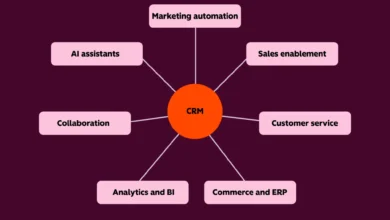
At the heart of the RevOps mandate is the optimization of the Customer Relationship Management (CRM) system. Data integrity is the primary hurdle for most organizations, as manual entry is prone to human error and neglect. If the data within the CRM is unreliable, the resulting strategy will be fundamentally flawed.
Professional RevOps teams prioritize the automation of data logging and the enforcement of standardized entry protocols. This creates a reliable repository of "buyer intelligence." By leveraging tools such as Playbooks, organizations can provide representatives with guided workflows that ensure the right actions are taken at the right time. These tools not only reduce the administrative burden on sales reps but also ensure that leadership has real-time visibility into the health of the pipeline. According to recent industry benchmarks, firms that utilize automated tracking and integrated CRM intelligence realize a 30% increase in forecast accuracy, allowing for more precise resource allocation and strategic planning.
Measuring Success Through Performance-Centric Goals
RevOps success is defined by performance-centric metrics. A baseline benchmark for healthy go-to-market teams is consistent 60% attainment across sales roles. If attainment falls below this threshold, the RevOps team is responsible for performing a root-cause analysis. This involves examining whether the company is targeting the correct Ideal Customer Profiles (ICPs), whether the sales enablement collateral is effective, and whether the outreach strategy is aligned with current market conditions.
The integration of sales enablement and revenue operations is a critical component of this performance model. By tying these two functions together, organizations can bridge the communication gap between "what we sell" and "how we sell it." This synergy ensures that the training provided to the sales force is directly tied to the revenue goals defined by the operations team.
Looking Ahead: The 2024 RevOps Summit
As the discipline continues to professionalize, the demand for standardized knowledge and peer-to-peer collaboration has surged. In response to this industry need, XANT has announced the upcoming RevOps Summit, a virtual forum dedicated to the advancement of operations professionals.
Scheduled for July 14th, from 9:00 AM to 12:00 PM PT, the event aims to provide a platform for industry experts to dissect the complexities of revenue orchestration. The summit will feature sessions on process architecture, the implementation of AI-driven sales intelligence, and the strategies necessary to align disparate teams under a single revenue mandate.
The implications for attendees are clear: as the barrier to entry for digital sales lowers and competition intensifies, the companies that thrive will be those that view operations as a strategic asset rather than an administrative necessity. The summit offers a glimpse into the future of the profession, emphasizing that the "behind-the-scenes" work of today determines the market position of tomorrow. By attending such forums, leaders can gain the insights required to turn their revenue operations from a cost center into a powerful engine for predictable, scalable growth.
Related posts: