The Evolving Landscape of B2B Sales Prospecting Software: Consolidation, AI, and CRM Integration Drive Efficiency in 2026

The realm of B2B sales prospecting software has reached unprecedented levels of capability, yet simultaneously, it has become notably fragmented and complex. Revenue teams today often navigate a labyrinth of specialized tools to merely initiate the sales funnel, employing distinct platforms for contact data acquisition, outreach sequencing, intent signal detection, and CRM enrichment. This proliferation of singular solutions frequently results in significant functional overlap, escalating operational costs, and persistent data siloing that hinders a unified view of customer interactions. As the market matures, a clear trend towards consolidation around more intelligent, integrated software is emerging as a critical driver of productivity gains across sales organizations.
The Shift Towards Integrated Sales Ecosystems
Historically, B2B sales prospecting was a labor-intensive endeavor, relying heavily on manual research, cold calling, and rudimentary database management. The advent of the internet and subsequent digital transformation brought about a wave of specialized software solutions, each addressing a specific pain point in the prospecting journey. While these point solutions offered initial efficiency gains, the aggregate effect has been a fragmented tech stack, where data rarely flows seamlessly between systems. This creates inefficiencies, leads to inconsistent data, and ultimately slows down the sales cycle.
Recent industry analysis underscores this pivotal shift. HubSpot’s 2025 State of Sales Report revealed that 37% of sales representatives now leverage AI tools, marking the highest adoption rate among all technology categories. Crucially, 31% of these reps identify AI as delivering the highest return on investment (ROI) within their existing technology stack. This data points to a strong industry impetus to move beyond disparate tools towards integrated, AI-powered platforms that promise not only automation but also intelligent insights and a more cohesive workflow. The market for sales technology is projected to continue its robust growth, with analysts forecasting a compound annual growth rate (CAGR) well into the double digits, reflecting the ongoing demand for sophisticated solutions that can streamline complex sales processes and provide a competitive edge.
This guide delves into the fundamental purpose of B2B prospecting software, highlights the essential features poised for prioritization in 2026, and provides a comparative analysis of leading tools, including HubSpot’s Sales Prospecting Tool, across diverse team sizes and operational requirements.
Defining B2B Sales Prospecting Software
B2B sales prospecting software constitutes a vital category within sales technology, designed to automate the often-arduous processes of lead research and initial outreach. Its primary function is to empower revenue teams to identify and engage potential customers effectively before they enter a formal sales cycle. These platforms typically integrate with Customer Relationship Management (CRM) systems and draw upon extensive contact databases, comprehensive company firmographic data, and behavioral signals to pinpoint leads that align with a predefined Ideal Customer Profile (ICP).
Sales development representatives (SDRs), account executives (AEs), and revenue operations (RevOps) teams are the primary beneficiaries of such software. By automating routine tasks, these tools significantly reduce the time spent on manual research, contribute to maintaining cleaner and more accurate pipeline data, and enable sales professionals to prioritize their outreach efforts based on sophisticated fit and intent signals. The result is a more efficient, data-driven approach to top-of-funnel activities, directly impacting pipeline quality and conversion rates.
Must-Have Features Driving Efficiency in 2026
As the B2B prospecting landscape evolves, certain features have transitioned from desirable enhancements to absolute necessities. For sales leaders evaluating their options in 2026, the comprehensive feature set of a platform holds as much weight as its brand recognition. Key capabilities include contact and company data accuracy, seamless CRM integration, AI-powered lead scoring, multi-channel outreach automation, advanced intent data, and robust reporting analytics. While some platforms excel in niche areas like data provision or outreach execution, the market trend favors solutions that offer a broader, more integrated suite of these critical functions.
1. Contact and Company Data Accuracy
The bedrock of effective prospecting is reliable data. Contact and company data accuracy refers to the currency, completeness, and verification status of records within a prospecting platform. These platforms aggregate data from various sources, including web crawling, third-party data providers, and user-contributed networks, to construct detailed profiles of decision-makers and their organizations. Accurate data encompasses verified business email addresses, direct-dial phone numbers, precise job titles, current company headcount, and insights into technology stacks. The absence of such accuracy can lead to substantial time wastage for sales representatives dealing with incorrect contact information and bounced emails. Data enrichment features are therefore paramount, actively improving lead quality and ensuring outreach reaches the intended recipients, thereby significantly enhancing deliverability and engagement rates.

2. CRM Integration and Data Sync
The ability to seamlessly integrate with CRM platforms is non-negotiable. CRM integration allows prospecting software to push contact records, activity data, and engagement signals directly into a connected CRM, such as HubSpot, eliminating the need for manual data entry. Crucially, bidirectional synchronization ensures that prospect records remain consistent across both systems, establishing a single, authoritative source of truth for all sales interactions. Without robust CRM integration, valuable prospecting data risks remaining isolated within a separate tool, failing to enrich the broader sales pipeline. Sales operations teams rely heavily on this connectivity to maintain data hygiene, meticulously track outreach history, and accurately measure which prospecting activities successfully convert into qualified opportunities.
3. AI-powered Lead Scoring and Prioritization
The integration of Artificial Intelligence (AI) has revolutionized lead prioritization. AI assistants and agents now automate numerous prospecting tasks and follow-ups by leveraging lead scores. These scores rank prospects based on their computed likelihood to convert, derived from a sophisticated analysis of firmographic fit, observed behavioral signals, and historical deal data. Sales representatives utilize these AI-generated scores to intelligently prioritize their outreach, directing efforts towards accounts that exhibit the strongest fit and most compelling intent. In the absence of automated scoring, reps often resort to working through lists based on recency or subjective judgment, methods that demonstrably reduce efficiency and compromise the overall quality of the sales pipeline.
4. Multi-channel Outreach Automation
Modern prospecting demands a multi-pronged approach. Multi-channel outreach automation provides the capability to design and execute coordinated prospecting sequences across a variety of communication channels, including email, phone, LinkedIn, and others, all managed from a single, unified platform. Prospecting software equipped with native sequencing tools enables SDRs to precisely define the timing, order, and messaging of each touchpoint, thereby eliminating the need to constantly switch between disparate applications. Automated sequences not only reduce manual follow-up work but also guarantee that no prospect is overlooked between steps in the engagement process. The HubSpot 2025 State of Sales Report highlighted that 42% of reps identify social media prospecting as yielding the highest cold outreach response rate, underscoring the practical necessity of multi-channel capabilities in today’s competitive landscape.
5. Intent Data and Buying Signals
Timing is everything in sales. Intent data in B2B prospecting software refers to the behavioral signals that indicate a company or contact is actively researching a particular solution category. These critical signals are gathered from diverse sources, including third-party content consumption networks, activity on prominent review sites like G2 and Capterra, and web visits tracked through IP resolution. When a target account demonstrates a significant surge in research activity around a relevant topic, intent data surfaces this information, enabling sales teams to prioritize outreach to precisely when a prospect is actively evaluating options. This strategic timing dramatically shortens the path from initial contact to a qualified conversation, optimizing sales cycles.
6. Reporting and Pipeline Analytics
Effective sales management hinges on clear visibility. Reporting and pipeline analytics within prospecting software encompass the dashboards and data export functionalities that connect prospecting activities directly to pipeline creation and ultimate revenue outcomes. Robust ROI measurement capabilities track activity, pipeline progression, and revenue impact, providing sales leaders with comprehensive visibility into the effectiveness of their prospecting efforts. This level of analytics is crucial for identifying which sequences, messaging strategies, and data sources consistently generate qualified opportunities, and conversely, which consume valuable representative time without yielding satisfactory returns. Without this crucial visibility, revenue operations teams lack the necessary insights to strategically adjust or scale various components of their prospecting process.
Top B2B Prospecting Tools for 2026: A Detailed Overview
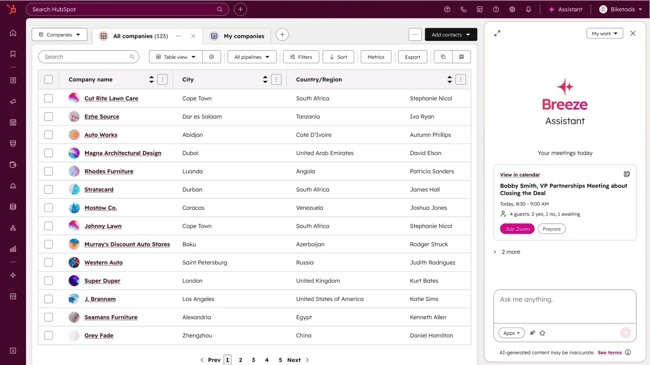
The competitive landscape of B2B sales prospecting software in 2026 features a diverse array of powerful tools, each catering to specific needs and organizational sizes. The leading platforms, including Breeze Prospecting Agent, HubSpot’s Sales Prospecting Tool, LinkedIn Sales Navigator, Outreach, and Salesloft Cadence, represent the cutting edge of innovation. These tools span a wide spectrum of functionalities, from AI-powered account monitoring and relationship-driven outreach to high-volume sequencing and comprehensive full-cycle pipeline management. While some platforms are renowned for their singular excellence in a particular domain, a growing number are consolidating the entire prospecting workflow into a unified system. The following analysis evaluates the strongest options based on core features, depth of CRM integration, pricing transparency, and suitability for various team sizes and selling motions.
Breeze Prospecting Agent
Breeze Prospecting Agent stands out as an AI-powered prospecting agent meticulously built directly into HubSpot’s sales workspace. Its core functionality involves continuously monitoring target accounts for emergent buying signals, autonomously researching prospects, and drafting highly personalized outreach communications without requiring direct representative involvement. A significant differentiator from standalone prospecting tools is Breeze’s native access to a company’s complete HubSpot history, encompassing closed deals, support tickets, and marketing engagement data. This rich, internal context enables Breeze to craft emails with a level of personalization and relevance that external tools simply cannot match. Sales representatives simply enroll target companies once, and Breeze takes over, monitoring for critical signals such as leadership changes, funding rounds, or spikes in engagement. Upon detection, it automatically drafts tailored emails, leveraging the comprehensive CRM context. Breeze is reported to reduce research and email personalization time by up to 95%, achieve up to twice the response rates compared to traditional sequences, and enable teams to engage up to twice as many leads.
- Key Features: AI-powered account monitoring, automated prospect research, personalized email drafting using CRM history, real-time buying signal detection, seamless integration with HubSpot CRM.
- Pricing: Available with HubSpot Sales Hub Professional and Enterprise plans.
- Analysis: Breeze Prospecting Agent offers unparalleled value for teams already operating within the HubSpot ecosystem. Its native integration and access to a holistic customer view provide a distinct advantage in crafting genuinely personalized and contextually relevant outreach. Teams not utilizing HubSpot as their primary CRM may find its benefits less pronounced when evaluated as a standalone solution.
- Best for: AI-driven email prospecting, intelligent account monitoring, and HubSpot-centric sales organizations.
HubSpot Sales Prospecting Tool
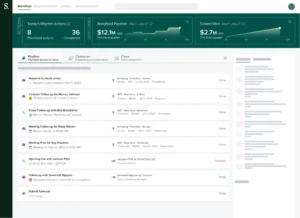
HubSpot’s Lead Management and Prospecting software is a purpose-built workspace embedded within Sales Hub, designed to assist revenue teams in capturing, qualifying, and nurturing prospects through AI-powered lead management and automation. It centralizes all daily prospecting actions, pipeline progression visibility, and CRM context into a single, intuitive view, thereby eliminating the inefficiencies of toggling between a contact database, task manager, and CRM. For sales managers, this tool provides real-time pipeline visibility and granular rep-level insights, enabling them to identify where leads might be stalling and where coaching interventions are most needed, all without the cumbersome process of pulling separate reports. The integrated AI Meeting Assistant streamlines pre-call preparation, accurately captures key details during conversations, and guides subsequent follow-up actions. This comprehensive approach ensures that sales representatives can concentrate on high-value leads and interactions, rather than being bogged down by administrative overhead between prospect engagements.
- Key Features: Centralized prospecting workspace, AI-powered lead management and qualification, automated pipeline progression, real-time pipeline visibility, AI Meeting Assistant for pre-call prep and follow-up, comprehensive CRM integration.
- Pricing: Included with HubSpot Sales Hub Starter, Professional, and Enterprise plans.
- Analysis: This tool is an ideal choice for organizations seeking a unified system for prospecting, pipeline management, and CRM data. Its AI-recommended actions and automated pipeline progression significantly reduce administrative burdens, freeing up reps for more strategic work. Teams already invested in HubSpot will derive immediate and maximum value, while those evaluating a combined CRM and prospecting platform should strongly consider the integrated Sales Hub package.
- Best for: Full-cycle prospecting workflow management, comprehensive lead prioritization, and holistic pipeline visibility within a unified CRM environment.
LinkedIn Sales Navigator
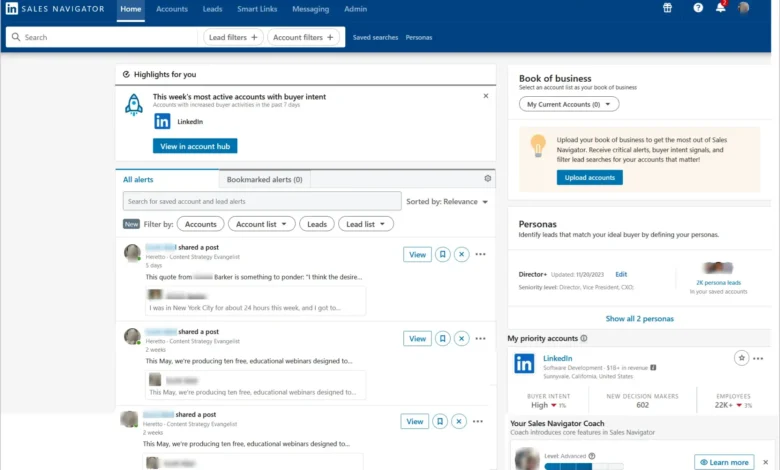
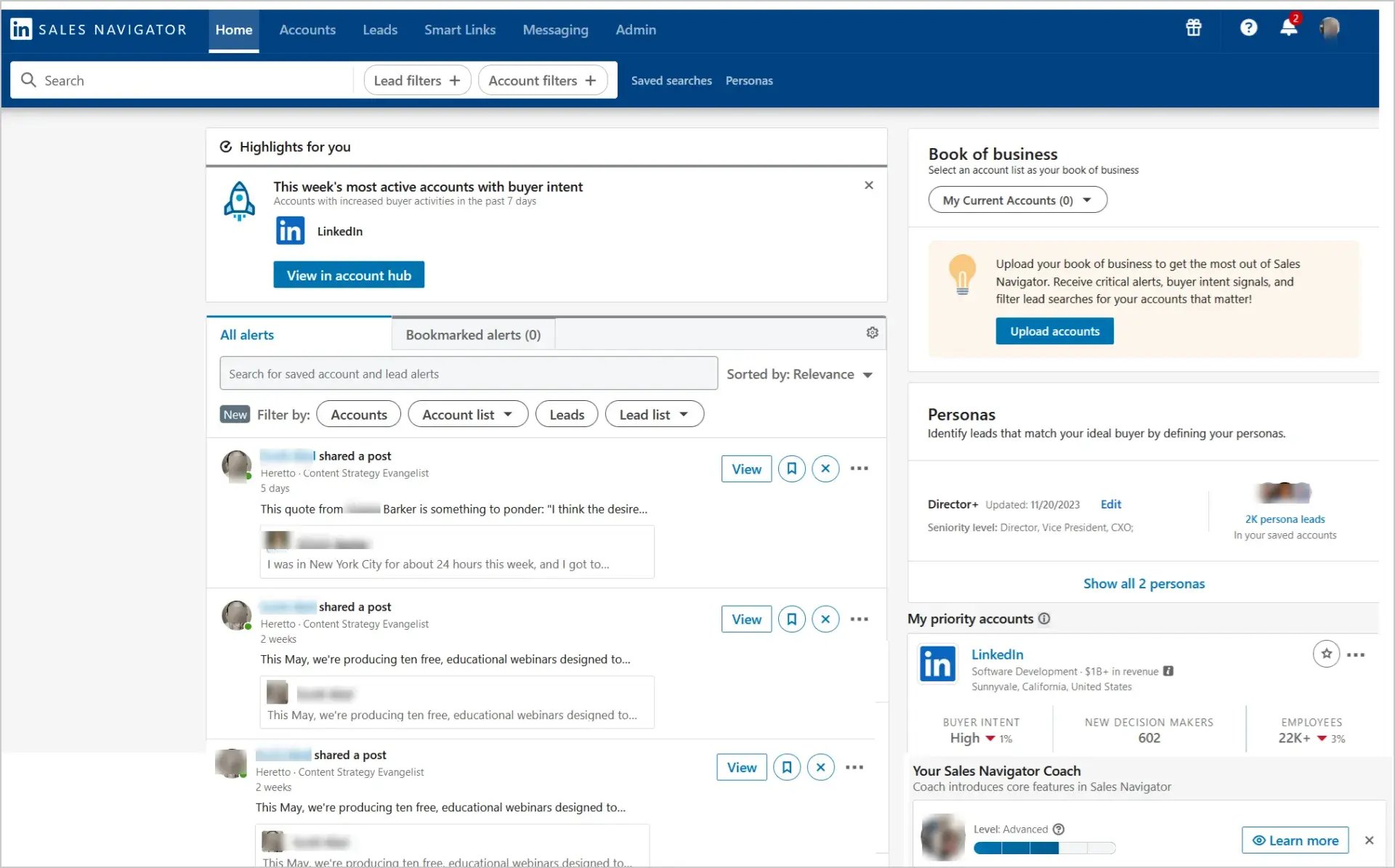
LinkedIn Sales Navigator is an industry-leading B2B prospecting and relationship intelligence platform built upon LinkedIn’s vast professional network of over one billion members. It provides sales professionals with access to highly advanced search filters, real-time account alerts, AI-generated buyer summaries, and direct outreach capabilities via InMail. Unlike traditional contact databases, Sales Navigator leverages the dynamic nature of LinkedIn profiles, offering up-to-date information on job changes, company updates, and professional networks. The platform’s TeamLink feature is particularly powerful, enabling reps to identify warm introduction paths through their colleagues’ connections, significantly increasing the likelihood of engagement. The AI-generated buyer summaries help sales reps quickly grasp key information about prospects and accounts, facilitating more relevant and impactful conversations.
- Key Features: Advanced lead and account search filters, real-time alerts on prospect and account activity, AI-generated buyer insights, InMail for direct outreach, TeamLink for warm introductions, CRM integration for data synchronization.
- Pricing: Offers Core, Advanced, and Enterprise tiers, with pricing typically starting around $99/month for Core and increasing for higher tiers.
- Analysis: LinkedIn Sales Navigator is an indispensable tool for sales teams where building relationships and leveraging network proximity are crucial to deal success. The combination of real-time alerts, AI buyer summaries, and TeamLink provides a level of account intelligence that traditional contact databases, which rely on crawled web data, cannot replicate. While it may not provide the sheer volume of cold contacts as some other platforms, its strength lies in facilitating highly targeted, relationship-driven outreach, making it invaluable for enterprise sales and account-based strategies.
- Best for: LinkedIn prospecting, relationship-based selling, and targeted account-based outreach strategies.
Outreach
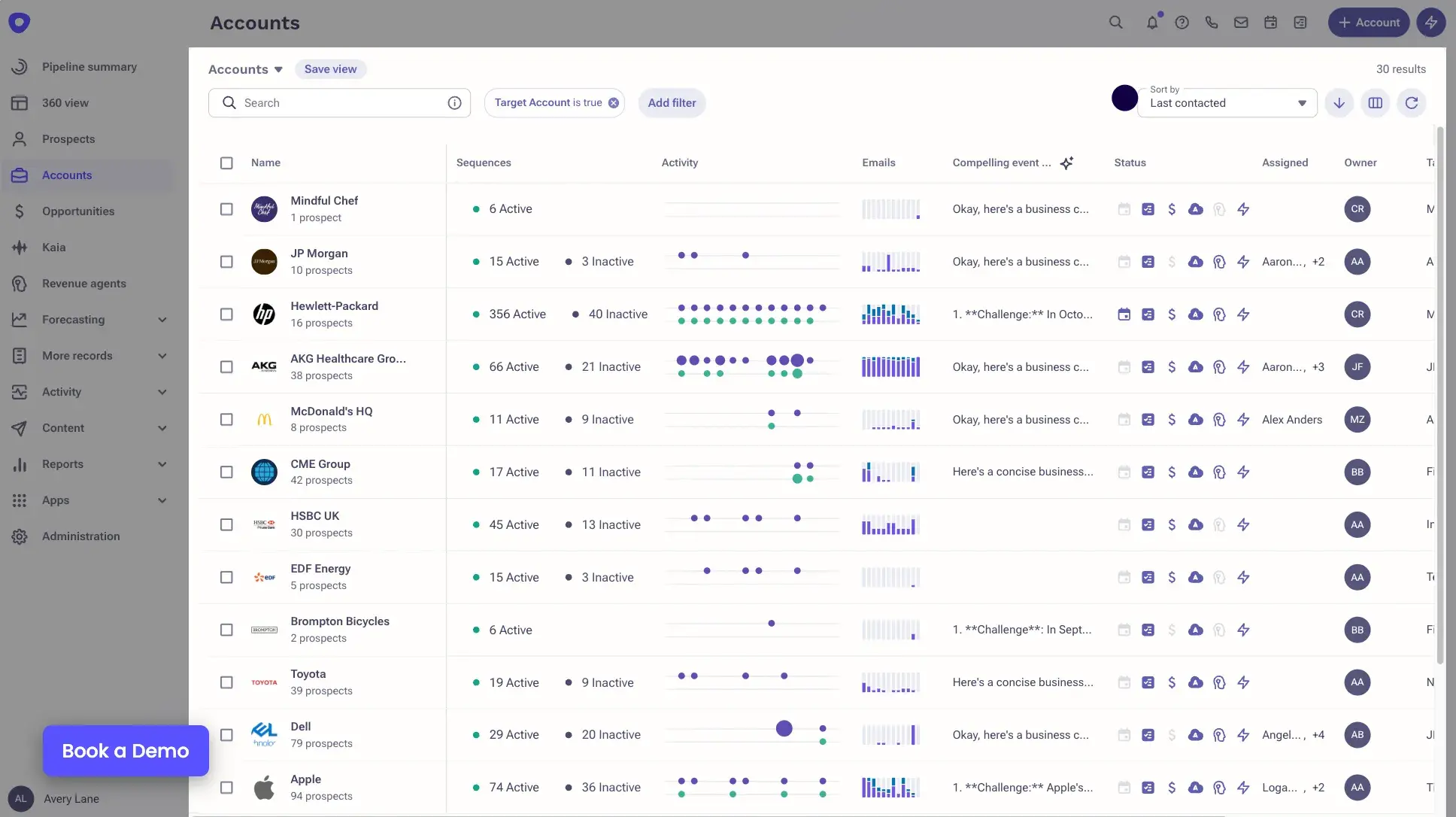
Outreach is positioned as an agentic AI platform meticulously designed for revenue teams, particularly suited for enterprise sales organizations that require sophisticated coordination of prospecting, sequencing, account planning, and comprehensive deal management across extensive selling teams. It consolidates several powerful functionalities into a single, cohesive platform: Research Agent for automated account intelligence, Revenue Agent for intelligent sequencing and outreach automation, Deal Agent for proactive pipeline risk assessment and deal health monitoring, and Kaia conversation intelligence tools. This robust suite is widely adopted by enterprise revenue teams across diverse sectors, including SaaS, financial services, and technology. Outreach excels in orchestrating complex, multi-stakeholder deals, providing a structured approach to standardize outreach and ensure consistency across large sales forces.
- Key Features: Agentic AI for research, outreach, and deal management; multi-channel sequencing (email, calls, social); advanced conversation intelligence (Kaia); pipeline risk assessment; Smart Account Plans; deep CRM integrations.
- Pricing: Custom pricing based on specific needs and team size, generally positioned for enterprise-level deployments.
- Analysis: Outreach is engineered for large-scale enterprise sales teams managing intricate, multi-stakeholder deals where precise account coordination and consistent sequencing are paramount. Its integrated suite of agents provides revenue operations teams with a highly structured methodology to standardize and optimize outreach across extensive sales organizations. Smaller teams or those in the nascent stages of developing their sales processes might find the platform’s comprehensive nature and associated learning curve more extensive than their immediate requirements. However, for organizations operating at a scale where deal coordination, pipeline predictability, and standardized outreach are critical challenges, Outreach warrants a thorough evaluation.
- Best for: Multi-channel outbound prospecting, sophisticated inbound lead follow-up, and comprehensive enterprise account development.
Salesloft Cadence
Salesloft Cadence is a leading pipeline generation and lead nurturing platform that meticulously coordinates multi-channel outreach across email, calls, and meetings through AI-powered sequencing and automation. Engineered for revenue teams that execute structured outbound motions, Cadence integrates buyer identification agents, automated contact enrichment, and robust CRM synchronization into a seamless prospecting workflow. It provides a unified environment for sales professionals to manage their entire outreach process, from initial contact to nurturing and follow-up. The platform’s emphasis on AI-powered prioritization ensures that reps focus their efforts on the most promising leads, while built-in dialing and automatic CRM synchronization minimize administrative overhead, enhancing rep productivity.
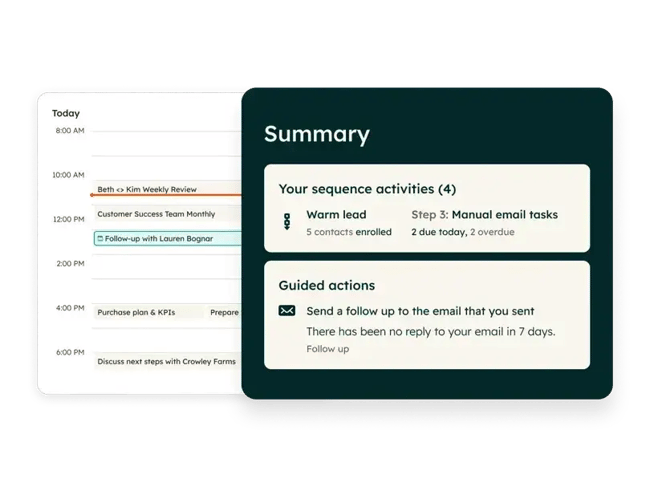
- Key Features: AI-powered multi-channel sequencing (email, call, social); automated contact enrichment; built-in dialer and call logging; meeting scheduling automation; robust CRM synchronization; buyer identification agents.
- Pricing: Custom pricing based on features and user count, designed for mid-market to enterprise clients.
- Analysis: Salesloft Cadence is exceptionally well-suited for revenue teams that implement structured, multi-channel outbound programs and require a centralized solution for coordinating calls, emails, and meetings. The combination of AI-driven prioritization, integrated dialing capabilities, and automated CRM synchronization effectively eliminates the coordination complexities that often impede prospecting efforts at scale. Teams that already possess a preferred dialer or a highly customized CRM configuration should diligently verify integration compatibility before committing to Cadence. For organizations where consistent outbound sequencing and maximizing representative productivity are primary strategic objectives, Salesloft Cadence represents a highly compelling solution.
- Best for: Structured multi-channel outbound sequencing, integrated call prospecting, and efficient pipeline nurturing at scale.
The Critical Role of Seamless CRM Integration
Prospecting software, by its very nature, generates a substantial volume of new contact data, detailed outreach activity logs, and crucial engagement signals. Without a clean, robust connection to the CRM system, this invaluable information risks remaining isolated within a separate tool, rarely being utilized to its full potential. The most effective prospecting setups are characterized by a seamless, bidirectional synchronization between the prospecting tool and the CRM. This ensures that contact records remain perpetually current, all sequence activity is automatically logged, and sales representatives possess complete, up-to-date context before every single conversation.
Beyond mere data transfer, compliance and governance are significantly enhanced when enrichment rules, deduplication logic, and field mapping are meticulously configured at the integration level—before any data begins to flow. This proactive approach prevents the compounding of data quality problems downstream. For teams engaged in account-based sales motions, this contextual richness is the fundamental differentiator between generic outreach and a message that genuinely reflects the actual account history and previous interactions.
HubSpot Sales Hub exemplifies the strongest option for teams that prioritize having their prospecting and CRM functionalities within a single, integrated platform. The inherent advantage of tools like Breeze Prospecting Agent, running natively within HubSpot, is the complete elimination of sync configurations or data reconciliation efforts. The entire customer history, marketing engagement data, and deal activity are immediately accessible to inform and enrich outreach from day one. For organizations grappling with fragmented data that consistently impedes pipeline reviews, this native connection directly addresses the problem at its source. Therefore, teams in the process of building or auditing their broader sales stack should critically evaluate CRM-native prospecting tools before opting for a collection of disparate point solutions.
Frequently Asked Questions About B2B Sales Prospecting Software
How do I choose B2B sales prospecting software for a small team?
For small teams, the paramount consideration should be selecting tools that consolidate both contact data and outreach sequencing capabilities into a single, integrated platform. The administrative overhead and data fragmentation introduced by adding separate tools for each function can quickly overwhelm a small team’s limited capacity. Begin by identifying a platform that comprehensively covers the core prospecting workflow, offers robust integration with your existing CRM, and possesses the scalability to accommodate future growth in headcount and sales volume without requiring a complete system overhaul.
What is the best way to measure ROI from prospecting software?
Measuring the ROI of prospecting software effectively requires a disciplined approach to tracking key metrics from the outset. The best way to measure ROI is to consistently monitor:
- Time Saved on Manual Tasks: Quantify the hours saved by automation in research, data entry, and outreach.
- Number of Qualified Opportunities Generated: Track how many leads from the software convert into sales-qualified opportunities.
- Sales Pipeline Velocity: Measure the speed at which prospects move through the sales funnel after engaging with the software.
- Conversion Rates: Analyze the conversion rate from initial outreach to meetings booked, and ultimately, to closed deals.
- Cost Reduction: Compare the software cost against the reduction in other tools or manual labor costs.
ROI becomes genuinely measurable when these quantifiable metrics are directly attributable to the activity data generated and managed within the specific prospecting tool.
Can I start with free sales prospecting tools?
Yes, it is certainly possible to commence with free sales prospecting tools, but it is crucial to approach this with clear and realistic expectations. Free editions, such as those offered by platforms like HubSpot, typically provide foundational functionalities like contact search, basic sequencing, and core CRM features, which can be sufficient for early-stage prospecting efforts. However, these free versions inherently come with limitations, including credit limits, contact caps, and restricted integrations. These constraints can quickly evolve into significant friction points as outreach volume escalates. While free tools offer a reasonable starting point for initial exploration and validation, they are generally not suitable as a long-term, scalable infrastructure decision for growing sales operations.
How can I reduce bad data in my CRM when adding new tools?
To mitigate the influx of bad data into your CRM when integrating new tools, it is imperative to establish and configure robust enrichment and deduplication rules before any new data is pushed into your CRM system. Most reputable prospecting platforms offer advanced functionalities for field mapping and duplicate detection at the integration level. Proactively configuring these settings during the initial setup phase is critical to prevent the compounding of data quality problems further down the line. Furthermore, it is highly recommended to conduct a comprehensive baseline audit of your existing CRM records prior to integration. This ensures that new data is introduced into an already clean and accurate system, rather than layering onto existing inaccuracies.
When should you consolidate point tools into an all-in-one platform?
The decision to consolidate multiple point solutions into an all-in-one platform becomes strategically sound when several key indicators emerge. A primary signal is when sales representatives are consistently toggling between three or more distinct tools to complete a single prospecting workflow, indicating significant operational friction. Another clear sign is when data between disparate systems is perpetually out of sync, leading to inconsistent information and unreliable reporting. Furthermore, if the combined expenditure on multiple point solutions begins to exceed the cost of a unified platform that offers comparable or superior functionality, consolidation becomes a financially astute move. Finally, if pipeline reporting necessitates extensive manual reconciliation across various dashboards to achieve a coherent overview, it is a reliable indication that the existing technology stack has become a bottleneck, hindering efficiency and strategic insights.
Building a Future-Proof Prospecting Stack Today
The market for B2B sales prospecting software in 2026 presents an unprecedented array of capabilities, often exceeding what most teams will fully utilize. Upon reviewing the leading platforms, a consistent pattern emerges: consolidated technology stacks consistently outperform fragmented ones. The strategic adoption of fewer tools, coupled with tighter CRM integration and cleaner data, demonstrably generates more robust pipelines than the continuous addition of yet another point solution to an already overburdened stack.
If one were to construct a prospecting stack from the ground up today, anchoring it around HubSpot’s Sales Prospecting Tool and Breeze Prospecting Agent would represent a highly strategic approach. The native CRM context, AI-powered account monitoring, and unified workspace inherently eliminate the extensive coordination overhead that typically impedes most prospecting motions before they can gain significant momentum. This integrated strategy fosters greater efficiency, superior data integrity, and ultimately, a more predictable and scalable sales pipeline.
Related posts: