The Evolution of Revenue Operations and the Strategic Mandate for Modern Sales Organizations


In the modern enterprise, the divide between marketing, sales, and customer success has become a primary bottleneck for growth. To bridge this gap, organizations are increasingly turning to Revenue Operations (RevOps)—a multidisciplinary function tasked with aligning the entire revenue engine. By centralizing data, strategy, and processes, RevOps transforms the chaotic "random acts of selling" into a predictable, scalable machine. Far from being a mere administrative function, RevOps has emerged as a cornerstone of corporate resilience, ensuring that every touchpoint in the customer lifecycle is intentional, measurable, and optimized.
The Operational Shift: Defining the RevOps Mandate
At its core, Revenue Operations serves as the architecture for a company’s sales organization. While traditional sales operations often focused on reporting and quota management, the modern RevOps model encompasses the full customer journey—from initial marketing lead generation through the closing of a deal and into long-term customer renewals. By integrating these disparate functions, organizations can eliminate the "silo effect" that frequently plagues scaling businesses.
When marketing and sales operate in isolation, the result is a fragmented buyer experience. Research indicates that this disconnect is a leading cause of revenue leakage. By marrying these functions, RevOps ensures that data flows seamlessly from one stage of the funnel to the next, allowing for a cohesive strategy that resonates with the buyer’s needs rather than the internal structure of the company.
The Buyer-Centric Imperative: Data and Experience
The rise of the empowered buyer has fundamentally changed the sales landscape. Modern customers are no longer passive recipients of a pitch; they are researchers who value consistency and personalization above almost all else. A report from Walker Info highlighted that by 2020, customer experience had overtaken price and product as the key brand differentiator. This trend has only accelerated in the B2B sector, where digital transformation has moved buying cycles entirely online.
Statistics underscore the financial necessity of this shift: 86% of buyers are now willing to pay a premium for a superior customer experience. Furthermore, the social proofing of modern sales is undeniable, with 93% of consumers and 92% of B2B buyers reporting that their purchasing decisions are heavily influenced by online reviews and third-party validation. For RevOps professionals, this necessitates a deep, granular understanding of the customer journey. By identifying exactly where prospects drop off in the funnel, operations teams can optimize touchpoints to minimize friction, effectively turning the sales process into a value-add service rather than an obstacle.
Chronology of Complexity: Why Process Breakdowns Occur
The history of sales operations has often been one of reactionary fixes. In the early stages of a company’s growth, individual departments—marketing, sales, and customer success—often develop their own localized workflows. Over time, these localized processes coalesce into what industry experts describe as a "Frankenstein process"—a disjointed series of steps that are optimized for individual department goals rather than the overall health of the revenue engine.
As organizations scale, the overlap in responsibilities becomes a critical liability. Sales enablement teams, marketing departments, and customer success managers may find themselves inadvertently duplicating efforts or, conversely, leaving gaps in communication. The primary mission of a RevOps leader is to disentangle these webs, ensuring that each department has clear, distinct deliverables that contribute to a unified organizational goal. Without this coordination, the sales process defaults to "guessing," where outreach becomes random and strategy is replaced by intuition.
Performance Metrics and the 60% Benchmark
A defining characteristic of elite RevOps teams is their reliance on rigorous performance-centric metrics. In a mature organization, the goal is not just to close deals, but to create a predictable model for revenue growth. RevOps professionals often monitor "attainment" as a primary health indicator for the sales floor.
Industry standards suggest that go-to-market teams should aim for a baseline of 60% quota attainment. When performance falls below this threshold, the RevOps team acts as an investigative body. They assess whether the organization is targeting the right channels, whether the Ideal Customer Profile (ICP) is accurately modeled, and whether the underlying strategy is sound. By increasing the sample size of "right activity" and automating high-volume tasks, RevOps creates a predictable rhythm that allows for more accurate revenue forecasting.
The Role of Technology and the CRM as a Source of Truth
The efficacy of a RevOps team is limited by the quality of its data. In many organizations, the CRM (Customer Relationship Management) system is treated as a glorified database, but for top-tier operations teams, it serves as the single source of truth. The challenge, however, is data integrity. When reps fail to log activity accurately, or when information is siloed in disconnected spreadsheets, the resulting data is "noisy" and unreliable.
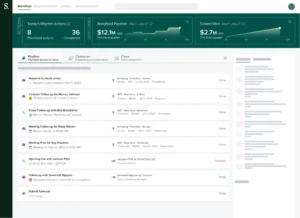
Advanced organizations are increasingly adopting integrated tools like Playbooks to standardize workflows. These platforms allow for the automation of compliance and activity tracking, ensuring that every interaction is logged without placing an undue burden on the sales representative. By guiding reps to the "next best activity" based on real-time buyer intelligence, these tools remove the element of chance from the sales motion. Visibility into these "black holes" in the process allows leadership to identify exactly where the funnel is leaking, enabling data-driven pivots rather than guesswork.
The Future of Operations: Knowledge Sharing and Industry Summits
As the discipline of Revenue Operations continues to mature, the focus is shifting toward community-driven knowledge sharing. The complexities of aligning diverse teams in a remote or hybrid work environment have made the need for standardized operational frameworks more urgent than ever.
In recognition of this need for professional development, industry leaders are mobilizing to provide educational resources. XANT, for instance, has announced the upcoming RevOps Summit, a virtual event scheduled for July 14th. The summit is designed to bring together operations professionals to discuss the "behind-the-scenes" mechanics of revenue generation. Featuring insights from industry veterans, the event focuses on how tactical operational shifts can lead to dramatic improvements in organizational output.
Broader Implications and Strategic Outlook
The implications of a robust RevOps strategy extend far beyond the sales department. When operations are optimized, the entire organization benefits from increased transparency, higher retention rates, and more predictable financial performance.
The shift toward RevOps represents a maturation of the sales profession. No longer is sales a black box defined by the talent of individual reps; it is now a systematic discipline driven by process, technology, and analytics. As companies continue to navigate an increasingly competitive global market, the ability to execute on a unified revenue strategy will be the primary determinant of who succeeds and who falls behind. The organizations that thrive in the coming decade will be those that treat their revenue process as a product—constantly testing, measuring, and refining to ensure that every stage of the customer journey is designed for maximum impact. By moving away from random outreach and embracing the analytical rigor of RevOps, modern businesses are setting themselves up for sustainable, long-term success.
Related posts: