The New Paradigm of Knowledge Debt and AI-Driven Operational Efficiency in the Modern Workplace


The rapid integration of generative artificial intelligence into professional workflows has birthed a complex phenomenon that experts are now identifying as Knowledge Debt. This term refers to the disparity between the speed at which AI systems can produce functional output and the user’s actual comprehension of the underlying mechanics of those systems. As of September 2026, industry data indicates that professionals utilizing AI-augmented tools are completing standard administrative and technical tasks at a rate roughly four times faster than traditional manual execution. However, this acceleration has created a systemic risk: the proliferation of critical digital infrastructure that employees maintain but do not fully understand.
The Emergence of Knowledge Debt
The challenge was highlighted recently by a case study involving the deployment of 32 optimized Stream Deck control buttons designed to automate a series of complex software workflows. The system, generated entirely by an AI agent, was functional within 20 minutes—a task that previously required several hours of manual programming. While the productivity gain was undeniable, the operator remained unable to explain the internal architecture of the resulting system.
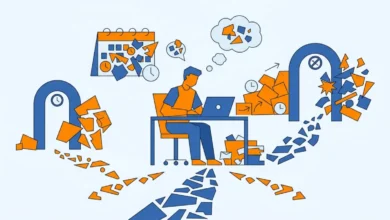
This scenario represents a structural shift in the workplace. When an individual ships a product they cannot debug or explain, they incur Knowledge Debt. Similar to financial debt, this carries an interest rate; if the system breaks or requires a nuanced adjustment, the lack of foundational knowledge leads to prolonged downtime. Industry analysts suggest that this creates a fragility in organizational systems, where speed is prioritized over the resilience of the digital foundation.
Redefining Time-Blocking and Parallel Processing
Traditional productivity frameworks have long relied on linear, human-centric time-blocking, where a single block of time is dedicated to a single, manually executed task. The rise of AI agents has rendered this model increasingly obsolete. Modern workflows are transitioning to a "10-80-10" distribution model: 10% of the time is dedicated to defining the desired outcome, 80% of the middle-stage execution is offloaded to AI, and the final 10% is reserved for human review and verification.
This structural shift allows for parallel processing. A professional can now initiate multiple concurrent workstreams—such as generating a newsletter, drafting a technical script, and managing a data migration—simultaneously. By delegating the 80% execution phase, the operator shifts from a "doer" to an "orchestrator." This transformation requires a higher level of cognitive oversight, as the professional remains legally and operationally responsible for the final output despite not having touched the intermediary steps.
Strategic Energy Management and the Hedonic Treadmill
The surge in AI-assisted productivity has also led to a psychological phenomenon often described as the "AI productivity hedonic treadmill." As workers consistently clear their priority lists earlier in the day, the immediate impulse is frequently to occupy the newfound time with additional tasks, rather than utilizing the time for recovery or lower-intensity professional development. Left unmanaged, this tendency toward continuous task-filling leads to a state of chronic overwork.
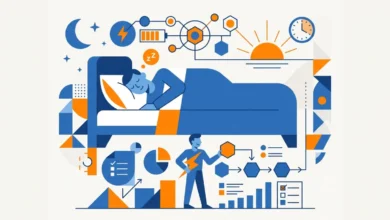
To mitigate this, productivity researchers are advocating for the adoption of "Energy Matching." This strategy involves aligning the cognitive demand of a task with the professional’s actual energy levels throughout the work week. For example, high-leverage, mentally taxing work is prioritized for peak energy windows, typically Monday mornings. Conversely, administrative, low-energy tasks—which are often performed inefficiently when a professional is fatigued—are deferred to the end of the work week, such as Friday afternoons. This "Energy Matching" approach ensures that administrative burden does not bleed into the hours required for high-level problem solving.
The Evolution of Organizational Calendaring
The structural approach to the work week is undergoing a parallel evolution. The traditional "heroic Monday," characterized by a sudden influx of meetings and administrative tasks, is being replaced by the "Meeting Day" concept. By clustering internal meetings and calls into a single day, such as a Wednesday, organizations can protect large, contiguous blocks of time for deep work.
Empirical observations from project management software data show that scattered meetings, which break up the workday into fragmented 30- or 60-minute windows, significantly degrade productivity. The "switching cost"—the cognitive energy required to refocus after a meeting—is compounded when these interruptions are distributed across multiple days.
Furthermore, the implementation of "Day Theming" is gaining traction as a superior alternative to rigid, hour-by-hour scheduling. By theming mornings for communication and afternoons for execution, workers can absorb the inevitable volatility of a modern workday without the friction caused by a collapsed schedule. Automated systems, such as mandatory buffer blocks in scheduling software like Calendly or Outlook, are becoming standard practice to enforce these gaps and prevent the burnout associated with back-to-back scheduling.
Data-Driven Productivity Audits
The transition to AI-assisted workflows has simplified the process of auditing personal performance. Where consultants once charged significant fees for manual time-tracking and analysis, professionals can now export 60 days of calendar data and utilize AI to identify patterns and inefficiencies.
Analysis of such datasets typically reveals a significant discrepancy between perceived time allocation and actual time expenditure. For example, many professionals discover that they are spending a disproportionate amount of time in low-value meetings that could be replaced by asynchronous communication. By leveraging AI to process this historical data, individuals can identify "leaks" in their schedule and pivot toward more effective time-management strategies based on factual evidence rather than intuition.
Implications and Future Outlook
The transition toward an AI-integrated workplace is not merely a change in tools, but a change in the fundamental nature of professional responsibility. The requirement for "retroactive learning"—where the individual spends time documenting and studying the logic of an AI-generated output—is becoming a critical competency.
As of late 2026, the consensus among workplace efficiency experts is that the most successful professionals will be those who can balance the raw speed of AI generation with the discipline of maintaining foundational knowledge. Organizations that prioritize the repayment of Knowledge Debt will likely prove more resilient than those that prioritize speed at the expense of system comprehension.
Moving forward, the successful implementation of these productivity frameworks relies on the following pillars:
- Conscious Rest: The ability to stop work once primary objectives are met, resisting the temptation of the hedonic treadmill.
- System Documentation: A mandatory period of study following the deployment of AI-generated workflows to ensure human oversight.
- Energy Alignment: The strategic relocation of low-energy tasks to preserve peak cognitive windows for high-leverage work.
- Structural Protection: The use of Meeting Days and automated buffer blocks to safeguard time for deep, uninterrupted work.
As these practices become more common, the definition of professional competence will shift from the ability to execute tasks to the ability to architect, delegate, and audit complex systems. The goal is no longer to work harder or even faster, but to maintain a sustainable, high-output workflow that does not compromise the operator’s ability to maintain the systems they have put in place. By treating time, energy, and knowledge as finite resources that require active management, the modern professional can navigate the rapid changes in the AI landscape while maintaining operational stability.
Related posts: