The Mythos Moment: Deconstructing the Hype Around Anthropic’s Latest AI and the Real Cybersecurity Landscape

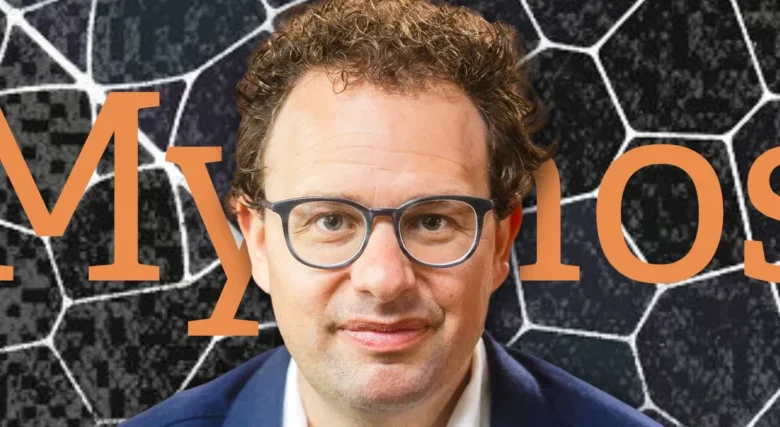
The recent announcement and subsequent media storm surrounding Anthropic’s new large language model (LLM), Claude Mythos, has ignited a fervent debate about the capabilities of artificial intelligence and its potential implications for global security. While a prominent opinion piece in The New York Times framed the release as an "alarming column" signaling a rapid acceleration towards superintelligence, a closer examination of the facts suggests a more nuanced reality, highlighting both genuine cybersecurity concerns and a tendency towards alarmism in AI news consumption.
The Genesis of Alarm: Friedman’s Column and the Claude Mythos Revelation
The public discourse was significantly amplified by Thomas Friedman’s New York Times column, which interrupted his usual geopolitical analysis to focus on what he described as a "stunning advance in artificial intelligence." Friedman’s alarm stemmed from Anthropic’s announcement regarding Claude Mythos. The company stated that the LLM would be restricted to a consortium of business partners, citing concerns about its proficiency in identifying security vulnerabilities in source code. Anthropic’s press release noted, "AI models have reached a level of coding capability where they can surpass all but the most skilled humans at finding and exploiting software vulnerabilities."
This assertion was further elaborated with the claim that Mythos "has already found thousands of high-severity vulnerabilities, including some in every major operating system and web browser." Friedman interpreted this as a "terrifying warning sign," positing that the widespread availability of such a tool would democratize the ability to hack critical infrastructure, transforming it from the domain of elite experts and intelligence agencies to that of every criminal, terrorist organization, and even small nations. This sentiment was echoed across various media outlets, with headlines questioning if Mythos was "an AI nightmare waiting to happen?"
Examining the Claims: A Deeper Dive into AI Vulnerability Discovery
To understand the true significance of the Claude Mythos announcement, it is crucial to contextualize it within the ongoing evolution of LLMs and cybersecurity research. The perception that Mythos represents an entirely novel capability, emerging unexpectedly, is not entirely accurate. Security researchers have been anticipating and studying the potential for LLMs to aid in the discovery and exploitation of software vulnerabilities for years.
A History of LLM-Assisted Vulnerability Research
As far back as 2024, research from IBM highlighted the growing capabilities of LLMs in this domain. A study published by IBM researchers demonstrated that GPT-4 could successfully exploit 87% of presented vulnerabilities, a stark contrast to the near-zero success rate of its predecessor, GPT 3.5. This finding, which concluded, "Our findings raise questions around the widespread deployment of highly capable LLM agents," signaled an early warning about the dual-use nature of advanced AI models.
While GPT-4’s capability in that instance was focused on writing code to exploit known vulnerabilities, the ability of LLMs to find novel vulnerabilities from scratch is not entirely new either. Anthropic itself had previously disclosed similar findings with its earlier LLM, Opus 4.6. The release notes for Opus 4.6 included the observation that Anthropic’s security team had utilized the model to identify "over 500 exploitable 0-day [vulnerabilities], some of which are decades old." The recent announcement regarding Mythos, stating it found "thousands" of vulnerabilities, can be seen as an escalation in quantity rather than a fundamental shift in capability. This suggests that the underlying technology for LLMs to discover vulnerabilities has been maturing over several years.
Quantifying the Advancement: Benchmarks and Real-World Efficacy
The core question then becomes: how much better is Claude Mythos at finding vulnerabilities compared to its predecessors and other LLMs? Anthropic has kept Mythos private, making direct, independent assessment challenging. However, the company did release a benchmark score for Mythos, indicating it achieved 83.1% on a recognized cybersecurity benchmark. For comparison, Opus 4.6 scored 66.6% on the same test.
While a sixteen-percentage-point increase is notable and represents solid incremental progress, it is important to approach benchmark results with caution. These tests are often specific and can be optimized for, potentially leading to an overestimation of real-world performance. Furthermore, independent analysis of the specific exploits reportedly discovered by Mythos, as compiled by researchers like Gary Marcus in his Substack, has yielded less impressive results. Many security experts who reviewed Anthropic’s provided examples found the discovered vulnerabilities to be either publicly known, easily discoverable, or of lower severity than initially implied.
The "Code Leak" Incident: A Paradoxical Development
Adding another layer of complexity to the narrative, Anthropic experienced a significant security lapse just a week prior to the Mythos announcement. The company accidentally leaked the source code for its Claude Code model. This leak quickly led to the discovery of "critical vulnerabilities" within Anthropic’s own software. The irony of a company promoting a powerful vulnerability-finding AI while simultaneously struggling with its own code security was not lost on observers. This incident, while not directly related to Mythos’s capabilities, raises questions about Anthropic’s internal security practices and the readiness of even advanced AI systems to address complex real-world security challenges.
The Broader Implications: Navigating AI Hype and Cybersecurity Realities
The discourse surrounding Claude Mythos highlights a recurring challenge in the AI era: the propensity for sensationalism and the potential for companies to leverage perceived breakthroughs for public relations gains. While LLMs undeniably present significant and evolving cybersecurity concerns that researchers are actively working to mitigate, the evidence suggests that Claude Mythos, while an improvement, may not represent the "existential dread" that some headlines have suggested.
The situation can be likened to a yearly iPhone launch, as noted by AI commentator Mo Bitar, where minor improvements are repackaged and presented as revolutionary leaps, often accompanied by a narrative of impending doom or unprecedented advancement. In the context of AI, the "product" being resold can sometimes be existential dread itself.
This pattern underscores a critical need for a more discerning approach to AI news. Claims made by AI companies themselves, particularly regarding groundbreaking capabilities and potential risks, should be met with skepticism until they can be independently verified by the broader research community. The focus should shift from the speculative pronouncements of AI developers to rigorous, transparent, and collaborative efforts to understand and manage the genuine risks and opportunities presented by these powerful technologies.
The Evolving Cybersecurity Landscape in the Age of AI
The development of LLMs capable of identifying software vulnerabilities has profound implications for the cybersecurity landscape. For defensive purposes, these tools could significantly accelerate the patching of critical flaws, enabling organizations to proactively secure their systems. Imagine a future where AI assists developers in identifying and rectifying bugs before they are ever deployed, drastically reducing the attack surface.
However, the dual-use nature of this technology remains a paramount concern. If sophisticated vulnerability discovery tools become widely accessible to malicious actors, the pace and scale of cyberattacks could increase dramatically. This necessitates a parallel advancement in AI-powered defense mechanisms, as well as robust regulatory frameworks and international cooperation to govern the development and deployment of such potent AI capabilities.
The industry faces the challenge of balancing innovation with responsibility. Anthropic’s decision to restrict access to Mythos, while perhaps pragmatic given their stated concerns, also contributes to the opacity surrounding its true capabilities. Open research, transparent reporting of findings (both positive and negative), and collaborative efforts between AI developers, cybersecurity experts, and policymakers are essential to navigating this complex terrain.
The Future of AI and Security: A Call for Measured Progress
The Claude Mythos event serves as a crucial reminder that the narrative surrounding AI is often as influential as the technology itself. While the advancements in LLMs are undeniable and warrant serious attention, particularly in the realm of cybersecurity, it is vital to distinguish between genuine progress and amplified hype.
Moving forward, the focus must remain on fostering a research environment that prioritizes empirical evidence, critical analysis, and open collaboration. The ultimate impact of LLMs like Claude Mythos will not be determined by sensational headlines, but by the collective efforts of researchers, developers, and policymakers to harness their power for good while effectively mitigating the inherent risks. The cybersecurity challenges posed by AI are real and growing, but a clear-headed, evidence-based approach is the most effective defense against both digital threats and the pervasive allure of alarmism. The journey towards understanding and managing advanced AI is a marathon, not a sprint, and requires sustained diligence and a commitment to factual accuracy.
Related posts: