The Strategic Imperative of Sales Content Management Platforms in the 2026 Revenue Landscape

A sales content management platform (SCMP) serves as a critical central nervous system for revenue teams, consolidating sales-approved content into a single source of truth to streamline discovery, distribution, and performance tracking of materials vital for advancing deals. In a competitive and rapidly evolving sales environment, where industry reports indicate that more than half of sales leaders actively leverage sales enablement content and a compelling 79% deem these materials essential for deal closure, the selection of an appropriate SCMP has transcended mere operational necessity to become a pivotal strategic decision for organizations aiming for sustained revenue growth.
The Evolution and Challenges of Modern Sales Enablement
The landscape of sales has undergone a dramatic transformation over the past decade, moving beyond traditional cold calling and generic presentations to a highly informed, digital-first buyer journey. This shift has necessitated a more sophisticated approach to sales enablement, evolving from basic training and a repository of static collateral to dynamic, data-driven content strategies. Modern sales professionals operate in an environment characterized by remote work, highly knowledgeable prospects, and intense market competition, demanding instant access to relevant, personalized, and compliant information.
-2.png)
Historically, sales teams have grappled with what is often termed "content chaos." This manifests as sales collateral scattered across disparate systems—Google Drive folders, SharePoint sites, email attachments, and local desktops—leading to significant inefficiencies. Sales representatives spend an inordinate amount of time, estimated by some industry analyses to be up to 30% of their day, searching for or recreating content. This not only saps productivity but also frequently results in sellers defaulting to outdated, off-brand, or non-compliant materials, which erodes buyer trust and jeopardizes brand consistency. For regulated industries such as healthcare, financial services, and legal, the distribution of unapproved pricing documents or obsolete compliance information can lead to severe legal and reputational liabilities. Even in less regulated sectors, inconsistent messaging damages credibility and introduces confusion, particularly in multi-stakeholder buying cycles.
The lack of connection between content engagement and pipeline outcomes further exacerbates these challenges. Without a dedicated SCMP, enablement leaders struggle to quantify the return on investment (ROI) for content creation, making it difficult to optimize strategies or justify future investments. The absence of robust analytics leaves organizations blind to which assets truly influence revenue versus those that merely get downloaded or viewed without tangible impact. This gap between having a wealth of content and having effective content remains a significant hurdle for many organizations.
Market Trends and the Strategic Imperative
The growing recognition of these challenges has fueled the rapid expansion and innovation within the sales content management sector. Sales enablement strategies that incorporate structured content management are demonstrably linked to superior performance metrics. Multiple industry benchmarks confirm that such strategies contribute to an impressive 49% higher win rate on forecasted deals. Despite this compelling evidence, a significant disparity exists, with only an estimated 35% of sales teams effectively tracking their content’s impact on business outcomes. This substantial gap is precisely what purpose-built SCMPs are designed to bridge, transforming content from a cost center into a measurable revenue driver.

The integration of artificial intelligence (AI) has emerged as a dominant trend, fundamentally reshaping how content is managed and utilized in sales. The Content Marketing Institute’s 2026 B2B research highlights that 45% of B2B marketers are planning to increase their investment in AI-powered marketing tools, a trend mirrored and amplified within sales enablement. AI is moving beyond basic search and recommendation to actively assist in content creation, personalization, and even strategic insights.
A Period of Significant Market Consolidation
The sales enablement technology market is currently undergoing a dynamic period of consolidation, signaling a maturation of the sector and a drive towards more comprehensive, integrated solutions. This trend is a critical factor for organizations evaluating their platform choices, as it promises both enhanced capabilities and potential shifts in product roadmaps and support.
- Seismic and Highspot Merger (February 2026): One of the most significant developments is the announced merger between Seismic, the established category leader in enterprise sales enablement, and Highspot, renowned for its strong seller adoption and intuitive interface. This combination, pending regulatory approval, is poised to create the largest dedicated enablement platform in the market. Industry analysts suggest this consolidation reflects a strategic move to dominate the enterprise segment by combining Seismic’s robust governance and automation capabilities with Highspot’s user-centric design and AI-powered search. For buyers, this potentially means a more comprehensive offering under a single brand, but it also necessitates careful evaluation of the product integration roadmap and long-term support plans during the transition phase. Company spokespersons for the combined entity have indicated that the merger aims to accelerate innovation and deliver unparalleled value to large, complex organizations by leveraging combined R&D and market reach.
- Showpad and Bigtincan Merger (Late 2025): Preceding this, October 2025 saw Vector Capital merge Showpad with Bigtincan, which had previously acquired Brainshark. This strategic maneuver brought together Showpad’s content management and sales coaching strengths with Bigtincan’s broader learning and readiness capabilities. The subsequent recognition of Showpad as a Leader in Gartner’s inaugural Magic Quadrant for Revenue Enablement Platforms in November 2025 underscores the combined entity’s enhanced market position. Experts observe that this merger aims to provide a more holistic enablement solution, integrating content, training, and coaching into a seamless experience, particularly appealing to mid-market and growing enterprises looking for a unified approach to seller effectiveness.
These mergers indicate a clear trend towards platforms offering broader functionalities, reducing the need for multiple, disparate tools. However, prospective buyers are advised to conduct thorough due diligence, inquiring about specific integration timelines, feature parity across legacy platforms, and the long-term vision for the consolidated product lines to ensure stability and continuity.
Key Features Defining Best-in-Class Sales Content Management Software
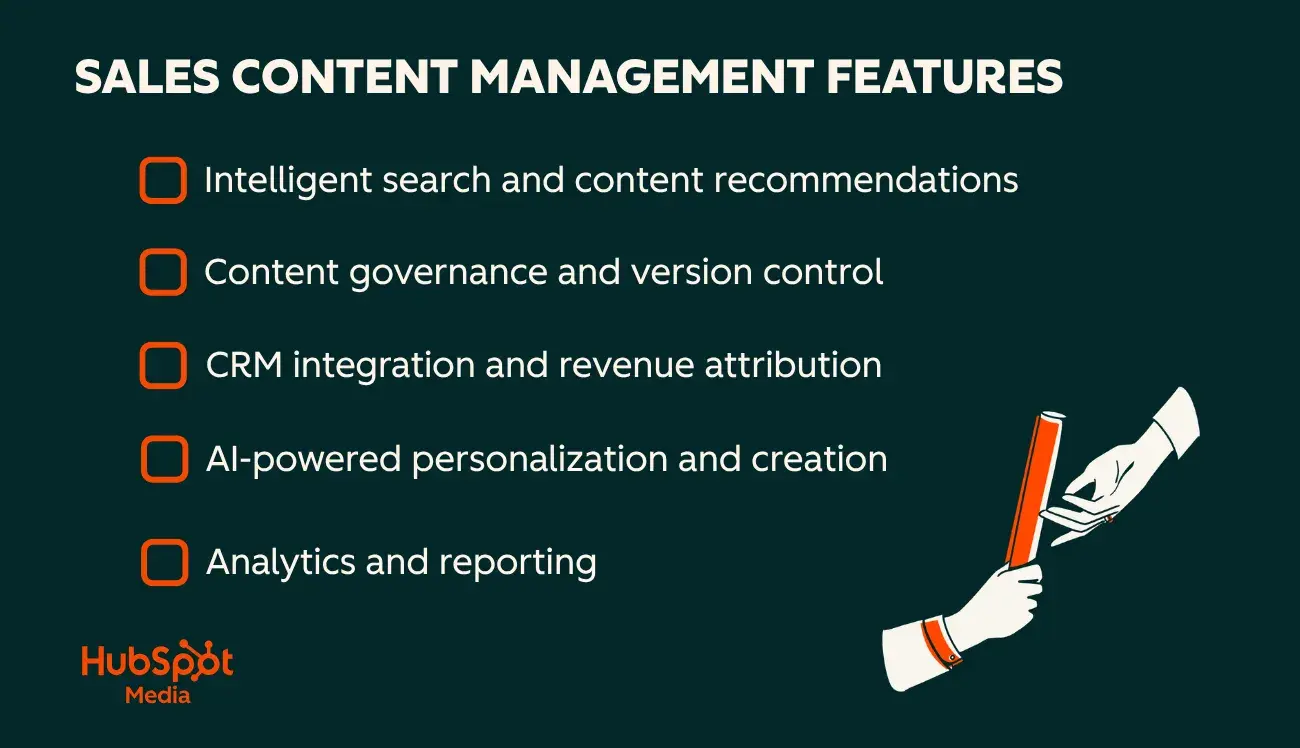
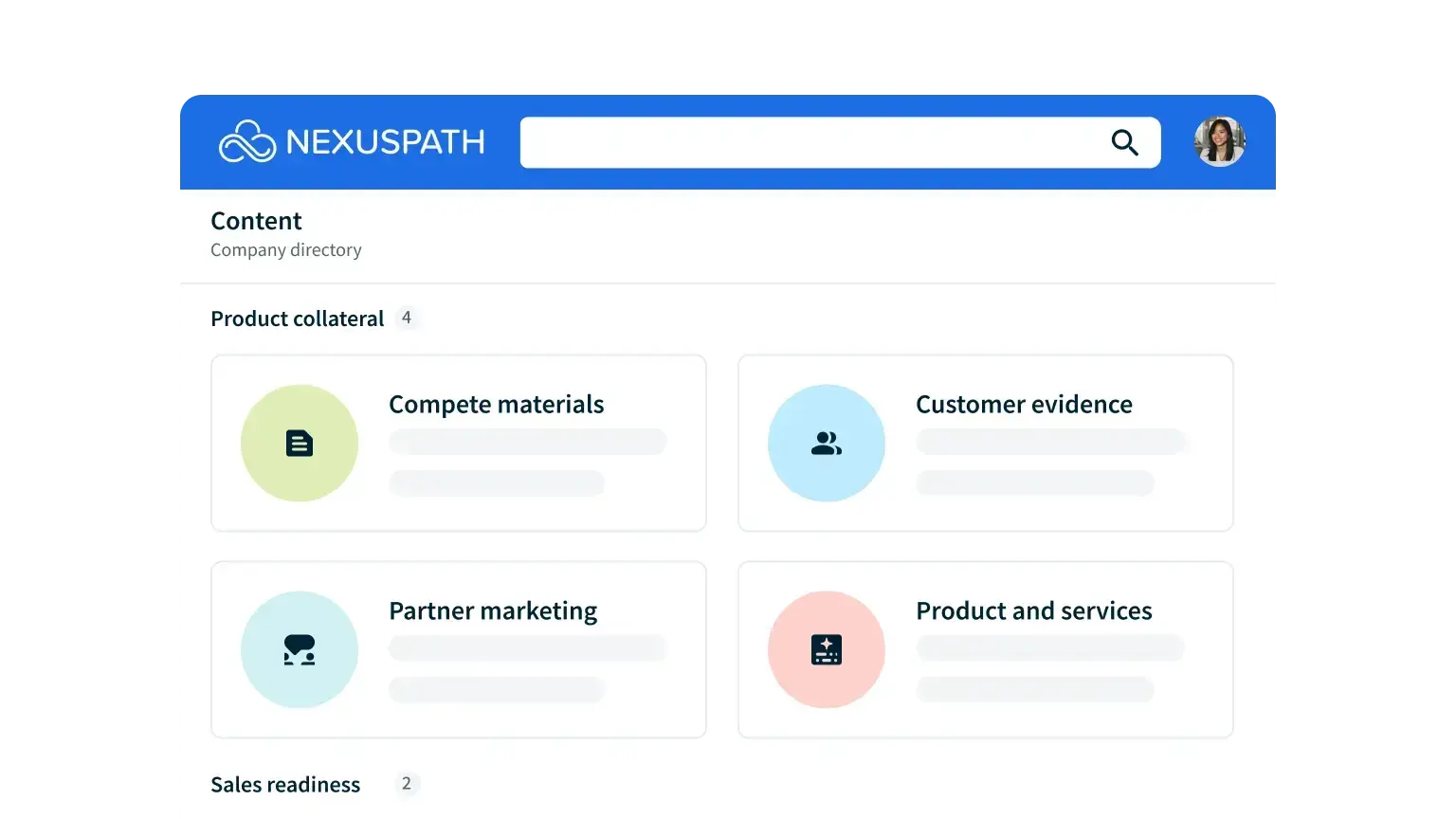
Sales enablement leaders evaluating SCMPs must prioritize capabilities that directly translate into improved seller adoption, enhanced content quality, and demonstrable revenue attribution. The following five features represent the highest-impact differentiators, distinguishing platforms that merely store content from those that actively activate it to drive sales outcomes.
-
Intelligent Search and Contextual Content Recommendations: A premier SCMP dramatically improves content findability by leveraging AI-powered search algorithms, sophisticated contextual tagging, and deal-stage specific recommendations. This functionality eradicates the time-consuming "hunt" where sellers manually sift through disorganized folders, replacing it with instant, context-aware results. The most effective systems continuously learn from usage patterns and engagement data, dynamically promoting high-performing assets. Furthermore, these platforms should seamlessly integrate content recommendations directly within the CRM or email workflow, minimizing friction points and maximizing adoption by eliminating the need for sellers to navigate away from their primary deal workspace. Analytics should track not just content usage, but successful usage, correlating specific assets to positive deal progression.
-
Robust Content Governance and Version Control: Effective content governance is paramount to maintaining a useful and trustworthy content library over time, preventing its degradation into an unmanageable clutter. A strong SCMP enforces comprehensive approval workflows, automatically assigns expiration dates to ensure timeliness, and meticulously tracks all content versions. This ensures that every asset available to sellers is current, compliant with regulations, and owned by a clearly designated stakeholder. Without such governance, content libraries become repositories of ambiguously named files (e.g., "Pitch-Deck_v5-FINAL-use_this_one"), leading to the distribution of outdated materials to prospective buyers. Role-based permissions are crucial, granting only approved users the authority to publish, edit, or retire content. For global organizations, region-based access controls further segment the library, accommodating diverse compliance requirements or product lines, thus safeguarding brand integrity and mitigating legal risks.
-
Seamless CRM Integration and Revenue Attribution: This capability fundamentally differentiates a simple content library from a powerful revenue intelligence tool. A leading SCMP integrates deeply with CRM systems to establish a clear, traceable link between content usage and opportunity outcomes. When a sales representative shares a case study during a mid-stage opportunity, and the buyer engages with it for a significant duration before the deal closes, CRM-native reporting automatically connects that specific engagement signal to the relevant pipeline stage and the eventual outcome. This critical integration provides enablement teams with the data required to prove content ROI—a persistent challenge in sales management—by logging content activity directly into deal records. Platforms that surface content engagement data directly on the deal timeline within the CRM are particularly valuable, as managers can intuitively see content’s impact without consulting separate analytics dashboards.
-
AI-Powered Personalization and Creation: The application of AI in SCMPs extends beyond intelligent search into active content creation and hyper-personalization. The most advanced platforms in 2026 leverage AI to generate initial drafts of sales emails, dynamically customize pitch decks with prospect-specific data, and intelligently assemble bespoke content packages tailored to a specific buyer persona or deal stage. This capability significantly reduces the manual effort sellers traditionally expend in adapting generic materials, thereby enhancing the relevance and impact of every customer touchpoint. Crucially, these AI features must function within the seller’s existing workflow—whether in the CRM or email client—to ensure practical utility and high adoption rates. AI that generates a perfect email draft is only truly valuable if the sales professional can access and deploy it directly from their primary workspace.
-
Comprehensive Analytics and Reporting: Robust sales content analytics measure critical metrics such as representative adoption rates and asset usage by team, deal stage, and content type. This empowers enablement leaders with the data necessary to strategically optimize their content library, moving beyond mere expansion to focus on effectiveness. Effective reporting should answer key questions: Which content assets are most frequently used? Which content correlates with faster deal cycles or higher win rates? Which teams or individuals are most effectively leveraging available content? The most impactful reporting connects content engagement directly to downstream pipeline outcomes, moving beyond vanity metrics like download counts and open rates. It delves into territories such as the influence on deal velocity, stage progression, and direct revenue attribution. Platforms that provide these insights through intuitive, built-in dashboards, rather than requiring complex custom report building, achieve significantly higher adoption among managers and executive leadership. Organizations should insist on pipeline-connected reporting to genuinely validate content investment.
Leading Sales Content Management Platforms in 2026
The following platforms represent strong options for sales enablement leaders in 2026, evaluated on their capabilities in content governance, CRM integration, AI functionality, analytical depth, and ease of adoption. Given the recent market consolidation, buyers should carefully assess current capabilities and inquire about future product roadmaps.
-
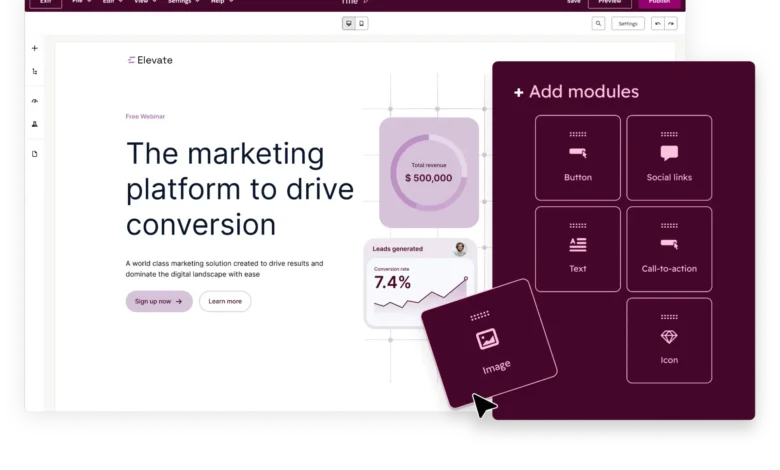
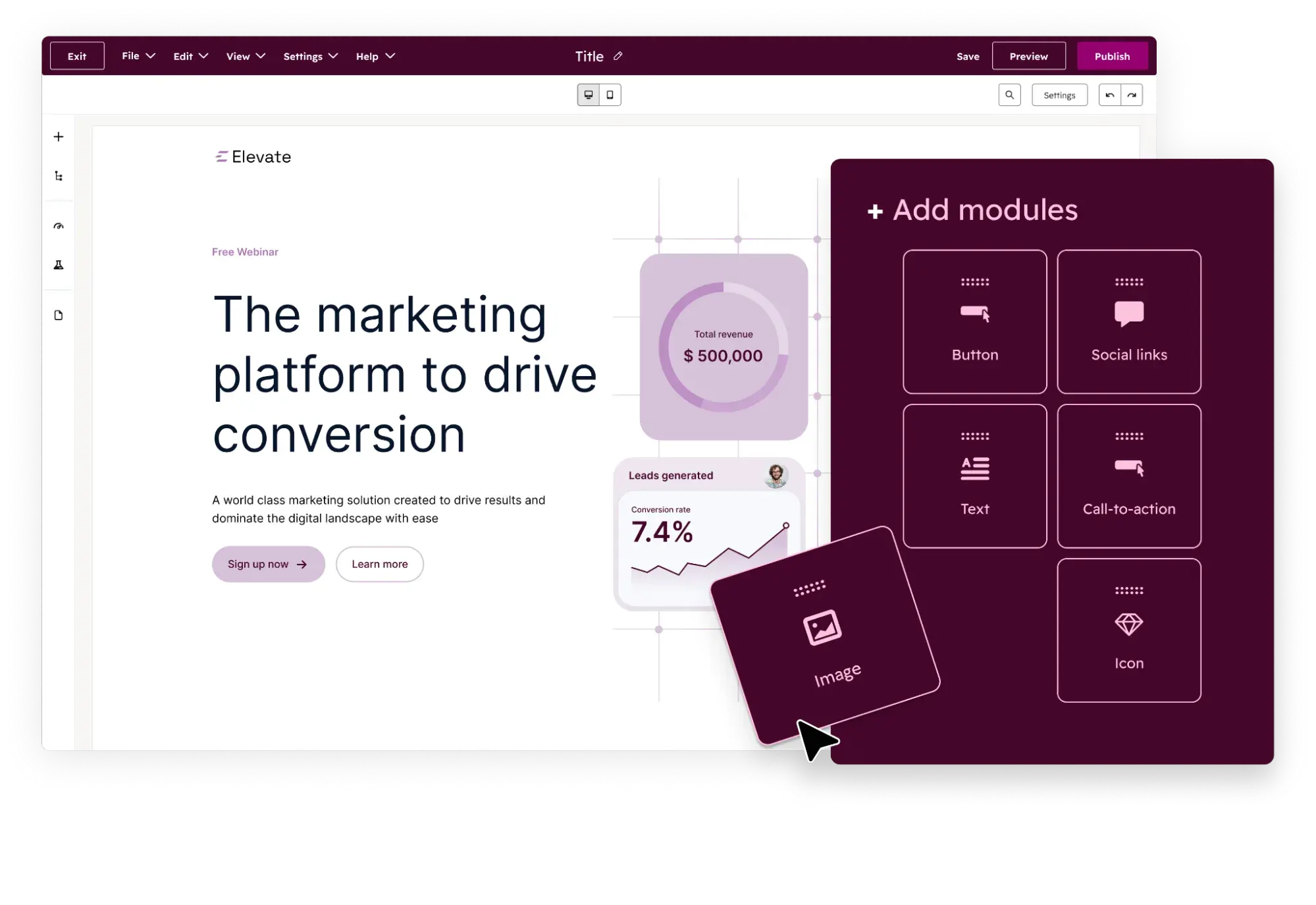
HubSpot Content Hub + Sales Hub + Smart CRM: HubSpot offers a uniquely integrated approach to sales content management, distinguishing itself by running content creation, distribution, tracking, and CRM reporting all on a single platform with a unified data model. This native integration eliminates the sync latency and data discrepancies often encountered when running separate content and CRM systems. Content Hub provides marketing and enablement teams with a user-friendly drag-and-drop environment, complete with AI-powered writing assistance, for creating and managing a diverse range of assets from blog posts to gated content. Sales Hub then facilitates personalized outreach, real-time email engagement tracking, and multi-channel automation. HubSpot’s AI system, Breeze, operates across all Hubs and the Smart CRM, offering capabilities like AI agents for drafting content, researching prospects, and enriching CRM data, directly linking AI-generated outreach to CRM-tracked content performance. This integrated architecture ensures that attribution is genuinely native, rather than inferred from synced data.
- Key Features: Unified content creation, distribution, and CRM reporting; Breeze AI for content, prospecting, and data enrichment; Real-time email tracking with automatic CRM logging; Free CRM edition with scalable paid plans; Extensive sales automation connecting content to deal progression.
- Best for: Overall CRM-native content management for mid-market to growing enterprise.
-
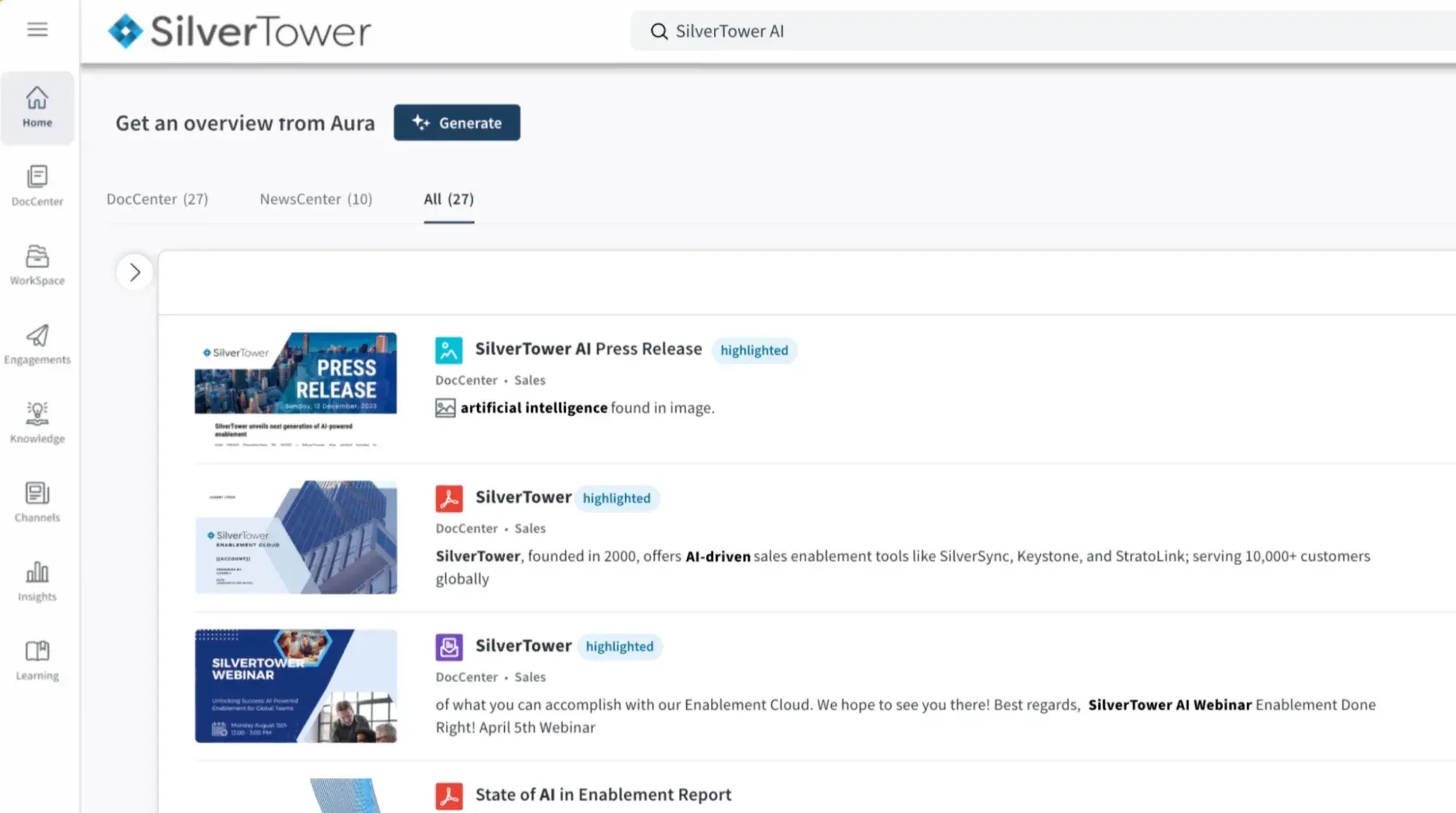
Seismic: As the long-standing category leader in enterprise sales enablement, Seismic’s core strength lies in its advanced content automation and governance capabilities, designed for large, complex organizations managing thousands of assets across multiple business units, regions, and stringent compliance frameworks. Its LiveDocs feature dynamically assembles personalized content using CRM data, significantly reducing manual customization and ensuring brand consistency at scale. The Aura AI engine powers content recommendations, intelligent search, and comprehensive analytics. Seismic integrates with major CRMs including Salesforce, HubSpot, and Microsoft Dynamics. The pending merger with Highspot is expected to further solidify its position in the enterprise market.
- Key Features: Advanced content automation and personalization (LiveDocs); Robust content governance with granular controls; AI-powered recommendations and search (Aura AI); Deep CRM integration for reporting and workflows.
- Best for: Enterprise content governance and automation at scale.
-
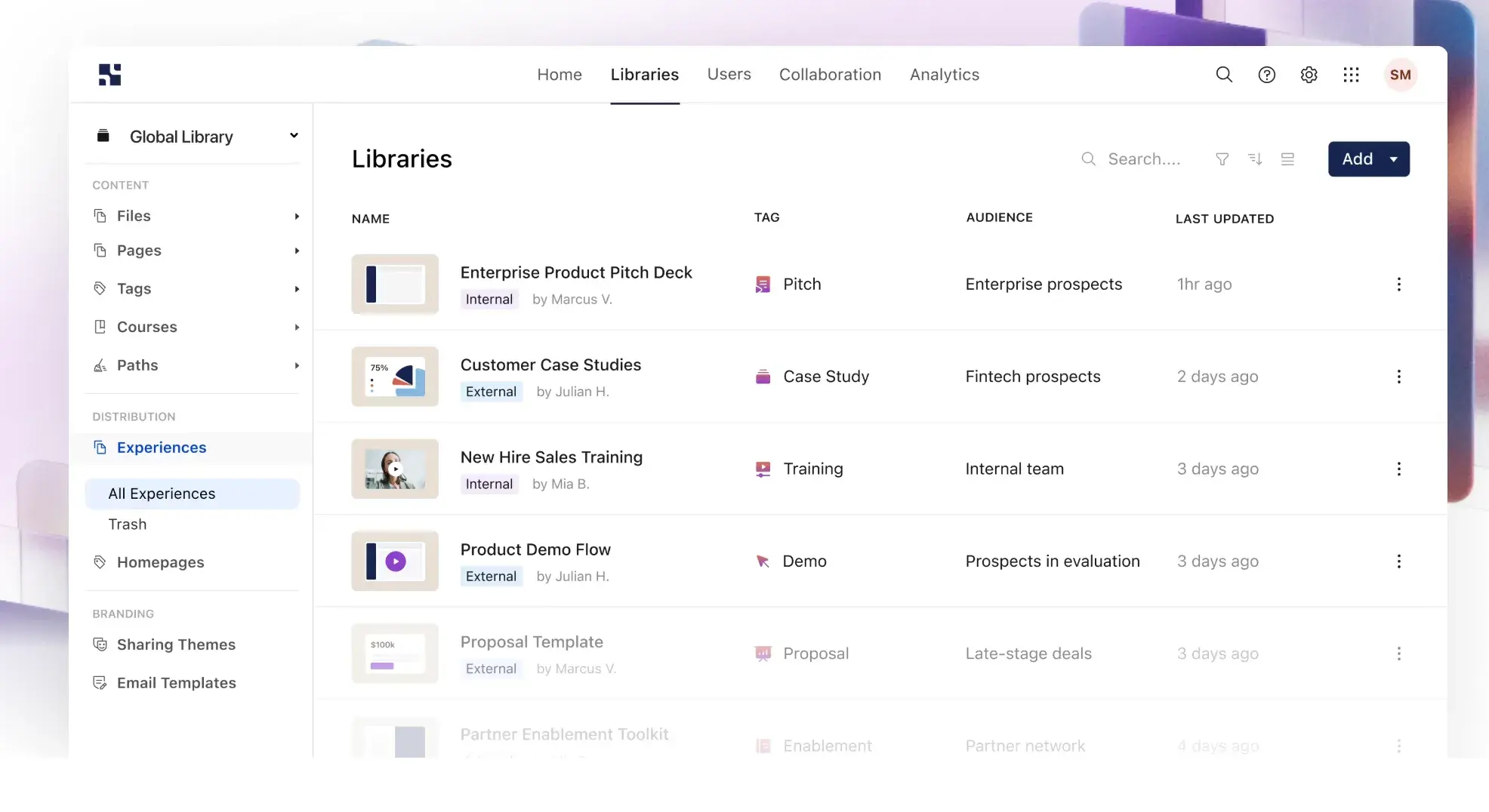
Highspot: Prior to its announced merger with Seismic, Highspot was highly regarded for its intuitive, seller-first interface, which led to high adoption rates among sales teams. It was recognized as a Customers’ Choice in Gartner’s 2025 Peer Insights for Revenue Enablement Platforms. Highspot’s AI-powered search utilizes natural language processing, allowing sales reps to describe their content needs rather than navigating complex folder structures. Content is intelligently organized into "Spots," which are curated collections by topic, persona, or deal stage, facilitating rapid content discovery even for new sellers. Its robust analytics provide insights into content performance and seller engagement.
- Key Features: Intuitive, seller-first interface; AI-powered natural language search; Curated content collections ("Spots"); Strong content performance analytics; Deep CRM integration.
- Best for: Seller adoption and intuitive content discovery.
-
Showpad: Showpad differentiates itself by bridging content management with comprehensive sales coaching functionalities within a single platform. Following its merger with Bigtincan in late 2025 under Vector Capital, it combines powerful content management with advanced training and coaching capabilities. Showpad’s platform allows managers to gain granular insights, connecting content usage to coaching outcomes and identifying correlations between skill gaps and content adoption rates. This integrated approach helps ensure that sellers not only have the right content but also possess the skills to effectively utilize it.
- Key Features: Integrated content management and sales coaching; Comprehensive training and readiness features; Advanced content analytics and usage insights; Personalized content delivery.
- Best for: Mid-market and enterprise teams seeking to combine content and coaching for holistic enablement.
-
SalesHood: SalesHood adopts an AI-first philosophy towards revenue enablement, offering a unified system that integrates content management with training, digital sales rooms, and mutual action plans. Unlike many legacy platforms that have grown through acquisition, SalesHood was built from the ground up as a cohesive enablement system. A notable feature is its AI content audit, which automatically identifies stale or underused content and recommends updates, a significant time-saver for teams with limited enablement staff. Its focus on a unified, AI-native platform makes it particularly appealing for agile mid-market and growth-stage B2B sales teams.
- Key Features: AI-first unified enablement platform; Integrated content management, training, and digital sales rooms; AI content audit and update recommendations; Mutual action plan functionality.
- Best for: Mid-market and growth-stage B2B sales teams prioritizing an AI-native, unified platform without enterprise complexity.
Implementing and Sustaining a Sales Content Management Platform
The successful implementation of an SCMP goes beyond mere software procurement; it requires a strategic approach to migration, governance, and ongoing adoption.
- Migration Timelines: Migration durations vary significantly based on platform complexity, the volume of existing content, and specific integration requirements. For teams transitioning from basic shared drives, lightweight platforms like HubSpot or SalesHood can often be operational within one to three weeks. Conversely, enterprise-grade platforms such as Seismic may necessitate four or more months for full implementation, especially when extensive customization, complex data migration, and deep CRM integrations are involved. A crucial factor in accelerating deployment and ensuring higher adoption rates is conducting a thorough content audit and organization process before migration.
- Effective Governance Roles: Sustaining a current and effective content library demands clearly defined governance roles. These typically include:
- Content Owners: Responsible for the accuracy, relevance, and lifecycle of specific content assets.
- Content Approvers: Review and authorize content for publication, ensuring it meets brand, legal, and strategic guidelines.
- Compliance Reviewers: Critical in regulated industries, ensuring all content adheres to relevant legal and industry standards.
- Enablement Admins: Manage the platform itself, including user permissions, content organization, and overall system health.
In smaller organizations, individuals may wear multiple hats, but the distinct functions remain essential to prevent bottlenecks and ensure accountability.
- Connecting Analytics to Revenue: The direct link between content analytics and revenue hinges on the depth of CRM integration. Platforms that automatically log content engagement events—such as opens, views, time spent, and shares—directly into CRM deal records create a clear attribution chain. This allows sales teams to filter reports by deal stage, content type, and outcome, providing irrefutable evidence of which assets genuinely influence revenue. HubSpot’s native architecture, where content activity, email engagement, and deal data reside in a single database, makes this connection seamless. Third-party platforms achieve this through robust CRM integrations, though organizations must be vigilant about potential sync latency and data mapping complexities.
Conclusion: The Platform as a Strategic Enabler
In the dynamic sales landscape of 2026, a sales content management platform is no longer merely a tool but a foundational system that directly dictates whether content investments yield tangible pipeline impact. The most effective platforms centralize robust content governance, establish a clear link between engagement analytics and CRM-tracked revenue, and leverage advanced AI to enhance both content findability and personalization at scale. With the enterprise enablement market undergoing significant consolidation, the choice of platform carries long-term implications for product stability, innovation, and roadmap continuity.
HubSpot’s integrated ecosystem—comprising Content Hub, Sales Hub, and Smart CRM—offers a uniquely unified approach. By bringing content creation, seller distribution, engagement tracking, and revenue attribution onto a single data layer, seamlessly augmented by AI through Breeze, it provides an efficient and powerful path to measurable results for teams seeking CRM-native content management without the complexities of integrating disparate systems.
Ultimately, the efficacy of any sales technology hinges on its adoption by sellers. The most impactful content management platform is one that integrates organically into the daily workflow of sales professionals, enhancing their productivity and effectiveness without introducing unnecessary friction. Organizations evaluating platforms today should commence by analyzing their current seller workflows, then select a platform that strengthens these processes, ensuring that content, outreach, and deal data are harmonized to empower sales teams to punch above their weight and consistently drive revenue growth.
Related posts: