The Strategic Shift from Patchwork HR to Professional Employer Organizations: A Guide to Scalable Growth

For many small and mid-sized businesses (SMBs), the transition from a startup to a mature enterprise is marked by a sudden, often painful, realization: the administrative infrastructure that worked for ten employees is fundamentally broken by the time the headcount reaches fifty. As organizations expand, they inevitably encounter the "complexity wall"—a threshold where the burden of regulatory compliance, tax filings, and benefits administration shifts from a manageable task to a primary drain on executive bandwidth. This evolution often forces leadership to decide between hiring an expansive internal HR team or partnering with a Professional Employer Organization (PEO) to achieve economies of scale.
The traditional "patchwork" approach—where businesses attempt to manage human resources through a disconnected ecosystem of payroll software, independent benefits brokers, and manual spreadsheets—is increasingly viewed as a high-risk liability. As a company scales, the costs associated with regulatory missteps, payroll errors, and an uncompetitive benefits package grow exponentially. For firms operating across state lines, the challenge is compounded by a shifting landscape of leave requirements, tax codes, and jurisdictional filing deadlines that require constant, specialized monitoring.
The Evolution of HR Outsourcing Models
Understanding the landscape of HR service providers is critical for modern business leaders. The market has matured into four distinct models, each catering to different operational needs and risk tolerances.
- Professional Employer Organizations (PEO): Under a co-employment model, the PEO assumes responsibility for a wide range of HR functions, including payroll, tax filings, and workers’ compensation. By pooling employees from thousands of client companies, PEOs can offer benefits packages—such as high-quality health insurance and 401(k) plans—that are typically reserved for large-scale corporations.
- Administrative Services Organizations (ASO): ASO providers offer administrative support without the co-employment arrangement. This model allows a business to retain full control over its HR policies and benefit plans while outsourcing the heavy lifting of payroll processing and compliance administration.
- Strategic HR Outsourcing (SHRO): This model is designed for organizations that require high-level HR consulting rather than just tactical administration. SHRO providers often assist with organizational development, talent management strategies, and high-level leadership coaching.
- Software-as-a-Service (SaaS): Pure-play HR software provides the tools necessary for internal teams to manage their own human capital. While cost-effective, this model places the entirety of the compliance burden and administrative workload back on the business’s internal staff.
The financial variance between these models is significant, with costs ranging from as little as $1 per employee per month for basic software access to upwards of $250 per employee per month for comprehensive, full-service PEO partnerships. The choice between these models often hinges on a firm’s growth trajectory, budget, and the degree to which leadership wishes to maintain internal control over the employee experience.
Quantifying the Return on Investment
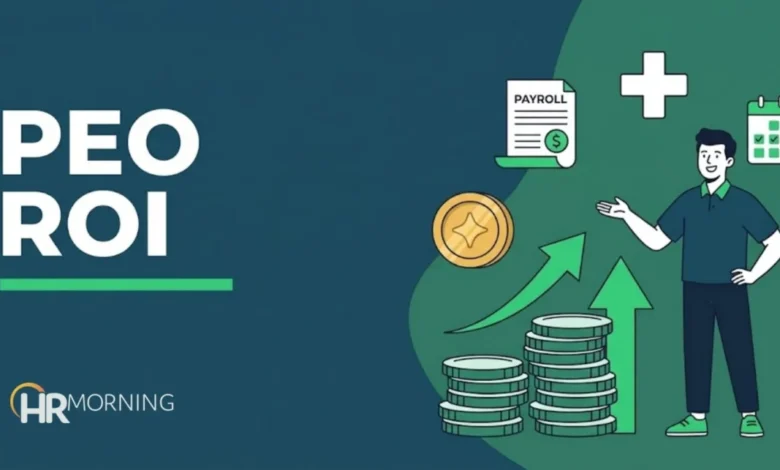
To assist organizations in navigating these choices, Forrester Consulting recently conducted a commissioned Total Economic Impact (TEI) study centered on the use of TriNet’s PEO services. The study utilized a composite organization model—based on interviews with existing TriNet customers—to project the financial and operational outcomes of transitioning from a fragmented, in-house HR setup to a unified PEO model over a three-year period.
The findings underscore a significant shift in resource allocation. By offloading administrative burdens, the composite organization saw a marked increase in the time reclaimed by internal leaders, allowing them to pivot toward revenue-generating activities. Furthermore, the study highlighted the mitigation of compliance risks. For businesses operating in multiple jurisdictions, the cost of a single payroll tax error or a missed compliance filing can reach tens of thousands of dollars in penalties and legal fees. By centralizing these functions within a PEO, organizations effectively transfer a significant portion of this liability.
Beyond the immediate administrative savings, the study identified the "benefits multiplier" as a key driver of ROI. By leveraging the PEO’s larger risk pool, SMBs can offer health, dental, and retirement benefits that are competitive with those of industry giants. In the current labor market, where employee retention is heavily tied to the quality of benefits, this capability provides a distinct recruiting advantage that is difficult for smaller firms to replicate independently.
Navigating the Internal Business Case
For HR leaders tasked with securing executive buy-in, the argument for a PEO transition must be framed in terms of business outcomes rather than HR utility. CFOs and CEOs are rarely moved by the promise of "streamlined paperwork"; however, they are highly responsive to arguments regarding the reduction of operational risk, the scalability of the organization, and the conversion of fixed HR overhead into a predictable, variable cost.
Building the business case requires a clear articulation of the "cost of inaction." This includes calculating the internal labor hours currently dedicated to manual payroll and compliance, estimating the potential cost of regulatory fines in the next two years, and evaluating the turnover rate that could be mitigated by a more robust benefits package. By presenting these figures, HR leaders can transform the PEO conversation from a debate over vendor fees into a strategic investment in the company’s infrastructure.
The Broader Impact of Modernized HR
The shift toward PEOs is part of a larger trend of "operational virtualization" among SMBs. As the regulatory environment becomes more complex, the ability to focus on core competencies—the products and services that generate profit—becomes the ultimate competitive advantage. When a company spends its limited time navigating the nuances of state-specific employment law, it is not iterating on its product or improving its customer service.
Furthermore, the integration of technology into the PEO model has created a more transparent environment for business owners. Modern platforms allow for real-time reporting on payroll expenses, compliance status, and benefits utilization, providing executives with a single source of truth that was previously impossible to achieve with a spreadsheet-based system.
Strategic Due Diligence: A Framework for Evaluation
Before committing to any HR partner, businesses should engage in a rigorous due diligence process. The following questions are essential for leaders evaluating potential providers:
- Scalability: How will the services provided evolve as the company grows from 50 to 500 employees?
- Compliance Expertise: Does the provider have dedicated teams that specialize in the specific labor laws of the states where we currently operate and plan to expand?
- Integration Capabilities: How seamlessly does the provider’s technology stack integrate with our existing accounting, time-tracking, and performance management software?
- Risk Sharing: What is the exact nature of the liability protection provided under the service agreement?
As businesses continue to navigate an unpredictable economic landscape, the decision to modernize the HR function is no longer just a matter of convenience; it is a fundamental element of risk management. Whether through an ASO, a PEO, or specialized SHRO support, the objective is to create a foundation that supports growth rather than hindering it. By replacing the "patchwork" of the past with a unified, professionalized approach, SMBs are finding that they can punch above their weight, providing their employees with the support they deserve while keeping the focus firmly on their mission-critical objectives.
In conclusion, while the transition to a PEO involves a shift in how a business operates, the long-term benefits—measured in reclaimed time, reduced liability, and superior employee retention—present a compelling case for growth-minded organizations. For those at the threshold of this decision, the focus should remain on the long-term sustainability of the HR infrastructure and the clear, measurable ROI that a professional partner can provide.