The Second Circuit Ruling on the Ending Forced Arbitration of Sexual Assault and Sexual Harassment Act and its Broad Impact on Employment Litigation

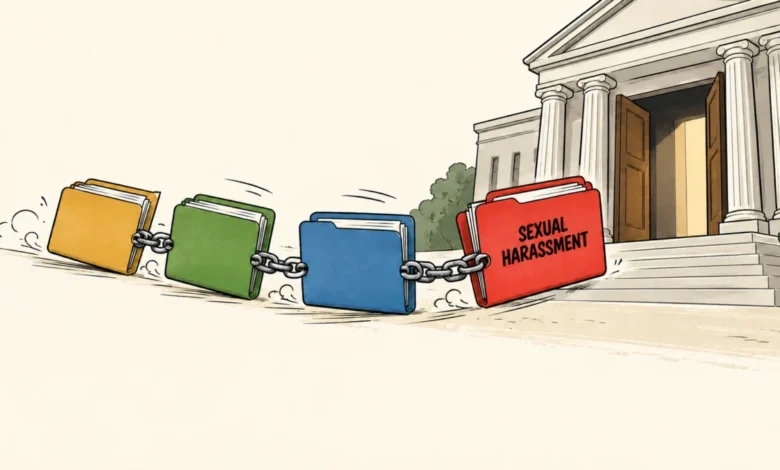
The landscape of employment litigation has undergone a significant shift as the United States Court of Appeals for the Second Circuit recently affirmed a ruling that reinforces the expansive reach of the Ending Forced Arbitration of Sexual Assault and Sexual Harassment Act (EFAA). By aligning with the Sixth and Ninth Circuits, the Second Circuit has effectively established a growing appellate consensus: when an employee invokes the EFAA to bring a sexual harassment claim into a public court, the entire "case"—including ancillary non-harassment claims such as contractual disputes or wage issues—must be litigated in that same forum. This decision serves as a critical warning for employers who rely on broad arbitration agreements as a shield against public courtroom exposure.
Chronology of the Dispute
The legal battle originated from a complex set of circumstances involving an employee at a law firm who also served as a key figure in an affiliated legal technology startup. According to the court records, the employee’s compensation package was heavily weighted with equity, specifically stock options representing roughly 10% of the affiliated company’s shares.
The timeline of the dispute is as follows:
- August 2023: The employee’s stock options fully vested, granting her a significant financial stake in the venture.
- Late 2023: The employee formally notified the firm of her intention to exercise these options.
- Weeks later: Following her written request, the firm terminated her employment. The firm contended that the firing was for "cause," a characterization that, if upheld, would effectively void her stock options.
- Litigation Phase: Upon her termination, the employee filed suit. Her complaint was multifaceted, alleging not only the wrongful denial of her stock options—a claim for conversion—but also severe sexual harassment. She alleged that she was pressured to flirt with prospective clients and pursue romantic relationships to benefit the firm’s bottom line.
- Trial Court Action: The initial trial court dismissed several peripheral claims but allowed the sexual harassment and conversion claims to proceed. When the employer attempted to compel arbitration for the conversion claim, the court denied the motion, leading to the Second Circuit appeal.
Understanding the EFAA Framework
The Ending Forced Arbitration of Sexual Assault and Sexual Harassment Act, signed into law in March 2022, was designed to provide employees with the autonomy to choose between arbitration and a judicial forum when dealing with claims of sexual misconduct. Prior to the EFAA, many employment contracts included mandatory arbitration clauses that forced these sensitive matters into private proceedings, which critics argued shielded perpetrators and silenced victims.
The statute specifies that no predispute arbitration agreement or joint-action waiver shall be valid or enforceable with respect to a "case" which is filed under Federal, Tribal, or State law and relates to the sexual assault dispute or the sexual harassment dispute. The crux of the recent appellate litigation centered on the interpretation of the word "case."
Employers argued that the term should be interpreted narrowly, applying only to the specific claims of harassment. However, the appellate courts have consistently rejected this, noting that Congress’s use of the word "case" refers to the entire civil action. Consequently, if a complaint contains a valid sexual harassment claim, the EFAA effectively "infects" the entire lawsuit, pulling related claims—even those unrelated to the harassment—out of the scope of mandatory arbitration.
Supporting Data and Legal Precedent
This recent Second Circuit decision is not an isolated event; it represents a strengthening of a judicial trend. The appellate court’s alignment with the Sixth and Ninth Circuits creates a high level of uniformity across major jurisdictions.

Data from the American Arbitration Association (AAA) and various legal research firms indicate that the volume of employment arbitration has increased by approximately 20% over the last decade, particularly in the tech and legal sectors. However, the EFAA has acted as a significant legislative check on this trend. Legal scholars note that the "case-wide" interpretation adopted by these three circuits creates a high barrier for employers attempting to bifurcate litigation. If an employer faces a lawsuit containing even one viable sexual harassment claim, they must prepare for a public trial on all counts, including breach of contract, discrimination, or, in this case, the conversion of equity assets.
Implications for Employer Strategy
The decision carries profound implications for human resources departments and corporate legal counsel. Employers can no longer assume that a "severability" clause in an employment contract will protect them from having to litigate business-related disputes in a public forum once a harassment claim is attached to the filing.
1. Financial Exposure Beyond Damages
The inclusion of a conversion claim—which involved stock options valued at over $1 million—illustrates that the financial risks are not limited to the harassment claim itself. Employers must now treat every employment-related lawsuit as a potential public trial, meaning they must account for the costs of discovery, public filings, and the potential for reputational damage associated with a public court setting.
2. The Necessity of Early Case Assessment
The court’s decision highlights the importance of the initial evaluation phase. Employers often rush to file a motion to compel arbitration as a default procedural move. However, if the plaintiff has a credible sexual harassment claim, such a motion may be a futile expenditure of legal fees. Counsel should now conduct a "EFAA audit" of every complaint to determine if the presence of a harassment claim makes a motion to compel arbitration legally untenable.
3. Strategic Considerations in Settlement
The "all-or-nothing" nature of these proceedings shifts the leverage in settlement negotiations. Because employers are now faced with the prospect of litigating non-harassment claims in court—where discovery is broader and more public—they may be forced to settle cases earlier and at higher price points to avoid the risks associated with public testimony and document disclosure.
Looking Ahead: Unresolved Questions
While the Second, Sixth, and Ninth Circuits have established a clear path regarding the "case-wide" application of the EFAA, several areas of uncertainty remain. The courts have yet to provide a definitive standard for how much factual detail is required in a harassment claim to trigger the EFAA’s protections. Furthermore, the application of this ruling to complex class-action or collective-action lawsuits remains a subject of intense debate.
If a single class member in a collective action alleges sexual harassment, does the entire class action move to court? The courts have left this question open for future litigation, but the current trajectory suggests that the judiciary is prioritizing the legislative intent of the EFAA—giving victims a path to the courtroom—over the enforcement of private arbitration agreements.
For corporations, the era of "forced arbitration" as a catch-all solution for employee disputes is waning. The legal environment now demands a more nuanced approach to personnel management, one that recognizes that public accountability is increasingly becoming the default, not the exception, when sexual harassment allegations are brought to the fore. Legal departments are advised to review their standard arbitration language and, more importantly, to strengthen internal investigation procedures to address harassment claims at the earliest possible stage, before they escalate into the kind of high-stakes, multi-claim litigation seen in this recent precedent.