Bridging the HR and Finance Divide Strategic People Investment in the Modern Workforce

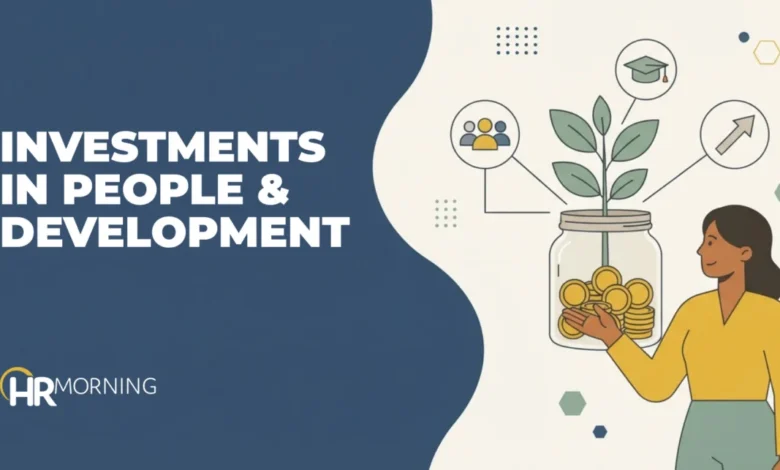
The tension between Human Resources (HR) and Finance departments has long been a defining feature of corporate management, characterized by a fundamental disagreement over the value of human capital versus the necessity of fiscal restraint. Historically, HR departments have advocated for increased spending on employee benefits, training, and development, while Finance departments, led by Chief Financial Officers (CFOs), have prioritized cost-cutting and bottom-line efficiency. However, a significant shift is currently underway as organizations grapple with unprecedented challenges, including the rapid adoption of generative artificial intelligence (AI), widespread manager burnout, and chronic employee disengagement. In this evolving landscape, the traditional "tug-of-war" is being replaced by a necessary alliance, where people strategies are increasingly viewed through the lens of strategic business investment rather than mere overhead.
The urgency of this alignment is underscored by the current state of global workforce performance. Recent data from BetterUp, derived from an analysis of behavioral patterns among 410,000 employees, reveals a concerning trend: work performance has declined between 2% and 6% since 2019. This decline, though seemingly small in percentage points, translates to a staggering $2.2 trillion in lost performance over the last five years. For organizations seeking to recover this lost value, the solution lies not in further cost-cutting, but in the strategic restoration of workforce capabilities. Jolen Anderson, Chief People and Community Officer at BetterUp, emphasizes that workforce development in the modern era is no longer just about teaching technical skills; it is about fostering the purpose and growth mindset necessary to drive sustained business performance.
The Economic Reality of Workforce Disengagement
To understand why the HR-Finance relationship is changing, one must look at the economic consequences of a disengaged workforce. The $2.2 trillion loss identified by researchers is not merely a theoretical figure; it manifests in increased turnover costs, lower innovation rates, and decreased operational efficiency. In the past, Finance leaders might have viewed a 5% drop in performance as a fluctuating market variable. Today, however, the "Great Exhaustion"—a term used to describe the cumulative effect of the pandemic, economic volatility, and the relentless pace of digital transformation—has made performance stability a top-tier financial risk.
CFOs are increasingly recognizing that the "human element" is the primary driver of volatility. High turnover, for instance, carries a direct financial burden that far exceeds the salary of the departing employee. Industry estimates suggest that replacing a mid-level manager can cost an organization up to 150% of that individual’s annual salary when accounting for recruitment, onboarding, and the loss of institutional knowledge. By framing people investments as a method to mitigate these specific financial risks, HR leaders are finding a more receptive audience in the Finance department.
Shifting the Narrative from Expense to Investment
For HR professionals to successfully secure backing for people-centric initiatives, they must adopt the language of the boardroom. This requires moving away from qualitative arguments about "employee happiness" toward quantitative arguments about "business outcomes." Jolen Anderson suggests that the most effective way to bridge the gap is to tie workforce development directly to solving tangible business challenges.
When an HR leader proposes a new training program, the immediate question from Finance is often, "What is the cost?" To change the dynamic, the proposal must instead answer, "What is the return?" For example, if an organization is struggling with a 15% turnover rate in its sales department, a development program should be presented as a strategy to reduce that turnover to 10%, thereby saving the company a specific, calculated amount in recruitment and lost productivity costs. This shift in perspective transforms the program from a line-item expense into a strategic asset.
Strategic Pillar 1 Focusing on Measurable Business Challenges
The first step in aligning HR and Finance is to identify the most pressing challenges facing the organization. In the current climate, these often include productivity gaps, the need for AI integration, and leadership pipelines. HR leaders must prioritize their development ideas based on their potential to move the needle on these specific issues.
The focus should remain on behavior change rather than participation rates. Traditionally, HR might have reported on the percentage of employees who completed a mandatory training course. However, a CFO is less interested in completion rates and more interested in whether those employees are now performing their jobs more efficiently or staying with the company longer. "The question isn’t whether employees completed a course, but whether the organization can measure meaningful behavior change and connect that change to progress against its business objective," Anderson notes.
Strategic Pillar 2 Utilizing the Right Financial Metrics
Finance departments rely on data to make decisions, but not all data is created equal. To win over a CFO, HR must utilize metrics that reflect actual business performance. Key indicators that resonate with Finance include:
- Internal Mobility: The rate at which employees move into new roles within the company. High internal mobility reduces the cost of external hiring and indicates a healthy pipeline of talent.
- Speed to Proficiency: The time it takes for a new hire or an employee in a new role to reach full productivity. Reducing this time has a direct impact on the bottom line.
- Retention of High Potentials: Tracking the turnover rate among the organization’s most valuable contributors, whose departure would cause the most significant financial and operational disruption.
- Leadership Readiness: The percentage of internal candidates ready to step into critical leadership roles, which mitigates the risk associated with executive turnover.
By presenting a data-driven case that utilizes these metrics, HR can demonstrate that they are managing the workforce with the same level of fiscal rigor that Finance applies to other capital investments.
Strategic Pillar 3 Early Collaboration and Shared Ownership
One of the most common mistakes in corporate strategy is the "siloed" approach, where HR develops a plan in isolation and then presents it to Finance for approval. This often leads to immediate rejection or significant scaling back. To avoid this, HR leaders should involve the CFO from the earliest stages of strategy development.
Early involvement allows the Finance team to provide insights into broader business priorities and help identify where stronger leadership or technical capabilities could create the most value. This collaborative approach fosters a sense of shared ownership. When the CFO helps define the expected outcomes and accountability measures for a people initiative, they are much more likely to support the funding required to execute it. This transition from "HR initiative" to "business strategy" is essential for long-term success.
The Role of AI and the Skills-First Economy
The rapid rise of AI has added a new layer of complexity—and opportunity—to the HR-Finance relationship. Organizations are currently facing a "skills gap" where the existing workforce may not have the technical literacy required to leverage new technologies effectively. This has created a "buy vs. build" dilemma: should the company hire new talent with AI skills at a premium, or invest in reskilling the current workforce?
From a financial perspective, "building" talent is often more cost-effective than "buying" it in a hyper-competitive market. However, this requires a significant upfront investment in learning and development. By working together, HR and Finance can conduct a cost-benefit analysis of reskilling programs versus external recruitment. This analysis can help the organization navigate the technological transition without compromising its financial stability.
Chronology of the Shifting HR-Finance Dynamic
The evolution of the relationship between these two departments can be viewed through a three-stage timeline:
- The Administrative Era (Pre-2000s): HR was largely seen as a personnel and administrative function. Finance viewed HR as a cost center responsible for payroll and compliance, with little involvement in strategic planning.
- The Strategic HR Era (2000-2019): The concept of "Human Capital Management" gained traction. HR began to take a seat at the table, but the departments still often operated with different objectives—HR focused on culture and Finance on quarterly earnings.
- The Integrated Alignment Era (2020-Present): Global disruptions forced a realization that business resilience is inextricably linked to workforce well-being and agility. The CHRO and CFO relationship has become one of the most critical partnerships in the C-suite.
Broader Implications for Organizational Resilience
The long-term impact of a successful HR-Finance alignment extends beyond immediate financial gains. Organizations that master this collaboration are better positioned to handle future market volatility. When people investments are treated as strategic assets, the workforce becomes more adaptable, engaged, and capable of driving innovation.
Furthermore, this alignment has a significant impact on employer branding. In a labor market where top talent prioritizes professional development and organizational purpose, companies that can demonstrate a sustained commitment to workforce growth have a competitive advantage. This, in turn, further reduces recruitment costs and enhances the company’s market value.
Ultimately, the goal is to create a workforce that is not just a cost to be managed, but a source of value to be maximized. As Jolen Anderson concludes, shared ownership between HR and Finance leads to better decisions, stronger alignment, and a workforce that is better prepared to support the organization’s long-term goals. In the modern economy, the companies that thrive will be those that recognize their people are their most significant—and most manageable—investment.
Related posts: