Fifth Circuit Reverses Summary Judgment in Racial Hostile Work Environment Case Citing Flawed Employer Investigation

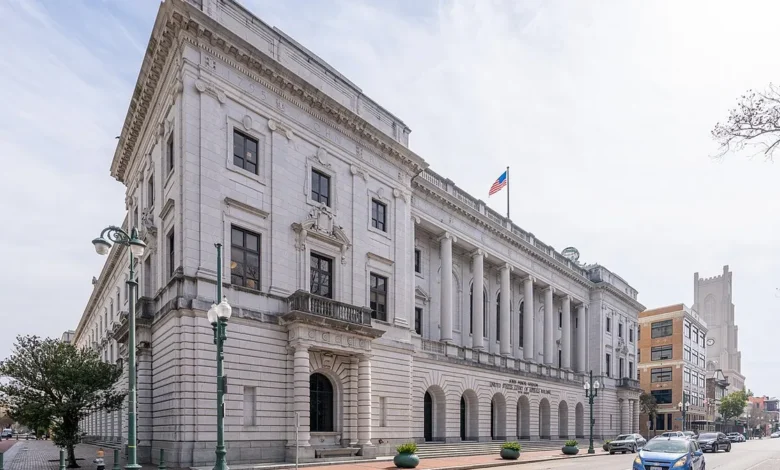
In a significant ruling for employment law and workplace civil rights, the 5th U.S. Circuit Court of Appeals has reversed a lower court’s grant of summary judgment in a racial hostile work environment lawsuit against Corpus Christi Medical Center (CCMC) and the Bay Area Healthcare Group. The appellate court’s decision, handed down in July 2026, centers on the finding that the employer’s internal investigation into allegations of racial harassment was "insufficiently prompt and thorough," thereby precluding the dismissal of the case before it could reach a jury.
The ruling underscores a critical standard for employers: simply initiating an investigation is not enough to shield a company from liability under Title VII of the Civil Rights Act of 1964. If the investigation is deemed perfunctory, lacks proper documentation, or fails to stop the conduct in question, the employer remains vulnerable to litigation. This case highlights the necessity of rigorous internal protocols and the potential legal consequences when management dismisses systemic cultural issues, such as "cliques," as unchangeable.
Background of the Litigation
The plaintiff, a Black nurse employed by CCMC, filed suit alleging that she was subjected to a persistent and severe hostile work environment based on her race. According to court documents and deposition testimony, the plaintiff was subjected to racial slurs, exclusionary behavior, and a generally abusive atmosphere. The plaintiff asserted that these experiences caused her to feel "less than human" and raised fundamental questions about her ability to continue functioning in the professional healthcare environment.
To support her claims, the plaintiff provided a robust evidentiary record, including her own deposition and corroborating testimony from a Black co-worker who had witnessed and experienced similar treatment. The evidence also included internal emails documenting specific harassing incidents. Beyond testimony, the plaintiff produced counseling records that detailed the psychological toll of the workplace environment. These records indicated that she suffered from significant distress, trauma, and a persistent fear of harm, all of which she claimed directly impaired her work performance.
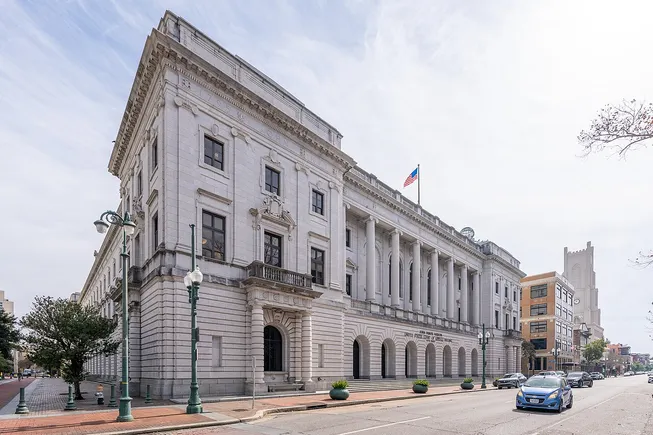
The U.S. District Court originally granted summary judgment in favor of the employer, effectively ending the case before trial. The lower court had concluded that the employer had taken sufficient corrective action to insulate itself from liability. However, the 5th Circuit’s reversal sends the case back to the trial level, signaling that the adequacy of an employer’s response is a question of fact that often requires a jury’s determination.
The Flaws in the Internal Investigation
Under established federal workplace civil rights laws, an employer can be held liable for harassment perpetrated by co-workers if the employer knew—or should have known—about the conduct and failed to take prompt and effective corrective action. In this instance, CCMC argued that it had met its legal obligations by conducting interviews with the accused parties and "coaching" the nurses involved. The medical center also pointed to an offer it made to transfer the plaintiff to a different department as evidence of a good-faith effort to resolve the conflict.
The 5th Circuit, however, found several "discrepancies" in the employer’s account of its investigation. A major point of contention was the employer’s failure to produce an actual investigation file or contemporaneous notes during the discovery phase of the lawsuit. The lack of a paper trail cast doubt on the thoroughness of the interviews CCMC claimed to have conducted.
Furthermore, the plaintiff provided evidence that the managers tasked with the investigation were dismissive of the underlying issues. She alleged that during the process, management told her that the "cliques" responsible for the exclusionary environment "were not going anywhere." Perhaps most damaging to the employer’s defense was the plaintiff’s allegation that the harassment did not cease after the investigation concluded, suggesting that the "coaching" provided to the offending staff was ineffective.
The Legal Weight of Secondhand Harassment
A notable aspect of the 5th Circuit’s decision is its emphasis on "secondhand harassment." The court noted that the harassment the plaintiff observed her Black co-worker experiencing was relevant to her own claim. Citing prior precedent, the court stated that witnessing the discriminatory treatment of others in one’s protected group "weighs in [the plaintiff’s] favor when assessing the totality of the circumstances."

This reinforces a growing judicial consensus that a hostile work environment is not merely the sum of individual comments directed at a single person, but the overall atmosphere of the workplace. When an employee sees their peers being targeted with racial epithets or discriminatory behavior, it contributes to a pervasive sense of hostility that can support a Title VII claim, even if the employee was not the direct target of every specific incident.
Broader Judicial Trends and Precedents
The 5th Circuit’s ruling aligns with recent decisions from other appellate courts across the United States, indicating a more stringent judicial eye toward how employers handle harassment.
- The 9th Circuit Precedent (2019): The court referenced a 2019 decision where the 9th Circuit held that a manager’s use of just four racial slurs over a one-year period could be sufficient to establish a hostile work environment. This moved the needle away from the idea that harassment must be "constant" to be "pervasive."
- The 10th Circuit and Walmart (2026): Just one week prior to the CCMC ruling, the 10th Circuit revived a hostile work environment case against Walmart involving anti-gay harassment. In that case, the court similarly held that multiple discriminatory acts, when viewed together, plausibly alleged an abusive environment that a lower court should not have dismissed.
These cases collectively suggest that the "severe or pervasive" threshold for hostile work environment claims is being interpreted in a way that gives plaintiffs more opportunities to present their cases to a jury, particularly when the employer’s response is seen as a "sham" or a mere formality.
Implications for Human Resources and Corporate Governance
The 5th Circuit’s decision serves as a cautionary tale for Human Resources (HR) departments and corporate legal counsel. The "adequacy" of an investigation is now being measured by its results and its documentation, not just its initiation.
The Danger of the "Clique" Defense
Management’s alleged comment that "cliques were not going anywhere" is a primary example of what not to do during an internal investigation. From a legal standpoint, such statements can be interpreted as an admission that the employer is unwilling to correct a known hostile culture. Employers are expected to actively manage and dismantle subcultures that foster discrimination, rather than accepting them as static elements of the workplace.

The Critical Importance of Documentation
The fact that CCMC could not produce an investigation file or notes during discovery was a significant factor in the court’s decision. For HR professionals, this highlights that an investigation that is not documented is, in the eyes of the court, an investigation that may not have happened. Contemporaneous notes, interview summaries, and clear records of disciplinary actions are essential for a successful defense.
The Failure of Transfers as a Remedy
While CCMC offered to transfer the plaintiff, the court did not view this as a definitive "corrective action." In many cases, offering to move the victim rather than addressing the behavior of the harassers can be viewed as retaliatory or as an attempt to "bury" the problem rather than solve it. Effective corrective action generally requires addressing the behavior of the perpetrators to ensure the harassment stops.
Chronology of the Case
- Incident Period: The plaintiff experiences racial slurs and exclusionary behavior at Corpus Christi Medical Center; she observes similar treatment of a Black colleague.
- Internal Complaint: The plaintiff reports the conduct to management and HR.
- Employer Response: CCMC conducts what it characterizes as an investigation, involving "coaching" for certain staff members and offering the plaintiff a department transfer.
- Psychological Impact: The plaintiff seeks professional counseling for trauma and distress related to the workplace environment.
- Legal Action: The plaintiff files a Title VII lawsuit in U.S. District Court.
- District Court Ruling: The judge grants summary judgment for CCMC, dismissing the claims on the grounds that the employer took prompt corrective action.
- Appellate Review: The plaintiff appeals to the 5th U.S. Circuit Court of Appeals.
- July 17, 2026: The 5th Circuit reverses the summary judgment, citing the "insufficiently prompt and thorough" nature of the investigation and the presence of material facts that must be decided by a jury.
Analysis: The Shifting Landscape of Employer Liability
This ruling reflects a broader shift in how the judiciary views the "Ellerth/Faragher" defense—a legal doctrine that allows employers to avoid liability if they can prove they exercised reasonable care to prevent and promptly correct harassing behavior. The 5th Circuit is signaling that "reasonable care" is a high bar.
The discrepancy in staff testimony and the lack of an investigation file suggest that the court is increasingly skeptical of "check-the-box" HR responses. In an era of heightened awareness regarding workplace equity and inclusion, the standard for what constitutes a "thorough" investigation has evolved. Employers are now expected to demonstrate a genuine effort to root out harassment, backed by transparent processes and effective disciplinary measures.
As this case moves back to the district court for trial, it stands as a reminder that the "totality of the circumstances"—including the experiences of co-workers and the long-term effectiveness of remedial measures—will be the yardstick by which workplace culture is judged. For Corpus Christi Medical Center, the failure to maintain a rigorous investigative trail and the perceived dismissal of "clique" culture have turned a potential summary dismissal into a costly and high-stakes trial.