Global Office Utilization Expected to Rise Through 2027 as Companies Prioritize Collaborative Design and Policy Enforcement

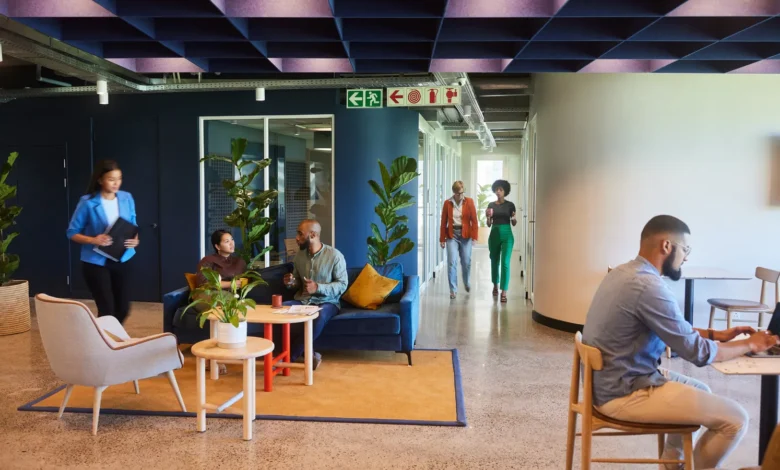
The landscape of corporate real estate is undergoing a fundamental transformation as organizations worldwide pivot from traditional, task-oriented office layouts to dynamic, relationship-centric environments. According to a comprehensive research report released by CBRE, global office utilization rates are projected to continue their upward trajectory through 2027. This growth is being fueled by a dual-pronged strategy: the increasingly rigorous enforcement of return-to-office (RTO) policies and a significant redesign of physical workspaces to better align with contemporary employee expectations.
The report highlights a definitive shift in the purpose of the physical office. While the pre-pandemic era focused largely on individual productivity and "heads-down" task completion, the emerging modern office is designed to foster culture, mentorship, and spontaneous collaboration. This shift is not merely philosophical; it is being reflected in the literal floor plans of major corporations across the Americas and beyond. As organizations grapple with the complexities of hybrid work, the office is being reimagined as a strategic hub for social connection rather than a mandatory destination for routine work that could otherwise be performed remotely.
The Evolution of Space Allocation: From Desks to Destinations
A critical finding in the CBRE report is the dramatic reallocation of square footage within the corporate footprint. In the Americas, the inventory of shared support spaces—which include meeting rooms, project-specific war rooms, and informal huddle areas—surged by 35% between 2021 and 2025. This increase corresponds directly with a 35% reduction in individual workstations and private offices designed for solitary, task-focused work.
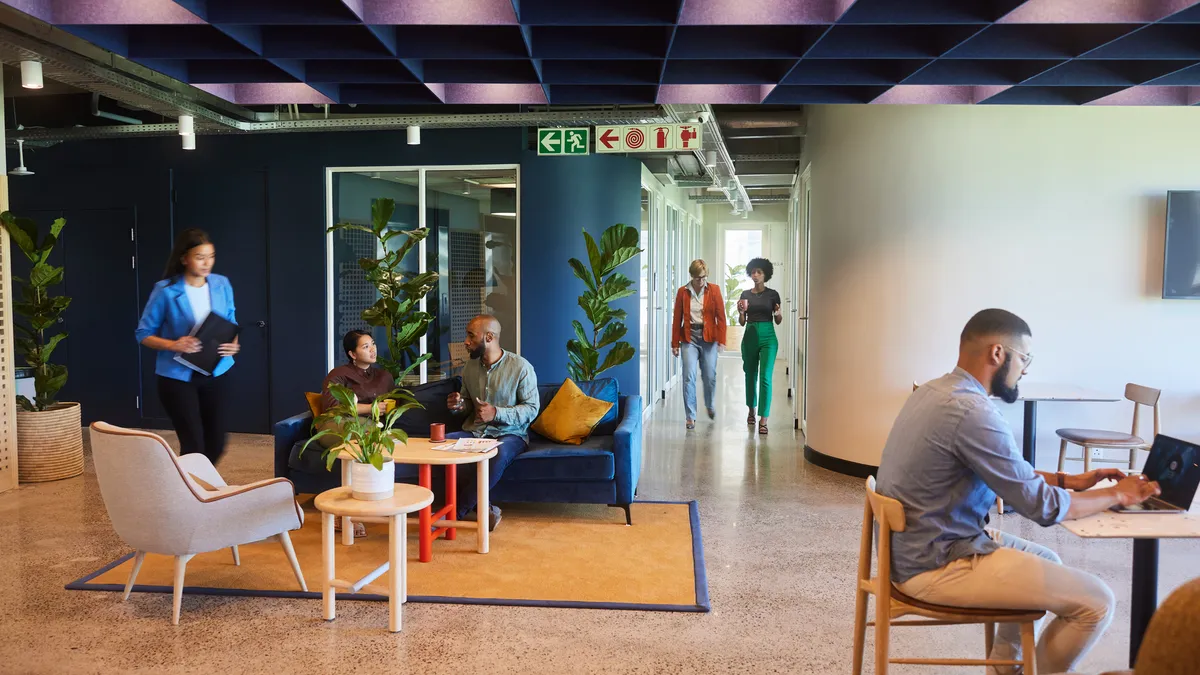
The most explosive growth, however, has occurred in amenity-driven spaces. Areas designed for social connection, shared experiences, and informal interaction have seen a staggering 120% increase since 2021. These spaces, often resembling high-end hospitality environments or community lounges, are intended to provide "commute-worthy" experiences. CBRE notes that this trend reflects a rising conviction among executives that corporate culture is something that must be actively cultivated and maintained through physical presence, rather than something that can be assumed to persist in a purely virtual environment.
"If utilization data indicates that people are returning to the office, then space allocation data indicates what they expect when they get there," the report states. This suggests that the "flight to quality" is not just about the building’s zip code or LEED certification, but about the internal functionality of the space and its ability to facilitate the human interactions that video conferencing often fails to replicate.
The Death of the 1:1 Desk Ratio
One of the most significant statistical shifts identified in the research is the move away from the traditional 1:1 employee-to-desk ratio. For decades, the standard for corporate efficiency was one assigned seat for every employee on the payroll. Today, that model is increasingly viewed as an obsolete relic of the 20th-century workplace.
Global occupancy rates have reached a calculated 111% in certain sectors, a figure that indicates space is being shared more intensely than ever before. Rather than assigning permanent desks, the majority of organizations have moved toward sharing ratios between 1.01 and 1.49 employees per seat. This "hot-desking" or "hotelings" model allows companies to maintain a smaller overall footprint while still accommodating their entire workforce over the course of a staggered work week.

The report reveals that approximately one-third of organizations are pushing these boundaries even further, aiming for ratios exceeding 1.5 employees per seat. However, this is not a one-size-fits-all approach. An overwhelming 83% of companies are now factoring in specific job functions when determining these ratios. For instance, creative teams or sales departments that spend significant time off-site may have much higher sharing ratios than legal or finance departments that require more consistent access to specialized equipment or secure filing.
Data-Driven Facility Management
The transition to high-density, shared environments is being managed with surgical precision through the use of sophisticated space utilization data. Over three-quarters of the organizations surveyed (76%) are now using real-time data—gathered through badge swipes, under-desk sensors, and Wi-Fi heat maps—to calibrate their space needs.
This data-driven approach allows facility managers to identify "dead zones" in the office that are rarely used and repurpose them into more desirable configurations, such as quiet pods for private calls or expanded cafe areas for team lunches. By monitoring peak occupancy days—typically Tuesday through Thursday—companies can also better manage building services, such as HVAC, lighting, and janitorial support, leading to significant operational cost savings and a reduction in the corporate carbon footprint.
A Chronology of the Return-to-Office Movement
The journey toward the current state of office utilization has been marked by several distinct phases since the global disruptions of 2020:

- 2020–2021: The Remote Experiment. Work was almost entirely decentralized. Offices remained largely empty, leading many to predict the "death of the office."
- 2022: The Hybrid Transition. Companies began introducing "suggested" return dates. Occupancy remained low and unpredictable as employees prioritized the flexibility of home work.
- 2023–2024: The Amenities Arms Race. Organizations realized that mandates alone were insufficient. They began investing heavily in office renovations, adding high-end coffee bars, fitness centers, and collaborative "neighborhoods" to entice workers back.
- 2025–2026: The Era of Policy Enforcement. The current phase is characterized by a "carrot and stick" approach. While offices are more attractive than ever, companies are also becoming more rigid with attendance policies, often linking office presence to performance reviews and promotion eligibility.
- 2027 Projections: Optimization and Equilibrium. CBRE predicts that by 2027, utilization will stabilize at higher levels as companies finalize their portfolio rightsizing and employees settle into established hybrid rhythms.
Strategic Advantage and Cultural Alignment
The push for higher utilization is not merely an exercise in real estate cost-cutting. Business leaders are increasingly viewing in-person connection as a strategic advantage in a competitive global market. The report suggests that the "spontaneous collisions" that occur in a physical office lead to faster problem-solving, more effective mentorship for junior staff, and a stronger sense of organizational belonging.
Industry analysts suggest that the organizations that have already invested in collaborative and social spaces will be the most successful in the coming years. These companies are better positioned to realize the full value of their real estate investments because their employees are more likely to "vote with their feet" for environments that make the daily commute feel worthwhile. Conversely, firms that attempt to mandate a return to sterile, outdated cubicle farms may face significant headwinds in talent retention and employee engagement.
Broader Implications for the Real Estate Market
The findings of the CBRE report have profound implications for the broader commercial real estate (CRE) market. As companies optimize their footprints and increase their employee-to-desk ratios, the total demand for square footage may decrease in some sectors, even as utilization of the remaining space increases.
This trend is driving a "bifurcation" of the office market. "Class A" buildings that offer modern infrastructure, high ceilings, outdoor spaces, and proximity to transit are seeing high demand and rising rents. Meanwhile, "Class B" and "Class C" buildings—those that lack the structural flexibility to accommodate the new focus on social and collaborative spaces—are facing record-high vacancy rates and potential conversion to residential or storage use.
Furthermore, the emphasis on data and technology in facility management is creating a new standard for building owners. Landlords are increasingly expected to provide "smart building" features that integrate with a tenant’s own utilization tracking software. The ability to provide detailed analytics on air quality, occupancy, and energy usage is becoming a baseline requirement for high-value leases.
Conclusion: The Office as a Tool for Performance
As we look toward 2027, the office is no longer viewed as a static container for workers, but as a dynamic tool for driving performance and culture. The rise in utilization rates is a signal that the corporate world has moved past the initial uncertainty of the post-pandemic era and is now committed to a redefined version of the workplace.
The success of this new model depends on the ability of managers to listen to their workforce and adapt their physical environments accordingly. As CBRE concludes, the office must deliver on its promise of culture and performance to remain relevant. In an era where work can happen anywhere, the office must offer something that a home office cannot: a sense of shared purpose, a community of peers, and a space designed specifically for the collective pursuit of innovation. Those organizations that master this balance will likely see the greatest returns, not just on their real estate assets, but on their human capital as well.