Bridging the Strategic Divide: How HR Leaders Can Secure Finance Buy-In for Essential Workforce Development Investments

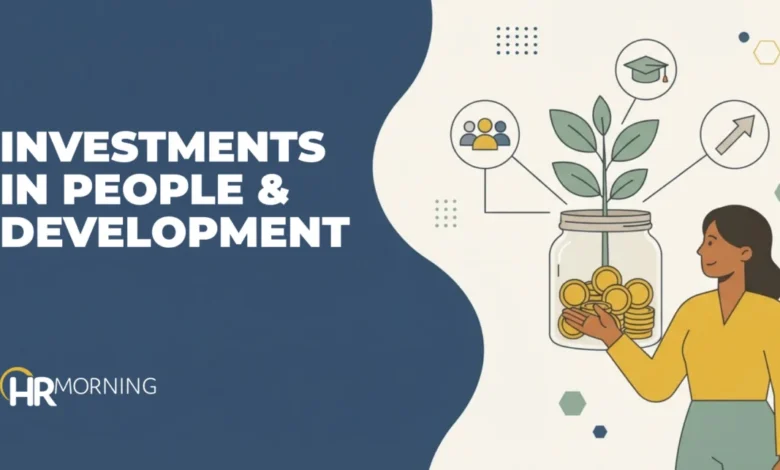
The historical friction between Human Resources and Finance departments is undergoing a fundamental transformation as organizations grapple with unprecedented shifts in the global labor market and the rapid integration of emerging technologies. For decades, the relationship between HR and the Chief Financial Officer (CFO) has been characterized as a tug-of-war, with HR leaders advocating for "people-first" investments and Finance teams prioritizing cost containment and bottom-line efficiency. However, a new economic reality—defined by a measurable decline in worker performance and the disruptive potential of Artificial Intelligence—is forcing these two pillars of corporate leadership to align their strategies. To navigate this shift, HR professionals must move beyond the traditional "training as an expense" model and present workforce development as a high-stakes strategic business investment.
The Emerging Crisis of Declining Performance
The urgency for renewed investment in people is underscored by alarming data regarding global productivity. Recent research conducted by BetterUp, which analyzed behavioral data from a massive sample of 410,000 employees, reveals a concerning trend: work performance has dropped between 2% and 6% since 2019. While a single-digit percentage might seem negligible in isolation, the cumulative impact is staggering. Researchers estimate that this decline has resulted in approximately $2.2 trillion in lost performance over the last five years.
This "productivity gap" is the result of a perfect storm of factors. The post-pandemic era has been marked by widespread employee disengagement, chronic manager burnout, and the "quiet quitting" phenomenon. Furthermore, the rapid introduction of AI has created a skills gap that many organizations are struggling to bridge. When performance dips, the traditional reaction from Finance is often to cut costs, which frequently includes slashing development budgets. However, experts argue that this creates a "death spiral" where reduced investment leads to further skill degradation and lower performance.
Jolen Anderson, Chief People and Community Officer at BetterUp, emphasizes that the solution lies in reframing the purpose of development. "Workforce development isn’t simply about building skills; it’s about restoring the capabilities, such as purpose and a growth mindset, that drive business performance," Anderson notes. By viewing development as a tool to restore these core capabilities, HR can present a more compelling case for funding.
A Chronology of the HR-Finance Relationship
To understand the current shift, it is essential to look at the evolution of the HR and Finance dynamic over the last several decades:
- The Administrative Era (1980s–1990s): HR was largely viewed as a "personnel" department focused on payroll and compliance. Finance held the reins of strategy, and HR was seen as a cost center with little influence on the long-term direction of the business.
- The Talent War Era (2000s–2010s): As the "War for Talent" became a buzzword, HR gained a seat at the table. However, investments in people were often seen as perks (e.g., office amenities, basic training) rather than strategic drivers.
- The Pandemic Pivot (2020–2022): The COVID-19 pandemic placed HR at the center of business continuity. CFOs and HR leaders had to work in lockstep to manage remote transitions and employee well-being.
- The Strategic Alignment Era (2023–Present): With the rise of Agentic AI and the $2.2 trillion productivity loss, the focus has shifted to "human sustainability." Finance now recognizes that the "human element" is the primary variable in the success or failure of digital transformation and operational efficiency.
Three Pillars for Securing Strategic Investment
For HR professionals to gain the backing of their Finance colleagues, they must adopt a business-centric approach to their proposals. Anderson suggests three primary strategies to ensure people-investments are viewed as essential rather than optional.
1. Focusing on Business Challenges Over Program Logistics
The most common mistake HR leaders make when requesting budget for development is focusing on the "what" rather than the "why." A proposal that focuses on a 10-week leadership course is less likely to succeed than one that focuses on solving a specific, high-cost business problem.
If an organization is struggling with high turnover in mid-level management, the HR proposal should lead with the financial impact of that turnover—including recruitment costs, lost institutional knowledge, and decreased team morale. "The question isn’t whether employees completed a course, but whether the organization can measure meaningful behavior change and connect that change to progress against its business objective," Anderson explains. By positioning development as the solution to a bottleneck in productivity or a spike in attrition, HR aligns its goals with the CFO’s mandate to protect the bottom line.
2. Utilizing High-Impact Financial Metrics
Finance leaders operate in the language of data. To bridge the communication gap, HR must move away from "soft" metrics like "employee satisfaction scores" and toward "hard" metrics that reflect operational health. Anderson highlights several key indicators that resonate with CFOs:
- Speed to Proficiency: How quickly can a new hire or an upskilled employee reach peak productivity? Reducing this timeline has a direct, positive impact on ROI.
- Internal Mobility: The cost of hiring an external candidate is often 1.5 to 2 times higher than promoting from within. Demonstrating that development programs increase internal promotion rates provides a clear cost-saving narrative.
- Retention and Turnover Costs: CFOs are acutely aware of the "real cost" of turnover, which includes severance, recruitment fees, and the "ramp-up" time for new hires.
- Leadership Readiness: Identifying the percentage of the workforce ready to step into critical roles reduces organizational risk—a key concern for any financial steward.
When HR can show that their data is reliable and that there is a consistent framework for evaluating outcomes, Finance is far more likely to view the request as a calculated investment rather than a discretionary expense.
3. Early-Stage Collaboration and Shared Ownership
The traditional model of HR designing a program in a vacuum and then presenting it to Finance for approval is increasingly obsolete. Instead, successful organizations are involving the CFO in the design phase of people strategies.
By getting Finance involved early, HR can gain insights into the organization’s most pressing financial priorities. This collaboration allows the CFO to help identify where stronger leadership or technical capabilities could create the most measurable value. Furthermore, early involvement fosters a sense of shared ownership. When a development initiative is seen as a joint venture between HR and Finance, it is more likely to be sustained through economic downturns.
"That shared ownership leads to better decisions, stronger alignment, and ultimately a workforce that’s better prepared to support the organization’s long-term goals," says Anderson. This partnership transforms HR from a department that "spends" to a department that "builds" value.
The Broader Implications of HR-Finance Alignment
The consequences of failing to align these two departments extend beyond internal politics. In an era where AI is automating routine tasks, the competitive advantage of a company increasingly rests on its "human capital"—the creativity, leadership, and adaptability of its workforce. If Finance continues to view development as a cost-cutting target, the organization risks falling behind in the "innovation race."
Conversely, when HR and Finance are aligned, the organization becomes more agile. They can pivot more quickly to new market demands because they have a workforce that is continuously upskilled and a budget that is optimized for growth. This alignment also has a significant impact on employer branding. In a transparent labor market, top talent gravitates toward organizations that demonstrate a tangible commitment to their growth, backed by the stability of a sound financial strategy.
Analysis: Moving Toward a Unified Business Strategy
The $2.2 trillion loss in performance is a wake-up call for the corporate world. It suggests that the "lean and mean" approach to human capital management may have reached a point of diminishing returns. To recover these losses, organizations must reinvest in the foundational capabilities of their people.
The shift toward "Agentic AI" and more complex workflows means that the "growth mindset" mentioned by Anderson is no longer a "nice-to-have" soft skill; it is a functional requirement. If employees are afraid of technology or lack the resilience to adapt to changing roles, no amount of software investment will yield the expected productivity gains.
Ultimately, the goal for HR leaders is to prove that the "People Strategy" is the "Business Strategy." By focusing on business challenges, speaking the language of metrics, and fostering early collaboration with Finance, HR can move from the periphery of the balance sheet to the very center of the organization’s value proposition. The future of work demands a workforce that is not just skilled, but empowered—and the only way to achieve that is through a unified front between those who manage the people and those who manage the purse strings.