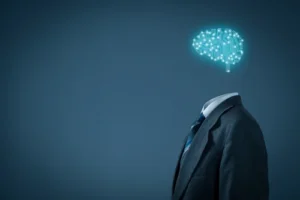
A rejected candidate asks why they never made it past the first round. An employee wants to know why they were passed over for a long-awaited promotion. A manager relies on an AI-generated performance summary that no one in the office can explain or justify. In each of these scenarios, an artificial intelligence system made the critical decision, yet the Human Resources department remains the entity tasked with defending the outcome. This is the new reality facing HR teams as automated tools move from experimental pilots to the core of everyday workplace decisions. While the technologies are novel, the fundamental principles of legal accountability remain firmly rooted in traditional labor law. When AI influences who gets interviewed, hired, promoted, compensated, disciplined, or terminated, the employer retains full ownership of the decision and its consequences.
For HR leaders, the risks posed by AI are not primarily a technology issue; they are a profound workplace governance challenge. The urgent question facing organizations today is whether they possess the capability to explain, audit, and defend the complex decisions that AI helps produce.
The Landscape of Exposure in Modern HR
HR functions are involved in the most legally sensitive decisions a corporation makes. From initial recruitment and talent acquisition to pay equity, performance management, and involuntary terminations, these processes are already subject to rigorous scrutiny under federal and state employment laws, including Title VII of the Civil Rights Act and the Americans with Disabilities Act (ADA). The introduction of AI does not reduce this scrutiny; instead, it complicates the legal landscape by adding layers of opacity.
The greatest exposure occurs when AI shapes outcomes before a human being ever reviews the relevant data. Modern software suites can now screen thousands of resumes, rank candidates based on "cultural fit," match internal skills to project needs, and even predict turnover risk. If an AI system inadvertently penalizes candidates with nontraditional career paths, employment gaps, or specific educational backgrounds that serve as proxies for protected characteristics—such as race, gender, age, or disability status—the organization faces significant liability.
Recent legal trends suggest that outsourcing these processes to third-party vendors provides no shield against litigation. A software provider may develop the algorithm, but the employer decides where to deploy it and whether to rely on its output. In the eyes of regulators like the Equal Employment Opportunity Commission (EEOC), HR departments cannot outsource their legal responsibilities.
The Evolution of Bias: Speed and Scale
Bias in the workplace is not a new phenomenon; it has existed as long as human decision-making has been part of the employment process. What changes with the integration of AI is the sheer speed, consistency, and volume at which that bias can be propagated.
A human interviewer might apply a flawed assumption—such as an unconscious preference for candidates from a specific university—inconsistently across a hiring season. However, an AI tool can apply the same flawed assumption thousands of times in a single afternoon. If historical hiring data reflects past systemic exclusions or uneven promotion patterns, a machine learning model will likely identify those patterns and convert them into future recommendations, essentially "automating" past prejudices.
The output from these systems often appears objective because it is presented as a precise score, ranking, or "match percentage." Yet, these models do not need to use protected categories like race or gender directly to produce discriminatory results. By relying on variables that correlate with those characteristics—such as commute distance, zip code, graduation year, or gaps in employment history—the AI can create disparate impacts that are statistically significant. Once these variables are applied across an entire applicant pool, isolated instances of unfairness morph into clear, documented patterns. For plaintiffs and government auditors, these patterns provide a "smoking gun" that is far easier to identify than the nuanced, subjective biases of a human manager.
The Myth of the Human-in-the-Loop
Many organizations take comfort in the "human-in-the-loop" safeguard, which assumes that a human employee reviews or approves the AI’s recommendation before it is finalized. However, this oversight mechanism is frequently insufficient. A review process only functions effectively if the human operator possesses the necessary context, the authority to override the system, and the time to investigate the underlying logic.
In many high-volume environments, the human-in-the-loop has become a "rubber stamp." If a system has already screened 2,000 candidates down to 50, the most critical filtering decisions have already occurred before a recruiter ever opens an application file. If a manager accepts an AI-generated performance summary without access to the raw data points that informed the score, the human review is merely performative. True oversight must happen before, during, and after deployment. Organizations must move toward a model of "algorithmic transparency," where HR teams know exactly what a tool is designed to optimize, what training data it relies on, and what specific outcomes would serve as a warning sign of failure.
Integrating AI into Existing Risk Frameworks
AI risk should not be treated as a standalone silo; it must be integrated into the risk profile an organization already maintains. HR departments already coordinate with legal, compliance, procurement, and finance departments on sensitive workforce issues. AI tools should be required to pass through these same rigorous gates.
Before adopting any new automated tool, organizations should conduct a "Pre-Deployment Impact Assessment." This process should answer several critical questions:
- What specific business problem is this AI solving, and is the data used to solve it free from historical bias?
- What are the potential disparate impacts on protected classes, and how will we monitor these outcomes quarterly?
- If the AI makes an error, what is the clear process for human intervention and remediation?
- How will the organization explain the logic of a decision to a candidate or employee who requests an explanation under emerging AI transparency laws?
These questions do not inhibit innovation; rather, they prevent the organization from discovering significant legal or ethical risks only after an adverse event has occurred.
Broader Implications and Future Outlook
The legal environment is shifting rapidly. With the rise of AI-specific regulations, such as the EU AI Act and various state-level initiatives in the United States, the burden of proof is increasingly falling on the employer. In 2024 and 2025, several high-profile class-action lawsuits regarding AI-driven hiring tools have set a precedent that will likely govern the next decade of employment law.
Organizations that fail to implement robust AI governance will find themselves vulnerable to "algorithmic discrimination" claims. Conversely, companies that treat AI as a high-stakes component of their talent strategy—and subject it to the same scrutiny as financial audits—will gain a competitive advantage in hiring and retention.
For HR leaders, the ultimate goal is not to prove that an AI system is entirely risk-free, as no decision-making process is. The goal is to ensure that every AI-influenced decision can be explained, tested, and defended. By maintaining human accountability and rigorous documentation, HR departments can navigate the complexities of the digital age without sacrificing the principles of fairness and equity that define a healthy, compliant workplace. The tools of the future are here, but the responsibility for their output remains, as it always has, in the hands of human leadership.