Amazon Pharmacy and eNavvi Partner to Integrate Real-Time Prescription Pricing and Same-Day Delivery into Physician Workflows

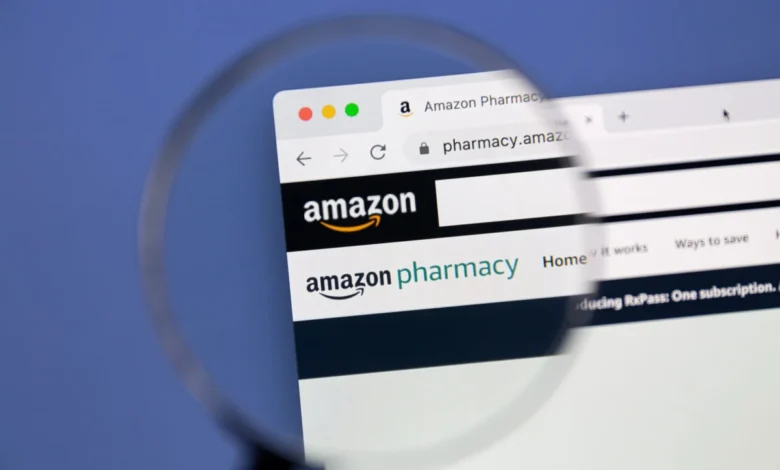
The landscape of American healthcare is undergoing a significant digital transformation as Amazon Pharmacy and eNavvi, a leading digital prescription platform, announce a strategic collaboration designed to streamline the medication procurement process. This partnership aims to bridge the gap between clinical consultation and prescription fulfillment by integrating Amazon’s extensive logistics and pricing data directly into the software used by healthcare providers. By embedding real-time information regarding drug costs, stock availability, and delivery timelines into the physician’s workflow, the two companies intend to convert the traditional doctor’s visit into a comprehensive "point-of-sale" (POS) experience. This initiative leverages Amazon’s massive same-day delivery infrastructure, which currently services nearly 3,000 cities across the United States, representing a major push by the e-commerce giant to dominate the pharmaceutical retail sector.
The collaboration comes at a time when Amazon continues to solidify its position as a titan of digital commerce. According to Digital Commerce 360’s Top 1000 Database, Amazon currently holds the No. 1 ranking among North American online retailers based on annual e-commerce sales. While the company is a dominant force in general retail, its expansion into healthcare has been a multi-year endeavor marked by aggressive acquisitions and internal service launches. Despite its overall market dominance, Amazon ranks No. 158 in the AI Commerce Rankings, suggesting that while its logistics and sales are unparalleled, the integration of advanced artificial intelligence into its commercial interfaces remains an area of ongoing development. Furthermore, Amazon maintains the No. 3 spot in the Global Online Marketplaces Database, which tracks the largest marketplaces by third-party gross merchandise value (GMV).
The Mechanics of the eNavvi and Amazon Pharmacy Integration
The core of the partnership lies in the technical integration of Amazon Pharmacy’s Application Programming Interface (API) into eNavvi’s digital prescribing platform. Traditionally, when a physician prescribes a medication, they do so with limited visibility into the patient’s out-of-pocket costs or the local availability of the drug. Patients often discover the price of their medication only upon arriving at a retail pharmacy, leading to "sticker shock" and high rates of prescription abandonment.
By utilizing eNavvi’s technology, clinicians can now view transparent pricing and real-time inventory for Amazon Pharmacy while the patient is still in the exam room. This allows for an immediate discussion regarding affordability and logistics. If the patient chooses Amazon Pharmacy, the prescription is routed directly through the system, triggering Amazon’s fulfillment process. For many patients, particularly those in urban and suburban areas covered by Amazon’s expedited logistics network, the medication can be delivered to their doorstep within hours of the appointment.
Simon Chang, Chief Executive Officer at eNavvi, emphasized that this transparency is the primary driver of the collaboration. "This collaboration fundamentally changes what physicians can see and do at the moment of prescribing," Chang stated. "Transparent pricing, real-time availability, and direct routing to Amazon Pharmacy means better decisions and fewer barriers between patients and the medications they need."
Leveraging Amazon Prime and RxPass for Patient Savings
A critical component of this new workflow is the integration of Amazon Prime benefits. Patients who are members of the Prime ecosystem stand to gain the most from this partnership, as they have access to significant discounts—up to 80% off generic medications—when paying without insurance. Additionally, the partnership promotes RxPass, Amazon Pharmacy’s $5-per-month subscription program that provides Prime members with unlimited access to over 50 commonly prescribed generic medications.
Tanvi Patel, Vice President and General Manager at Amazon Pharmacy, noted that the goal is to eliminate the "friction" that often prevents patients from adhering to their prescribed treatment plans. "Amazon Pharmacy is committed to providing a transparent pharmacy experience that removes the friction preventing patients from reliably accessing the medications they are prescribed," Patel said. "We know that when patients can conveniently access their medications, they take them and live healthier lives."
Historical Context: Amazon’s Healthcare Ambitions
To understand the significance of this partnership, it is necessary to view it through the lens of Amazon’s broader strategy in the healthcare sector. The company’s journey began in earnest in 2018 with the $753 million acquisition of PillPack, a digital pharmacy known for its dose-packaging technology. This acquisition provided Amazon with the necessary pharmacy licenses in all 50 states and the foundational infrastructure to launch Amazon Pharmacy in late 2020.
Since then, Amazon has expanded its footprint through the acquisition of One Medical, a primary care provider, for $3.9 billion in 2023. This move signaled Amazon’s intent to control the entire patient journey, from the initial primary care visit to the final delivery of medication. The partnership with eNavvi is a logical extension of this vertical integration, ensuring that even physicians outside the One Medical network can seamlessly funnel prescriptions into the Amazon ecosystem.
Comparative Analysis: The "Shoppable" Healthcare Model
The shift toward integrating fulfillment into the point of discovery is a trend that has already matured in other sectors of e-commerce. Vivien Garnès, co-CEO and co-founder of the influencer marketing platform Upfluence, suggests that healthcare is finally catching up to the "social commerce" model popularized by platforms like Instagram and TikTok.
"We’ve actually been seeing this shift play out in influencer marketing," Garnès observed. "The purchase decision used to happen after the discovery moment. A follower would see a product they like on a feed. They’d have to open a separate screen, go to the product website, find it, add it to cart, and purchase. Too many touchpoints where a sale could be lost."
Garnès argues that eNavvi’s decision to embed Amazon Pharmacy into the prescribing screen follows the same logic as "shoppable content." By placing the checkout or fulfillment option at the exact moment a decision is made—in this case, the doctor’s decision to prescribe—Amazon is erasing the logistical gaps where patients often fall off the care path. "The winners in any industry right now are the ones erasing the friction between deciding and buying," Garnès added.
Addressing the Crisis of "Pharmacy Deserts" and Access Inequity
Beyond the convenience of e-commerce, the partnership addresses a growing public health crisis in the United States: the emergence of "pharmacy deserts." As traditional retail pharmacy chains like CVS and Walgreens close hundreds of underperforming locations across the country, many low-income and rural communities are left without easy access to a physical pharmacy.
Alys Reynders, Chief Marketing Officer at Quickbase, a no-code workflow and operations platform, believes that the digital transformation of prescription routing is essential for maintaining patient access. "The health care sector has long struggled with inefficiencies when it comes to digital transformation and the secure flow of patient data," Reynders said. "The collaboration between eNavvi and Amazon Pharmacy for real-time prescription orders and medication pricing has the potential to transform patient access to important treatments."
Reynders pointed out that by using Amazon’s highly efficient nationwide delivery network, the partnership can mitigate the physical bottlenecks that characterize pharmacy deserts. By providing clinicians with direct access to real-time costs and availability, the system eliminates hidden fees and allows patients in underserved areas to receive their medications without needing to travel long distances to a physical storefront.
Market Implications and the Future of Retail Pharmacy
The eNavvi-Amazon partnership poses a significant threat to legacy retail pharmacies. For decades, the retail pharmacy business model has relied on "foot traffic"—the idea that a patient coming in to pick up a prescription will also purchase high-margin "front-of-store" items like snacks, cosmetics, and household goods. As Amazon moves the pharmacy transaction to the doctor’s office and the delivery to the patient’s doorstep, this traditional model is being undermined.
Industry analysts suggest that the "point-of-sale" moment in the doctor’s office is the new frontline of pharmaceutical competition. If a patient can see that their medication will cost $5 on Amazon and arrive at their home by 5:00 PM, they are far less likely to take a paper prescription to a local drug store where the price is unknown and the wait time is uncertain.
Furthermore, the data collected through this partnership provides Amazon with invaluable insights into prescribing trends and patient behavior, allowing the company to further optimize its inventory and supply chain. As the world moves toward a fully interconnected, online-first ecosystem, this partnership serves as a blueprint for how medicine can thrive in the age of digital transformation.
Conclusion: A New Era of Integrated Care
The collaboration between eNavvi and Amazon Pharmacy represents more than just a technical update to a prescribing platform; it is a fundamental shift in how healthcare services are delivered and consumed. By prioritizing transparency, speed, and integrated workflows, the two companies are attempting to solve long-standing issues of medication non-adherence and price opacity.
As this model gains traction, it is likely to trigger further innovations across the healthcare technology sector. Other digital health platforms and retailers will be forced to respond with their own integrated solutions, potentially leading to a more competitive and patient-centric pharmaceutical market. For now, Amazon and eNavvi have established a "secure corridor" for prescription data that promises to make the process of getting sick and getting better more efficient than ever before.