The Evolution of Digital Advertising: Navigating the $740 Billion Cross-Channel Marketing Frontier in a Fragmented Global Economy


The global digital advertising landscape is undergoing a seismic shift, with total expenditures projected to surpass $740 billion by 2026. This financial surge is accompanied by a rapid proliferation of consumer touchpoints, creating a complex environment where the average marketing team finds it increasingly difficult to maintain a cohesive brand presence. As the sheer number of digital channels multiplies, the traditional "multichannel" approach—simply being present on various platforms—is no longer sufficient to drive meaningful ROI. In its place, the discipline of cross-channel marketing has emerged as the critical framework for modern brand survival.
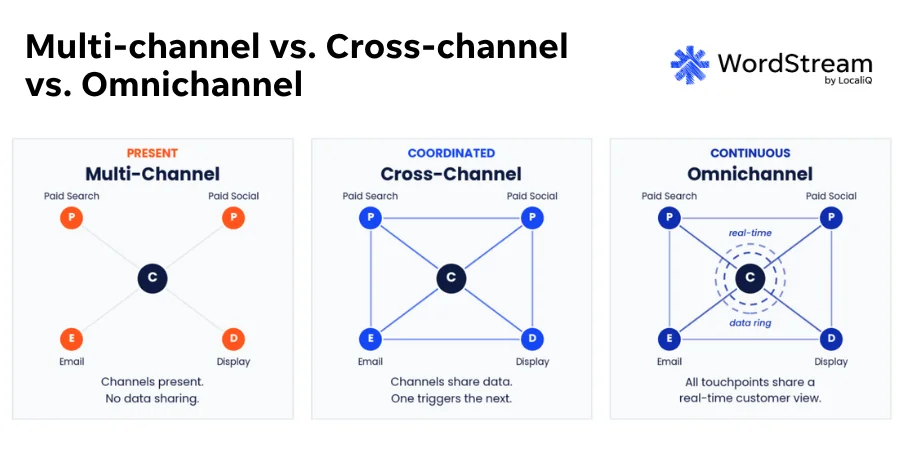
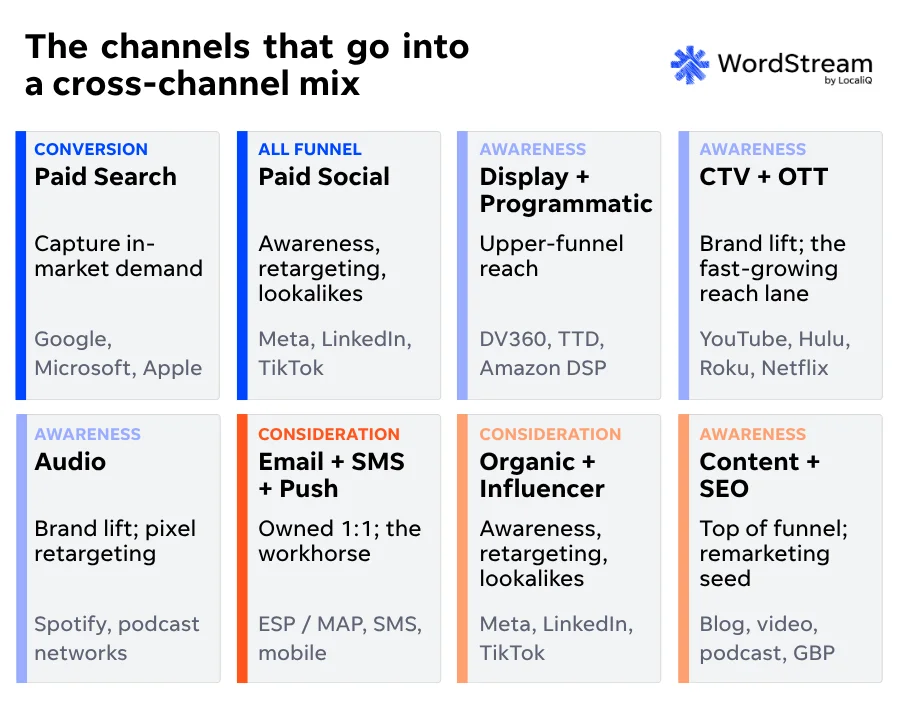
Cross-channel marketing is defined as a highly coordinated strategy designed to engage customers across a spectrum of paid, owned, and earned channels. Unlike its predecessors, this methodology relies on a bidirectional flow of data where interactions on one channel directly inform the messaging, frequency, and timing of another. The goal is to create a customer journey that feels like a single, continuous conversation rather than a series of repetitive, disconnected advertisements.

The Strategic Divergence: Multichannel vs. Cross-Channel vs. Omnichannel
Industry analysts distinguish between three levels of marketing maturity, each representing a different degree of integration and technical sophistication.
Multichannel marketing, the most basic tier, focuses on "coverage." A brand might run Google Search ads, maintain a Meta presence, and send out a weekly email newsletter. However, in a multichannel setup, these platforms operate in silos. Data is not shared, and a customer who has already converted via an email link may continue to see aggressive "buy now" ads on social media. This lack of coordination leads to "the multichannel trap," where brands burn budget on redundant impressions that frustrate the consumer.
Cross-channel marketing represents the next level of evolution: "coordination." Operationally, a cross-channel campaign is built upon three shared layers: a unified audience definition, a creative system that adapts natively to each platform, and a single measurement frame. In this model, a search ad click on Google can trigger a specific retargeting sequence on Meta, followed by a personalized email 24 hours later. For small and medium-sized businesses (SMBs), cross-channel marketing is currently the "gold standard," providing the highest yield for spend without requiring the astronomical infrastructure costs of higher tiers.
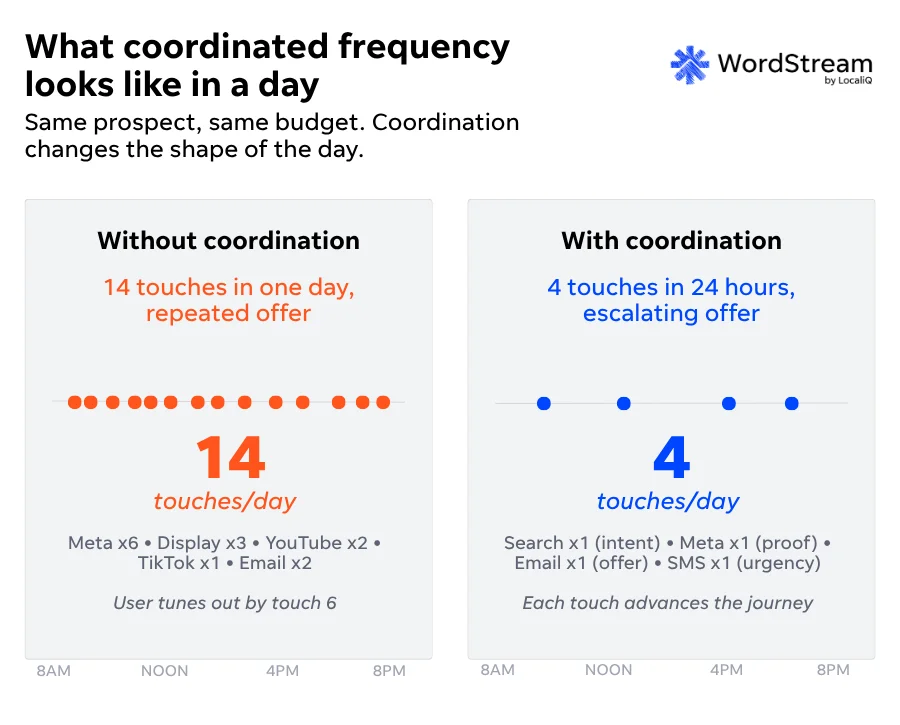
Omnichannel marketing is the most advanced and aspirational stage. It seeks to be "all-encompassing," unifying every online touchpoint with offline experiences, such as in-store visits, customer service calls, and mobile app interactions. While many technology vendors market their platforms as "omnichannel," true implementation requires a full Customer Data Platform (CDP) and real-time identity resolution—capabilities that remain out of reach for many mid-market firms.
The Data Dilemma: Why Coordination Lags Behind Participation
A recent Salesforce State of Marketing report highlights a widening "coordination gap" in the industry. The data shows that while high-performing marketers utilize an average of 10 different customer engagement channels, they are only able to fully personalize the experience across six of them. This four-channel discrepancy represents the primary challenge facing modern marketing departments: the mix of available platforms is growing faster than the technical ability to synchronize them.
The urgency for better coordination is driven by the collapse of traditional measurement. In the wake of heightened privacy regulations and the deprecation of third-party cookies, the effectiveness of multi-touch attribution has plummeted. Industry data from eMarketer suggests that attribution coverage has fallen from over 90% to between 30% and 60% in post-cookie environments. This "tracking leakage" means that many brands are making budget decisions based on data that misses up to 70% of the actual conversion path.
Building the Cross-Channel Framework: A Chronological Approach
Transitioning from a siloed multichannel approach to a coordinated cross-channel strategy requires a fundamental shift in how campaigns are architected. Experts suggest a five-step chronological process for implementation:
- Centralized Audience Definition: Rather than defining audiences within individual ad platforms (e.g., setting up "Interests" in Meta and "Keywords" in Google), successful marketers build their audience definitions in a centralized CRM or spreadsheet. This "source of truth" is then pushed out to various platforms via tools like Google Ads Customer Match or Meta Custom Audiences.
- Journey Mapping Over Budget Allocation: Traditional teams often decide on a budget split (e.g., 50% Google, 50% Facebook) before considering the customer journey. Cross-channel strategy reverses this, mapping the customer’s progression from awareness to conversion first, then assigning channels based on their role in that journey.
- The Creative System: Consistency is the hallmark of cross-channel success. Brands must develop a single campaign-level promise or offer and then translate it into channel-native executions. This ensures that the visual identity and value proposition remain identical whether the user is on TikTok or checking their inbox.
- Signal Sharing Infrastructure: For channels to "talk" to one another, technical bridges must be built. This includes implementing server-side tagging and APIs, such as the Meta Conversions API (CAPI) and Google’s Enhanced Conversions. These tools allow offline or bottom-funnel signals (like a phone call or a CRM update) to be fed back into ad platforms to optimize targeting.
- Integrated Measurement: Before launching, teams must establish a unified KPI frame. Relying on individual platform dashboards leads to "cherry-picking," where marketers highlight whichever metric looks best. A cross-channel frame uses Media Mix Modeling (MMM) and incrementality testing to determine the true impact of the combined spend.
Sector-Specific Applications and Case Studies
The practical application of cross-channel marketing varies significantly across different business models.
B2C E-commerce: In the retail sector, the primary use case is the "abandonment loop." When a customer browses a product but does not purchase, a cross-channel system synchronizes this data across social media, search retargeting, and email. By implementing a unified frequency cap, the brand ensures the user is not overwhelmed, but rather gently nudged toward a purchase across different environments.
B2B SaaS and Account-Based Marketing (ABM): B2B deals often involve buying groups of six to ten individuals. Cross-channel strategies here focus on "account warming." If one executive from a target company engages with a LinkedIn ad, the system may automatically trigger direct mail to the office or increase display ad frequency for other stakeholders within the same firm. This ensures the brand remains top-of-mind for the entire decision-making unit.
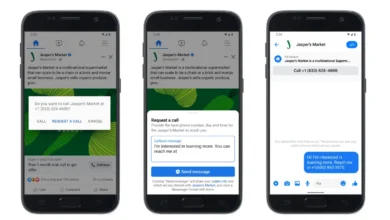
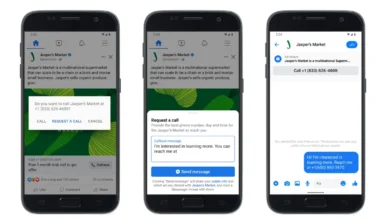
Local and Multi-Location SMBs: For local service providers, such as auto repair shops or law firms, cross-channel coordination often centers on lead quality. If a prospect calls the business after a Google search, that "call" signal is sent to social media platforms to switch the user from an "awareness" ad to a "retargeting" offer for a specific service.
Measurement and the Future of Attribution
As the industry enters the second half of the decade, the tools for measuring success are becoming more sophisticated to compensate for privacy-related data loss. The modern "measurement stack" is now layered:
- First-Party Data: Utilizing server-side tracking to capture clean inputs directly from the brand’s own assets.
- Data-Driven Attribution (DDA): Using machine learning within platforms like GA4 to estimate the value of different touchpoints.
- Media Mix Modeling (MMM): A top-down statistical approach that correlates marketing spend with sales, helping to determine budget allocation without relying on individual user tracking.
- Incrementality Testing: Periodically turning off specific channels in certain regions to measure the "lift" they provide compared to a control group.
Broader Impact and Industry Implications
The move toward cross-channel marketing is more than just a tactical shift; it is a response to a fundamental change in consumer behavior. With the rise of AI-driven search and "Generative Engine Optimization" (GEO), customers are increasingly researching brands through agents and platforms that do not follow a linear path to a website.
Industry analysts suggest that the "era of the easy click" is over. In this new landscape, the winner is not the brand that spends the most, but the brand that manages its frequency and messaging most intelligently. By reducing "ad fatigue" through cross-channel frequency capping, companies can actually lower their customer acquisition costs while improving the brand’s perception.
Ultimately, the projected $740 billion in spend represents a high-stakes environment where efficiency is the only path to profitability. For businesses ranging from local studios to global enterprises, the transition from multichannel presence to cross-channel coordination is no longer optional—it is the prerequisite for growth in a fragmented digital world. Organizations that fail to integrate their data and messaging risk being lost in the noise of a thousand disconnected signals, while those that master the discipline will turn their marketing mix into a powerful, self-optimizing engine for revenue.