Windows Privilege Escalation Vulnerability "HiveLegacy" Threatens Administrator Access

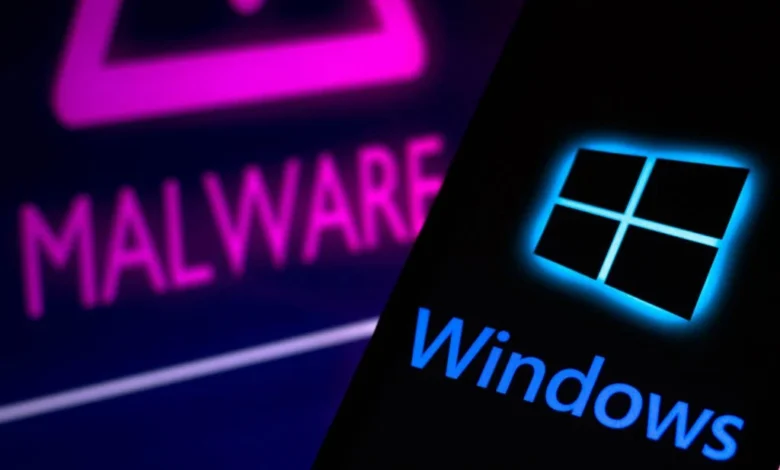
A critical vulnerability, dubbed "HiveLegacy," has emerged in Windows operating systems, allowing non-administrative users to gain de facto administrator privileges, according to security researchers. The flaw centers on how Windows handles user profile hives during the login process, potentially enabling attackers to execute arbitrary code with system-level permissions without requiring direct administrative credentials. This discovery, first highlighted by security analyst Will Dormann, raises significant concerns about the security posture of millions of Windows users worldwide.
Understanding the HiveLegacy Vulnerability
The core of the HiveLegacy vulnerability lies in the manipulation of Windows’ user registry hives. These hives are essentially snapshots of a user’s registry settings, which are loaded when a user logs into their account. When a new user account is being set up or when a user logs in for the first time, Windows needs to load the user’s class hive. Crucially, at this stage, the user is not yet logged in. This means the hive cannot be loaded within the context of that specific user’s session. Instead, Windows loads it with the highly privileged NT AUTHORITYSYSTEM context.
Will Dormann, a senior principal vulnerability analyst at Tharros Labs, explained the severity of this mechanism in a post on infosec.exchange. "If I can set up the system so that it runs my code when the admin user logs in," Dormann stated, "the attacker has de facto administrator privileges. I don’t need to be an admin myself." This ability for a non-privileged user to modify the registry hive of an administrator is described by Dormann as "a pretty powerful primitive." He further elaborated that "clever attackers or people who want to accomplish something will easily be able to figure out how to do things that are more interesting and/or don’t even require user interaction."
The exploit’s potential is amplified by the possibility of chaining it with other vulnerabilities. Dormann suggested that HiveLegacy could be combined with a separate exploit that grants direct access to an administrative account, creating a potent two-stage attack that could rapidly compromise systems.
Chronology of Discovery and Disclosure
While the exact timeline of when this vulnerability was first identified by researchers is not publicly detailed, the public disclosure began to gain traction in late August 2023. Will Dormann’s initial post on August 30, 2023, on the decentralized social media platform infosec.exchange, brought the vulnerability to wider attention within the cybersecurity community. He shared a link to his findings, detailing the technical implications of the flaw.
Shortly after, on August 31, 2023, another independent security analyst, posting under the handle "kallisti," further elucidated the technical underpinnings of the exploit on infosec.exchange. This analyst’s post provided a more granular explanation of why the NT AUTHORITYSYSTEM context is exploited during the user login process.
The disclosure of HiveLegacy triggered a response from Microsoft, the developer of Windows. On September 1, 2023, Microsoft confirmed its awareness of the vulnerability report and stated that it was actively investigating the matter. The company also reiterated its preference for vulnerability reporters to adhere to its coordinated disclosure policy, a standard practice in the cybersecurity industry aimed at ensuring vulnerabilities are patched before widespread exploitation.
Independent researchers have also taken proactive steps to help users mitigate the threat. Kevin Beaumont, an independent researcher, published a detection script on GitHub, specifically designed for threat hunting within Windows environments using Kusto Query Language (KQL), commonly employed with Microsoft’s Azure Sentinel SIEM. This script allows security teams to identify potential signs of compromise related to HiveLegacy.
Technical Details and Exploitation Vectors
The technical mechanism behind HiveLegacy involves exploiting the ProfSvc (User Profile Service) and its handling of user registry hives. When a user logs in, Windows attempts to load their user profile, including the UsrClass.dat file, which is part of the user’s class registry hive. As noted by the analyst "kallisti," because the user is not yet logged in, the UsrClass.dat hive cannot be loaded in the user’s security context. Instead, it is loaded with the highly privileged NT AUTHORITYSYSTEM account.
An attacker who has the ability to modify files within the system’s temporary directories or other locations accessible to the ProfSvc during its operation can potentially replace or tamper with the UsrClass.dat file before it is loaded by the SYSTEM account. By pre-configuring this modified hive to execute specific code upon loading – for instance, by placing malicious commands in registry keys that are executed at startup or login – an attacker can achieve privilege escalation. This execution happens silently, without the logged-in user being aware that code is running with administrator privileges.
The implications of this are far-reaching. Beyond simply gaining administrator rights, attackers could use this vulnerability to:
- Install persistent malware: By embedding malicious code that runs at startup, attackers can ensure their malware remains on the system even after reboots.
- Steal sensitive data: With administrator access, attackers can access and exfiltrate credentials, financial information, intellectual property, and other confidential data.
- Further compromise the network: Administrator privileges are often the stepping stone to moving laterally within a network, compromising other systems and escalating their attack scope.
- Disable security software: Administrators can disable antivirus programs, firewalls, and other security measures, making the system more vulnerable to subsequent attacks.
- Create backdoors: Attackers can create new administrative accounts or backdoors to maintain access to the compromised system long-term.
The fact that the exploit "doesn’t even require user interaction" is a particularly worrying aspect. This means that an attacker could potentially trigger the exploit simply by having a foothold on a machine, without needing to trick an administrator into clicking a malicious link or opening an infected file.
Supporting Data and Broader Context
The discovery of HiveLegacy adds to a growing list of privilege escalation vulnerabilities found in Windows operating systems. Microsoft, like other major software vendors, faces a constant challenge in securing its vast codebase against sophisticated adversaries. Privilege escalation vulnerabilities are highly sought after by attackers because they represent a significant step towards full system control.
The "primitive" described by Dormann is a fundamental building block that attackers can leverage. In cybersecurity, a "primitive" refers to a basic capability or operation that can be combined with other primitives to achieve a more complex goal. In this case, the ability to modify a system-level loaded registry hive is a powerful primitive for executing code with high privileges.
The user’s class hive (UsrClass.dat) typically stores information about COM (Component Object Model) registrations, shell extensions, and other user-specific application settings. By manipulating these settings, an attacker can influence how the operating system behaves and which applications are executed.
Official Responses and Mitigation Strategies
Microsoft’s acknowledgment of the vulnerability report signifies that the company is taking the issue seriously. The ongoing investigation will likely lead to a security update to address the flaw. Historically, Microsoft has a strong track record of releasing patches for critical vulnerabilities, often on its "Patch Tuesday" schedule. However, the timeframe for a patch is currently unknown.
In the interim, security professionals and system administrators are advised to implement the following mitigation strategies:
- Run Detection Scripts: As mentioned, Kevin Beaumont’s detection script provides a valuable tool for identifying potential exploitation attempts. Organizations should integrate this into their threat hunting routines.
- Restrict Non-User Account Creation: While not directly related to HiveLegacy’s core mechanism, restricting the creation of unauthorized local accounts can limit an attacker’s ability to establish a persistent presence.
- Monitor ProfSvc Activity: The User Profile Service (
ProfSvc) is central to this vulnerability. Monitoring this service for unusual hive load activities can provide early warnings of compromise. - Track NTUSER.DAT and UsrClass.dat Activity: These are the core registry hive files. Monitoring for unexpected modifications or access patterns to these files can help detect malicious activity.
- Principle of Least Privilege: While not a direct technical fix for HiveLegacy, enforcing the principle of least privilege for all users and applications is a fundamental security best practice that can limit the impact of any successful exploit. Users should operate with standard user accounts whenever possible, rather than administrative accounts.
Broader Impact and Implications
The HiveLegacy vulnerability underscores the ongoing cat-and-mouse game between vulnerability researchers and attackers, and between software vendors and those seeking to exploit weaknesses. The interconnected nature of modern operating systems means that seemingly minor flaws in how components interact can lead to significant security risks.
The fact that this vulnerability was discovered and detailed by independent researchers highlights the critical role of the cybersecurity community in identifying and reporting security flaws. While coordinated disclosure is encouraged, the proactive efforts of individuals like Dormann and Beaumont are essential in fortifying digital defenses.
For organizations and individuals alike, the HiveLegacy vulnerability serves as a stark reminder of the persistent need for vigilance. Staying informed about emerging threats, applying security updates promptly, and implementing robust security practices are paramount in protecting against sophisticated cyberattacks. The potential for attackers to gain administrative control without even needing to be an administrator themselves is a testament to the evolving and increasingly complex threat landscape. The coming weeks will be crucial as Microsoft works towards a patch and the cybersecurity community continues to analyze and defend against this potent new threat.