Google AI Max Unlocks Billions in New Search Ad Inventory Following Official Release from Beta Phase

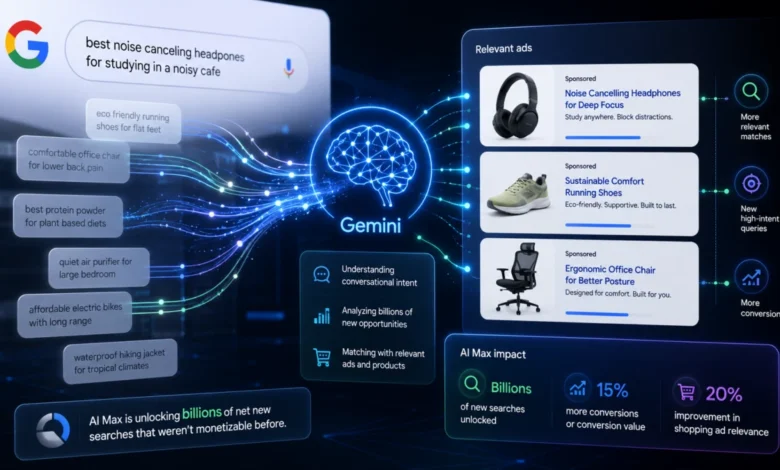
Google has announced that its proprietary AI Max technology is successfully opening "billions" of previously unmonetized search queries to advertising, providing parent company Alphabet with a robust strategy to scale Search revenue as user behavior shifts toward longer, more conversational interactions. During Alphabet’s Q2 2026 earnings call, Google Senior Vice President and Chief Business Officer Philipp Schindler detailed how the integration of advanced generative models is fundamentally altering the economics of search by capturing value from queries that were historically too complex or ambiguous for traditional keyword-based targeting systems.
The transition of AI Max from its beta testing phase to a full-scale commercial product marks a significant milestone in Google’s multi-year pivot toward an "AI-first" advertising ecosystem. According to the company, more than 500,000 advertisers have already integrated AI Max into their digital marketing strategies. The results reported by Google indicate that advertisers utilizing AI Max, often in conjunction with Performance Max campaigns, are experiencing an average 15% increase in conversions or conversion value, while maintaining a consistent return on ad spend (ROAS). This efficiency is attributed to the system’s ability to interpret user intent with a level of nuance that manual keyword management cannot replicate.
The Evolution of Search: From Keywords to Conversational Intent
For over two decades, the backbone of digital advertising was the keyword—a specific string of text that advertisers would bid on to capture a user’s attention. However, as search engines have evolved into sophisticated AI assistants, user behavior has changed. Modern search queries are increasingly characterized by their length and conversational nature, often taking the form of full questions or multi-part requests.
Historically, these "long-tail" or highly specific queries were difficult to monetize because they did not always contain a high-intent keyword that triggered a relevant ad. AI Max addresses this gap by using the Gemini large language model to decode the underlying commercial intent behind complex phrasing. This allows Google to serve ads in contexts that were previously considered "dark" or unmonetizable, effectively creating a massive new stream of ad inventory without increasing the number of ads shown per page.
The implementation of Gemini has specifically bolstered Google’s Shopping ecosystem. The company reported that the relevance of Shopping ads for complex queries has improved by approximately 20% since the integration of Gemini. By better understanding the relationship between a user’s descriptive query and a merchant’s product data, the AI can bridge the gap between a vague desire (e.g., "what kind of shoes are best for a rainy hike in the Pacific Northwest") and a specific product listing, even if the advertiser did not explicitly bid on every word in that query.
Chronology of Google’s AI Advertising Integration
The launch of AI Max is the culmination of a strategic roadmap that began several years ago as Google sought to defend its dominance in the search market against emerging AI competitors.
- 2021–2022: The Foundation of Automation. Google introduced Performance Max (PMax), a goal-based campaign type that allowed advertisers to access all of their Google Ads inventory from a single campaign. This was the first major step toward removing manual keyword control in favor of machine learning.
- 2023: The Generative AI Pivot. Following the public surge in interest in generative AI, Google began testing "Search Generative Experience" (SGE) and integrated initial AI features into the Google Ads interface to help with headline generation and image cropping.
- 2024–2025: The Rise of Gemini. Google rebranded its AI efforts under the Gemini umbrella, rolling out more sophisticated multimodal models. During this period, AI Max entered beta, allowing a select group of large-scale advertisers to test intent-based matching for conversational search.
- Q2 2026: Commercial Maturity. Alphabet officially moves AI Max out of beta, citing the 500,000-advertiser milestone and the successful monetization of billions of previously untapped queries.
Technical Analysis: How Gemini Redefines Ad Matching
At the heart of AI Max is the Gemini model’s ability to perform semantic mapping. Traditional search advertising relies on "Broad Match," "Phrase Match," and "Exact Match" to link queries to ads. While Broad Match uses some machine learning, it still operates within the orbit of the specific keywords provided by the advertiser.
AI Max functions differently by analyzing the totality of the user’s search history, location, and the linguistic structure of the current query to build a "vector" of intent. It then matches this vector against the advertiser’s landing page content, product feeds, and creative assets. This shift means that the quality of an advertiser’s data—such as product descriptions and landing page clarity—is becoming more important than the specific keywords they choose to target.
Furthermore, AI Max is designed to function within the "AI Mode" of Google Search. As users increasingly interact with AI-generated overviews rather than a list of blue links, AI Max ensures that ads are woven into the conversational response in a way that feels organic and helpful. This minimizes "ad blindness" and increases the likelihood of a conversion by providing a solution exactly when the user’s intent is most refined.

Official Responses and Industry Sentiment
During the earnings call, Philipp Schindler emphasized that the goal of AI Max is to create a "win-win-win" scenario for users, advertisers, and Google. "We are seeing that when we provide more relevant ads for these complex queries, users are more likely to engage, advertisers see better performance, and we are able to unlock growth in areas of search that were previously quiet," Schindler stated.
However, the transition has not been without its critics within the digital marketing community. Many performance marketers have expressed concerns regarding the "black box" nature of AI Max. Because the system prioritizes intent over specific keywords, advertisers have less visibility into exactly which queries are triggering their ads. This lack of granular data can make it difficult for brands to perform traditional competitive analysis or to exclude specific terms that might be marginally related but not profitable.
Industry analysts suggest that while the 15% lift in conversions is impressive, the long-term impact will depend on how Google balances automation with transparency. "Google is essentially asking advertisers to trust the algorithm entirely," noted one senior analyst at a leading digital firm. "For small and medium-sized businesses, this automation is a massive time-saver. For enterprise brands with strict brand safety requirements, the lack of control remains a point of friction."
Broader Economic Impact and Market Implications
The success of AI Max has significant implications for Alphabet’s stock and its standing in the broader technology market. By successfully monetizing conversational search, Google has mitigated the risk that AI-powered search engines (which provide direct answers rather than links) would cannibalize its primary revenue source.
The "billions" of newly monetized searches represent a significant expansion of the total addressable market for digital advertising. As more consumers use voice search and mobile AI assistants to conduct research, the ability to serve ads in those contexts ensures that Google remains the primary gateway for commercial discovery.
Moreover, this shift is forcing a transformation in the search engine optimization (SEO) and pay-per-click (PPC) industries. The emphasis is moving away from "keyword stuffing" and toward "entity-based" marketing. Brands are now incentivized to provide high-quality, comprehensive information about their products and services so that Google’s AI can accurately categorize them. This could lead to a general improvement in the quality of web content, as the AI rewards clarity and depth over simple repetition.
Future Outlook: The Path to 2027
As AI Max continues to roll out globally, Google is expected to introduce further refinements, including "AI-generated creatives" that can build custom ad copy and images in real-time based on the specific query a user has typed. This would mean that two different users searching for the same product for different reasons would see two completely different ads, each tailored to their specific motivations.
The Q2 2026 earnings report confirms that Alphabet’s heavy investment in AI research and data centers is beginning to pay off in the form of tangible advertising revenue. By moving beyond the limitations of the keyword, Google has not only modernized its core product but has also built a moat against competitors who lack the massive scale of historical search data required to train such sophisticated intent-matching models.
The bottom line for the advertising industry is clear: the era of manual keyword bidding is drawing to a close. In its place is a dynamic, AI-driven landscape where success is defined by the richness of a brand’s data and the ability of algorithms to connect that data with the ever-evolving way humans ask questions. For Alphabet, the move is a definitive statement that Search is not just surviving the AI revolution—it is being rebuilt by it.