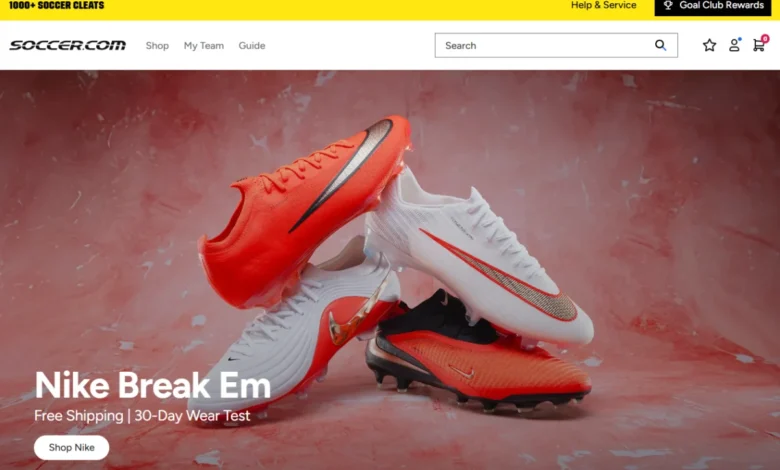
As the dust settles following the 2026 FIFA World Cup—an event that served as the primary catalyst for record-breaking sales cycles—Soccer.com is shifting its strategic focus toward the critical Cyber 5 period. While the World Cup acted as an unprecedented revenue accelerator for the niche retailer, the organization is now recalibrating its operational model to address the complexities of the upcoming holiday shopping season. Navigating this transition requires a delicate balance between leveraging existing inventory, managing inflationary pressures, and meeting the specific needs of a consumer base that remains highly responsive to seasonal demand.
A Seasonal Shift in Retail Momentum
For most general retailers, the period from Thanksgiving through Cyber Monday—collectively known as the Cyber 5—represents the singular peak of the fiscal year. For Soccer.com, however, the retail calendar is dictated more by the rhythms of the sport itself than by traditional calendar holidays. According to Billy Lalor, director of consumer merchandising at Soccer.com, while days such as Memorial Day, Independence Day, and Labor Day generate measurable traffic upticks, they do not mirror the dramatic, sustained surges experienced by mass-market competitors.
Instead, the retailer operates on a unique seasonal cadence. The "back-to-school" and "back-to-club" window, occurring from late July through late August, remains a pivotal moment for the company. During this timeframe, youth players and club members gear up for fall competition, driving significant volume in performance equipment and apparel. This seasonal peak often creates a "bell curve" of activity that dictates inventory flow and merchandising strategy long before the holiday shopping season begins.
The World Cup Impact and Inventory Realities
The 2026 FIFA World Cup created a seismic shift in the soccer retail sector. By hosting the tournament on North American soil, the event provided an unprecedented surge in interest and merchandise consumption. However, the outcomes were not uniform across all product categories. Lalor noted that while adult men’s and women’s fan merchandise saw robust sell-through rates, youth-sized apparel did not reach projected targets.
This discrepancy is currently being corrected through the back-to-school cycle, where youth demand has normalized. The lessons learned from the World Cup are currently informing how the company approaches its Q4 inventory. With "pretty healthy" inventory levels heading into the final quarter, Soccer.com is well-positioned to maintain a competitive edge without the need for the aggressive, margin-eroding markdowns that often plague retailers with excess stock.
Chronology of Planning and Strategic Execution
Strategic planning at Soccer.com is a long-horizon endeavor, with merchandising plans often finalized more than six to seven months in advance. In a World Cup year, this planning process becomes exponentially more complex, requiring an assessment of the sport’s broader growth trajectory in the United States.
- Early 2026: Strategic procurement and demand forecasting based on projected tournament interest.
- Q2 2026: Initial rollout of national team kits and World Cup-related hardware.
- Summer 2026 (Tournament Window): Primary sales peak, characterized by high-velocity sales of fan gear and commemorative merchandise.
- August 2026: Transition to back-to-school and club-team replenishment; mitigation of excess inventory from the tournament.
- Q4 2026 (Cyber Month): Execution of the Cyber 5 strategy, focusing on value-based promotions to clear remaining World Cup surplus while maintaining healthy margins.
By the time the summer months commence, the roadmap for the "Cyber Month"—as Lalor now refers to the expanded five-day period—is already locked in. The challenge, according to the retailer, is that the late-year period lacks the high-profile product launches that typically drive massive traffic spikes. Consequently, the focus shifts to consumer expectations for volume-based savings.
Macroeconomic Pressures and Market Competition
The retail environment for the remainder of 2026 is defined by a complex interplay of macroeconomic factors. Rising inflation and fluctuating fuel costs have inevitably impacted the company’s operating expenses. While these costs have influenced the bottom line, Soccer.com has successfully shielded its supply chain and product delivery timelines from these external pressures.
"The marketplace is going to be as promotional as ever," Lalor observed. "There is likely going to be leftover inventory from the World Cup that stakeholders will want to liquidate by year-end." This market reality suggests that consumers will find significant value, and Soccer.com intends to participate in this promotional environment judiciously. The objective is to remain competitive with general sporting goods retailers without sacrificing profitability through unnecessary discounting.
Comparative Analysis: 2025 vs. 2026
To understand the current strategy, one must look at the performance during the 2025 Cyber 5. During that period, Soccer.com achieved year-over-year growth, but the context was unique. Adidas and Puma utilized the 2025 holiday season to launch the first major wave of World Cup-related products, including home jerseys and official match balls. This created an artificial "bump" in traffic and sales that occurred earlier than a typical non-tournament cycle.
In contrast, the 2026 season requires a different approach. Because the tournament has already concluded, the focus is not on customer acquisition through new product hype, but on retention and the conversion of residual interest. Lalor emphasized that the company does not necessarily view the Cyber 5 as a primary customer acquisition vehicle; rather, it is a tool for inventory turnover and maintaining a consistent presence in a crowded market.
Broader Implications for the Soccer Retail Sector
The growth of soccer in the United States is no longer a matter of speculation; the success of the 2026 World Cup has solidified the sport’s permanent standing in the American retail landscape. This has profound implications for niche retailers. The increased demand for soccer-specific goods—ranging from high-end cleats to club jerseys—means that Soccer.com is no longer just competing with local specialty shops but is increasingly vying for share-of-wallet against major, multi-category sporting goods retailers.
The "Cyber Month" evolution suggests that the traditional holiday peak is becoming less defined for specialized segments. Instead, retailers are finding success by mapping their promotions to the specific needs of their demographic. For soccer players, that means timing sales around tournament cycles and season-start dates. For fans, it means capitalizing on the liquidation of event-specific merchandise.
Strategic Outlook
As Soccer.com moves toward the end of the year, the primary objective is operational efficiency. By refusing to engage in a "race to the bottom" on pricing, the company maintains its brand integrity while acknowledging the competitive reality of a post-tournament surplus. The ability to pivot from the high-energy environment of a global sporting event to the value-driven environment of the holiday season is a testament to the maturation of the soccer retail market.
The company’s reliance on data-driven merchandising, rather than reactive, short-term discounting, positions it to weather the remaining months of 2026. As Lalor noted, the strategy remains one of calculated moderation—being "no more promotional than we have to be." This disciplined approach ensures that while the World Cup provided the peak, the ongoing, year-round engagement with the sport provides the foundation for sustained success in an increasingly crowded and cost-conscious retail landscape.
Ultimately, the 2026 retail cycle will be remembered as a pivotal year for the industry—a time when the sport moved from the margins of American culture to a central pillar of the retail calendar. Whether that momentum can be sustained into 2027 and beyond will depend on the continued ability of retailers like Soccer.com to anticipate the needs of the consumer with the same precision with which they manage their inventory.
Related posts: