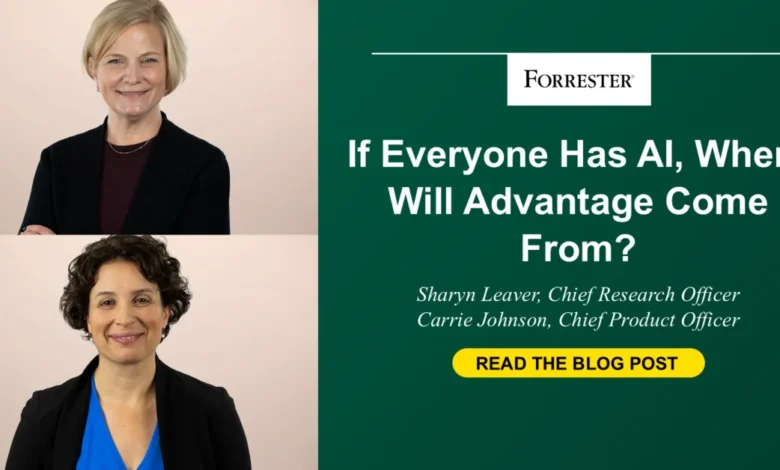
As technology and data leaders from across the globe convene at Forrester’s Technology & Innovation Forum Central, a singular, pressing theme has emerged to dominate the discourse: the transition from experimental artificial intelligence to strategic, value-driven implementation. For many executives, the initial novelty of generative AI has worn off, replaced by the pragmatic challenge of leveraging the speed and computational scale of large language models (LLMs) without sacrificing the nuance, accountability, and organizational context that only human intelligence can provide.
The consensus among industry experts at the forum is that AI, in its raw form, has ceased to be a competitive differentiator. Instead, the firms that will lead in the coming decade are those capable of seamlessly blending automated intelligence with the qualitative judgment of human experts. This shift marks a fundamental maturation of the corporate AI narrative—from a focus on "what can we automate" to "how can we augment human decision-making to create durable value."
A Chronology of the AI Evolution at Forrester
The urgency of this transition is reflected in the rapid evolution of Forrester’s own operational model. When ChatGPT burst into the public consciousness in late 2022, it signaled a seismic shift in how professional research and advisory services would be consumed. Recognizing that traditional delivery models were being disrupted, Forrester moved quickly to internalize these capabilities.
In 2023, the firm introduced its first generative AI tool, Izola, now rebranded as Forrester AI. This platform was designed to bridge the gap between public AI models and the firm’s proprietary research, data, and rigorous methodologies. By grounding AI responses in verified, expert-led data, Forrester sought to mitigate the risks of "hallucinations" that have plagued more generic models.
The evolution continued throughout 2024 as the firm integrated these insights into the native workflows of its clients. By deploying Forrester AI within Microsoft Teams and Microsoft Copilot, the firm acknowledged that the most effective insights are those that reach decision-makers exactly where they are working. As of this week’s forum, the firm has expanded this ecosystem to include integration with Claude, further diversifying the models available to its user base to ensure that clients have access to the most effective technological tools available.
The Strategic Imperative: The AI + HI Framework
Central to the discussions at the Technology & Innovation Forum is the introduction of the "AI + HI" (Artificial Intelligence + Human Intelligence) framework. This concept posits that AI provides the velocity and breadth required to navigate modern markets, while Human Intelligence (HI) provides the judgment, lived experience, and ethical guardrails necessary to convert that data into sound corporate strategy.
Forrester’s analysts argue that AI is exceptionally capable at identifying patterns and synthesizing vast datasets, but it lacks the capability to understand the subtle, often political, internal dynamics of an organization. An analyst, by contrast, can interpret how a macroeconomic trend might impact a specific, localized department or how a board of directors might react to a radical shift in product strategy.
In practice, this means the firm’s experts are shifting their focus from being simple content producers to being "experience-driven consultants." They are tasked not only with delivering research but with challenging client assumptions—a role that an algorithm, programmed to be helpful and agreeable, is currently unable to perform with the necessary level of critical insight.
Supporting Data and Industry Context
The necessity of this hybrid approach is underscored by recent market shifts. According to internal data and market observation, organizations that rely solely on automated insights often suffer from "context drift," where the speed of information delivery outpaces the ability to apply it meaningfully to a specific brand identity.
Industry analysis suggests that the cost of implementing AI has moved from the top of the agenda to the middle, while the challenge of integration has risen to the top. As CISOs and CIOs move past the initial skepticism regarding whether AI "works," they are now forced to grapple with the ROI of these systems. Security and risk professionals are particularly focused on the tension between the speed of deployment and the necessity of governance.
The focus on context has also returned to the forefront of consumer personalization. As AI models become more adept at understanding intent and resolving ambiguity, the most successful firms are those that use this technology to enhance the human-brand relationship, rather than replace it with a cold, automated interface. The "contextual future" is one where AI is used to provide the right information at the right time, while human teams define the brand’s unique voice and ethical position.
Official Perspectives and Expert Commentary
During the forum, industry leaders emphasized that the value of a research firm in the AI era is largely human. While AI can draft reports and organize data points, it cannot account for the "lived experience" of an executive who has navigated three different recessions or led a company through a successful digital transformation.
"The goal is not to have AI replace the expert," one senior lead at the forum noted during a breakout session. "The goal is to capture AI’s power to synthesize, then elevate the human intelligence that turns that synthesis into a decisive outcome. The machine knows the data; the human knows the business."
This sentiment reflects a broader industry trend toward "human-in-the-loop" systems. Whether in security, marketing, or general management, the consensus is that accountability remains a human responsibility. When an AI makes a suggestion that affects millions of customers or billions of dollars in valuation, the final "go/no-go" decision must rest with a person capable of understanding the consequences.
Broader Impact and Future Implications
The integration of AI + HI is expected to redefine the delivery models for advisory services across all sectors. As firms like Forrester continue to weave these technologies into their service offerings, the expectation for clients is that they will receive more personalized, rapid, and actionable advice than ever before.
However, the shift also suggests a need for a new set of skills within the workforce. The "AI-enabled analyst" must be as comfortable with prompt engineering and data architecture as they are with traditional market research. Organizations are now looking for talent that can synthesize data from multiple AI sources while maintaining the skepticism and creative insight that define high-level consulting.
Looking ahead, the implications for businesses are clear: those that view AI as a replacement for human intelligence will likely find themselves delivering commoditized, "average" strategies. Those that view AI as a catalyst to unlock the potential of their human talent will gain a durable, structural advantage.
As the Technology & Innovation Forum Central concludes, the prevailing takeaway is that we are entering a phase of "sophisticated pragmatism." The hype cycle is being replaced by the execution cycle. For leaders, the challenge of the next five years will not be finding the best AI tool, but rather building the organizational culture and operational infrastructure that allows humans and machines to work in a collaborative, value-generating harmony. The future of business is not human versus machine; it is a synergistic blend that honors the strengths of both, ensuring that technology serves the strategic goals of the enterprise rather than the other way around.