Critical Windows Zero-Day Exploit Weaponizes CLFS to Bypass Antivirus and Gain SYSTEM Privileges

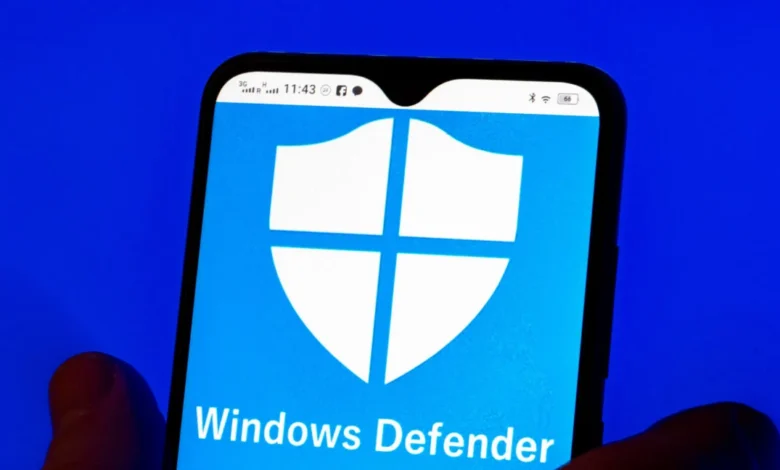
A newly disclosed zero-day vulnerability affecting modern iterations of the Microsoft Windows operating system has sent shockwaves through the cybersecurity community. The security flaw, discovered and publicly documented by an independent researcher operating under the pseudonym Nightmare Eclipse, weaponizes the Common Log File System (CLFS) driver to achieve arbitrary file creation within the security context of privileged anti-malware processes. This capability effectively neutralizes the tamper protection mechanisms of leading endpoint detection and response (EDR) solutions and security engines.
The implications of this vulnerability are profound, as it provides local attackers with a direct pathway to disable host-based defenses and elevate privileges to the SYSTEM level. While the discovery highlights persistent architectural challenges within core Windows components, independent verification and official statements from Microsoft provide crucial nuance regarding the real-world exploitability and specific preconditions required for the vulnerability to manifest.
Mechanics of the CLFS Vulnerability and Antivirus Bypass
At the core of the security flaw is the manipulation of the Common Log File System, a logging subsystem designed for high-performance transaction logging in Windows. Over recent years, CLFS has frequently emerged as a fertile ground for vulnerability researchers, yielding multiple zero-days and privilege escalation bugs exploited in targeted attacks.
This latest iteration, however, introduces a novel twist. By exploiting the manner in which the CLFS driver handles authentication modes and file operations, an attacker can trick the system into generating arbitrary files. Crucially, because these file creation requests are processed through the context of legitimate, trusted antimalware processes, kernel-level drivers inherently trust the origin of the request.
Nightmare Eclipse detailed the mechanics of the exploit in a technical advisory, noting the irony and severity of utilizing security software against itself. "What makes it funnier is the fact that it can be used against any antimalware engine to bypass their self defense or tamper protection mechanism," the researcher wrote. "You can trigger arbitrary file creation in the context of their own antimalware process, so from the perspective of their kernel drivers, the file creation request is coming from their own legit process, so it passes. This makes this vulnerability unique as it can be used to turn off any antivirus or EDR."
Once the tamper protection mechanisms are successfully disarmed through this file creation maneuver, the included proof-of-concept (PoC) script effortlessly spawns an interactive command shell running with elevated SYSTEM privileges, granting the operator total control over the underlying operating system.
Scope, Affected Versions, and Specific Prerequisites
Initial disclosures from Nightmare Eclipse indicated that the exploit successfully executed against several cutting-edge and pre-release Windows environments, specifically targeting Windows 11 version 26H2, Windows 11 26H2 Experimental builds, and Windows Server 2025 Experimental builds.
However, as the security research community began analyzing the disclosure, veteran vulnerability analyst Will Dormann undertook efforts to reproduce the exploit. Speaking in an interview regarding his findings, Dormann confirmed that the exploit functions precisely as described by its author, but with significant caveats concerning its reproducibility across standard consumer installations.
"The requirements are important in that it seems to require Windows 26H2, and one that has existed for more than 90 days, it seems," Dormann explained, outlining the temporal constraint discovered during testing. "That is, you can’t just take a new 26H2 system and install updates and have it work."
Dormann’s technical breakdown highlighted a specific registry key configuration required for successful exploitation. For a system to be considered vulnerable, the registry value located at HKEY_LOCAL_MACHINESYSTEMCurrentControlSetServicesCLFSAuthenticationMode must be explicitly set to 0 or 1, which correspond to the learning or enforcement modes of CLFS authentication. Administrators and security auditors can determine their system’s exposure by checking this specific path. Furthermore, among a diverse testing pool of multiple machines utilized in Dormann’s daily operations, only a single system met all the stringent criteria required to execute the PoC successfully.
Staged Rollouts and Ecosystem Visibility
Because Microsoft routinely deploys major operating system updates, such as Windows 11 version 26H2, via staggered and controlled rollouts, the exact aggregate percentage of the global enterprise and consumer user base currently running the qualifying build remains difficult to quantify. End users and system administrators seeking to verify whether their local machines are running the targeted build can execute the standard winver command via the Windows Run dialog or command prompt.
The discovery also adds to an exceptionally busy cycle for Nightmare Eclipse, who has maintained a prolific disclosure record over recent months. The researcher’s previous disclosures include high-profile vulnerabilities impacting core Windows components, such as a zero-day exploit that completely bypassed default BitLocker disk encryption protections in Windows 11, alongside contributions to record-breaking patch Tuesday disclosures managed by Microsoft.
Microsoft Response and Official Assessment
In the wake of the public disclosure, Microsoft initiated a formal investigation into the technical write-up provided by Nightmare Eclipse. In a statement issued to security journalists shortly after the vulnerability details went public, representatives for the Redmond-based technology giant confirmed that the engineering and security response teams are actively examining the claims.
Crucially, Microsoft stated that it currently possesses no telemetry or evidence indicating that this specific zero-day vulnerability is being actively exploited in the wild against customers. Additionally, the company emphasized that its native security suite, Microsoft Defender, incorporates behavioral monitoring and heuristic rules designed to detect and block potential exploitation attempts leveraging CLFS manipulation techniques, even in instances where underlying operating system configurations might theoretically allow the attack chain to initiate.
Broader Implications for Endpoint Security
The weaponization of core operating system subsystems to bypass security software represents an ongoing escalation in the perennial cat-and-mouse game between defensive engineering and offensive research. Antivirus and Endpoint Detection and Response (EDR) solutions rely heavily on self-defense mechanisms and tamper-protection drivers to prevent malicious actors—even those operating with administrative rights—from terminating security services, unloading kernel filters, or modifying critical registry entries.
By subverting the trust model of the operating system kernel, vulnerabilities that leverage legitimate processes as proxies for malicious actions undermine the foundational architecture of host-based security. While the strict preconditions identified by researchers—such as specific registry states and the 90-day installation age threshold on Windows 11 26H2—significantly limit the immediate attack surface in the wild, the conceptual approach serves as a warning for software architects.
Security operations centers (SOCs) and enterprise administrators are advised to monitor their environments for anomalous CLFS driver interactions, unexpected modifications to security-related registry keys, and unauthorized attempts to spawn shells from security product processes. As Microsoft continues its investigation into the disclosure, enterprise customers should ensure that their endpoint protection platforms are fully updated and that regular telemetry monitoring is active to detect anomalous administrative behavior before it can lead to full system compromise.
Related posts: