The transition from a boutique operation processing 200 orders daily to a high-volume enterprise handling 2,000 or more is a critical inflection point that tests the structural integrity of any ecommerce business. As order volumes swell, the logistical methods that once provided agility often transform into bottlenecks. Ecommerce fulfillment—the end-to-end process encompassing inventory procurement, warehousing, order picking, packing, shipping, and the management of reverse logistics—has become a primary determinant of long-term brand loyalty and financial sustainability.
Current industry data highlights the fragility of this process. Research conducted by Baymard Institute in September 2025 indicates that fulfillment-related friction is a leading driver of cart abandonment. Specifically, 40% of shoppers cited unexpected shipping costs as their primary reason for exiting a purchase, while 20% pointed to uncompetitive delivery speeds, and 13% identified restrictive returns policies as a dealbreaker. These statistics underscore that fulfillment is not merely an operational back-end task; it is a critical component of the customer experience that directly impacts conversion rates and revenue.
The Evolution of Fulfillment Demands
For many growing brands, the need to re-evaluate fulfillment strategies arises long before the system reaches a complete breakdown. Operational warning signs—such as the necessity for daily, manual inventory counts or constant hands-on supervision of order status—are early indicators that existing workflows are no longer scalable. As businesses expand into new sales channels and geographic regions, the complexity compounds. Entering a new market often requires navigating distinct shipping regulations and varying consumer expectations for delivery timelines. Without a unified, real-time inventory synchronization system, companies risk the dual hazards of stockouts and overselling, both of which can irreparably damage seller ratings on major platforms.

The timeline for these challenges typically follows a predictable trajectory. In the startup phase, manual processes are sufficient. However, as the product catalog expands past 100 SKUs, the margin for human error in manual logging increases exponentially. By the time a business reaches mid-market status, the integration of automated warehouse management systems (WMS) and robust shipping software becomes a prerequisite for survival rather than a competitive advantage.
Strategic Shifts: Internal Optimization vs. Outsourcing
When a brand identifies that its fulfillment processes are failing to keep pace with demand, leadership generally faces three paths: internal process optimization, full outsourcing to a third-party logistics provider (3PL), or a hybrid model.
Optimizing internal processes is the logical first step for teams that have the physical capacity to handle orders but lack the necessary systems. Implementing standardized bin locations, adopting barcode scanning technology, and utilizing digital pick lists can bridge the efficiency gap without the need to relinquish control over the customer experience. Tools such as Scanventory, which utilizes QR code scanning to eliminate manual data entry, serve as essential infrastructure for brands managing a diverse inventory.
Conversely, outsourcing becomes a strategic imperative when capacity constraints—such as a lack of warehouse floor space or an inability to meet delivery expectations—become the primary barrier to growth. Data from Capital One Shopping (March 2026) suggests that businesses should prioritize warehouse proximity as a means to maintain free shipping rather than prioritizing pure speed. Their findings reveal that 90% of online shoppers are willing to wait up to three days for free shipping, while 95% prioritize the removal of shipping costs over expedited arrival. Therefore, a 3PL partner should be evaluated not just on their ability to ship quickly, but on their ability to position inventory closer to the customer to offset shipping costs.

The Hybrid Fulfillment Model
Many established brands have adopted a hybrid approach to mitigate risk and maintain control. Under this model, companies retain fulfillment responsibility for high-margin, fragile, or specialty products while outsourcing standard, high-volume items to a 3PL. This strategy allows the business to maintain a personalized touch for key customer segments—such as wholesale clients or subscription box recipients—while leveraging the economies of scale offered by professional logistics providers.
When entering negotiations with a 3PL, the documentation of operational requirements is paramount. A business must provide a clear profile including average daily order volume, peak-season spikes, total SKU count, and specific handling requirements for items that are fragile, expiring, or high-value. This documentation allows for an accurate assessment of a provider’s capabilities.
Navigating the Landscape of Reverse Logistics
The financial implications of returns remain a significant concern for the retail sector. The National Retail Federation reported that in 2025, 19.3% of all online sales were returned, a figure significantly higher than the 15.8% rate observed across total retail. Because returns represent a substantial portion of revenue leakage, the reverse logistics capabilities of a fulfillment provider must be scrutinized. A proficient partner does more than just receive goods; they inspect, categorize, and restock items efficiently, ensuring that inventory remains visible and available for future sales.
The Economic and Technological Infrastructure
The Total Cost of Ownership (TCO) for fulfillment extends well beyond standard "pick and pack" fees. Brands frequently underestimate the impact of secondary costs, such as long-term storage fees for slow-moving inventory, custom packaging requirements, and the integration costs associated with connecting multiple software portals. Furthermore, the geographic location of a 3PL’s warehouse network acts as a multiplier on shipping expenses. As Digital Commerce 360 observed in their January 2026 trends analysis, the industry is shifting toward distributed, regional fulfillment networks to combat rising transportation costs and meet customer demand for predictable, low-cost delivery.
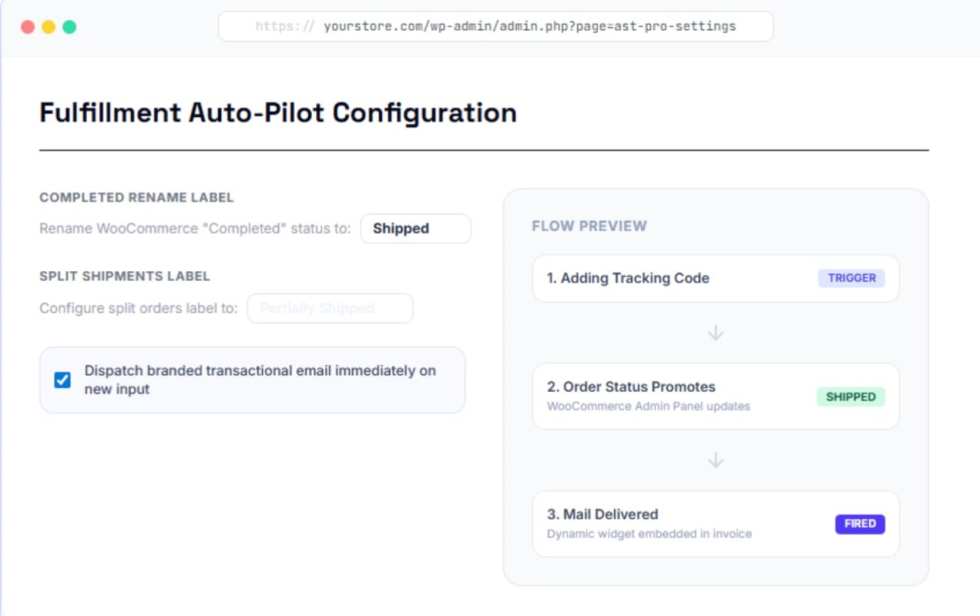
Technological integration is the connective tissue of this modern fulfillment ecosystem. For a business to scale effectively, orders must flow seamlessly from storefront platforms like WooCommerce into the 3PL’s management system. Real-time synchronization of inventory levels, tracking numbers, and return status is non-negotiable. Using solutions like ShipStation for multi-carrier label printing or Advanced Shipment Tracking Pro for customer-facing updates enables brands to maintain transparency without the burden of manual data management.
Conclusion and Future Outlook
The transition from a manual, internal fulfillment setup to an automated or outsourced model is a milestone that marks a brand’s evolution from a small business to a serious market player. The objective is to transition from a state of reactive crisis management to one of proactive, data-driven logistics.
By identifying specific bottlenecks—whether they exist in inventory accuracy, picking speeds, or the return inspection process—business leaders can isolate the specific tools and partnerships required to optimize their operations. Software, while powerful, is merely an enabler; the true success of an ecommerce fulfillment strategy lies in the accuracy of the data being fed into these systems and the ability of the leadership team to use that data to make informed decisions about storage, shipping, and customer service. As the market continues to demand faster, cheaper, and more transparent delivery, those who master the complexity of fulfillment will be best positioned to capture and retain market share in an increasingly competitive digital landscape.