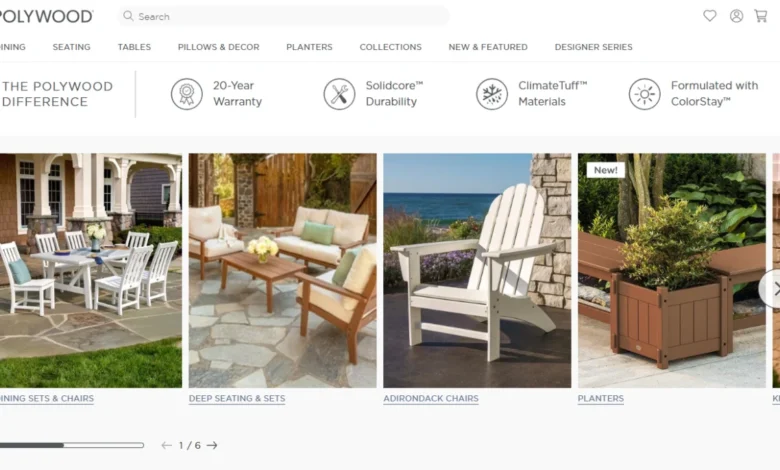
When Ben Spiegel joined Polywood in 2025, he did not anticipate that 75% of the outdoor furniture retailer’s sales would eventually stem from e-commerce channels. Joining the organization initially as chief information officer in April 2025 before transitioning into the role of chief digital officer a year later, Spiegel brought a background in consumer-packaged goods and health and beauty retail—sectors where digital-first strategies are the standard. However, the home furnishings category presented a unique set of challenges that challenged his initial assumptions about consumer behavior.
The traditional furniture shopping experience has historically been rooted in showrooms. Consumers typically browse physical displays to test comfort and aesthetics. Yet, Spiegel noted that the limitations of brick-and-mortar retail—specifically regarding inventory variety, color availability, and precise dimensions—have acted as a primary catalyst for the surge in direct-to-consumer (DTC) demand. For many shoppers, the inability to find the exact configuration of outdoor furniture in a local store has driven them to seek digital solutions where customization is more accessible.
The Operational Model: Just-in-Time Manufacturing
At the heart of Polywood’s success is a highly efficient, vertically integrated manufacturing process. Unlike traditional furniture retailers that rely on massive warehousing operations and inventory forecasting—which often lead to overstocking or stockouts—Polywood utilizes a just-in-time (JIT) production model. According to Spiegel, the moment a customer completes a transaction on Shopify, an automated signal is sent to the manufacturing floor. This triggers the movement of raw materials, which are then extruded, cut, and assembled specifically for that order.
This "one-piece flow" manufacturing approach allows the company to maintain an extremely lean inventory profile, with Spiegel estimating that at any given time, no more than 5% of the company’s total potential assortment is held in finished goods inventory. By manufacturing each piece on demand, Polywood bypasses the traditional overhead costs associated with warehousing large, bulky outdoor furniture items. This model is particularly advantageous in the furniture sector, where trends shift rapidly and the cost of storing unsold inventory can be prohibitive.
Seasonal Dynamics and the Retail Calendar
Polywood operates within a highly seasonal market, with approximately 80% of its business volume concentrated between Memorial Day and Labor Day. May serves as a critical month for the brand, acting as the primary launchpad for the outdoor living season. Because the product category is inherently seasonal, the company has had to develop sophisticated strategies to manage demand spikes while maintaining brand integrity.
The company’s approach to major promotional periods, such as the "Cyber 5" (the period spanning Thanksgiving through Cyber Monday), is markedly different from many of its competitors. Rather than engaging in aggressive price discounting, which can devalue a brand, Polywood often leverages logistical incentives. This includes offering expedited shipping or releasing limited-time, exclusive products. Spiegel noted that for high-ticket items with an average order value of approximately $1,600, customers rarely make impulsive, emotionally driven purchases. Instead, these acquisitions require significant pre-planning and research.
Consumer Behavior During Prime Day and Beyond
Polywood’s experience with Amazon’s Prime Day in June 2025 offered further insights into consumer behavior. While the event generated a notable spike in traffic, the data revealed a trend toward "comparison shopping" and "dream shopping." Many consumers used the event to curate baskets, filling them with potential items while waiting for the most advantageous time to convert.
This behavior has forced Polywood to adjust its conversion optimization windows. During standard periods, a typical customer journey from site entry to purchase spans about seven days. However, during high-promotional windows like the Cyber 5, that cycle has extended to 10–14 days. Consumers are increasingly treating the online shopping experience as a "hunting" period, waiting for flash sales or price adjustments across various retailers. This shift has necessitated a more nuanced approach to retargeting and email marketing, as the company must maintain top-of-mind awareness without defaulting to the "race to the bottom" pricing that often plagues the furniture industry.
The Impact of Economic Uncertainty
The broader economic environment has also played a role in shaping Polywood’s recent performance. Spiegel observed that while demand for high-end, premium-priced products has remained relatively resilient, smaller, lower-priced items have seen a decline. This disparity is often attributed to shifts in household income and general consumer uncertainty. In periods of economic tightening, lower-income households tend to reduce discretionary spending on home improvements, while higher-income consumers remain insulated from the immediate effects of market volatility.
Strategic Marketing and the "Second Season"
A critical component of Polywood’s digital strategy involves the concept of the "second season." For consumers in southern states, the optimal time for outdoor living often begins when northern climates are entering the winter months. Spiegel, who is based in Florida, emphasized that the post-November period provides a secondary window of opportunity to capture market share. By aligning advertising spend and promotional messaging with the geographic realities of the climate, Polywood effectively extends its sales cycle beyond the traditional summer peak.
Furthermore, the brand has shifted its focus away from traditional pay-per-click advertising toward influencer partnerships and organic content curation. By collaborating with creators to produce "roundup" content—such as guides on the best outdoor furniture for winter yards—Polywood has achieved better engagement and conversion rates. This strategy focuses on "context relevance," ensuring that the brand appears in front of consumers who are already in the research phase of their purchasing journey.
Market Implications and Future Outlook
The rise of Polywood’s DTC model serves as a case study for the broader home furnishings industry. The traditional model, characterized by mass-market retailers carrying a limited selection of obscure brands with opaque delivery timelines, is increasingly viewed as inefficient. Consumers now demand transparency, customization, and reliability.
By controlling the entire value chain—from the digital storefront to the raw material extrusion and shipping—Polywood has mitigated many of the risks associated with global supply chain disruptions. This vertical integration allows for a degree of agility that traditional wholesale-reliant retailers struggle to replicate.
As the industry moves forward, the success of this DTC, JIT-manufactured model suggests a permanent shift in how furniture is bought and sold. The reliance on digital tools for complex, high-value purchases is no longer an anomaly but a consumer expectation. Retailers that can successfully balance the "dream shopping" phase of the customer journey with the operational efficiency required to produce and deliver custom goods on a short timeline will likely capture the majority of the market share in the coming decade.
Conclusion
The evolution of Polywood under the guidance of its digital leadership team highlights the necessity of adapting to modern consumer behaviors. Through a combination of lean manufacturing, strategic seasonal planning, and a deep understanding of the digital customer journey, the company has managed to thrive in a category traditionally dominated by physical showrooms. As the retail landscape continues to prioritize convenience and customization, Polywood’s model of on-demand production and targeted digital engagement serves as a benchmark for the home furnishings sector at large. The company’s ability to navigate economic headwinds while maintaining its premium pricing structure reflects a mature understanding of its consumer base and a robust commitment to operational excellence. Moving into the next fiscal cycle, the focus will remain on refining these digital acquisition strategies to ensure the brand remains at the forefront of the outdoor furniture market, regardless of the broader macroeconomic climate.