The Evolution of Revenue Operations Stacks: How Modern GTM Teams are Unifying Data, AI, and Tech Infrastructure

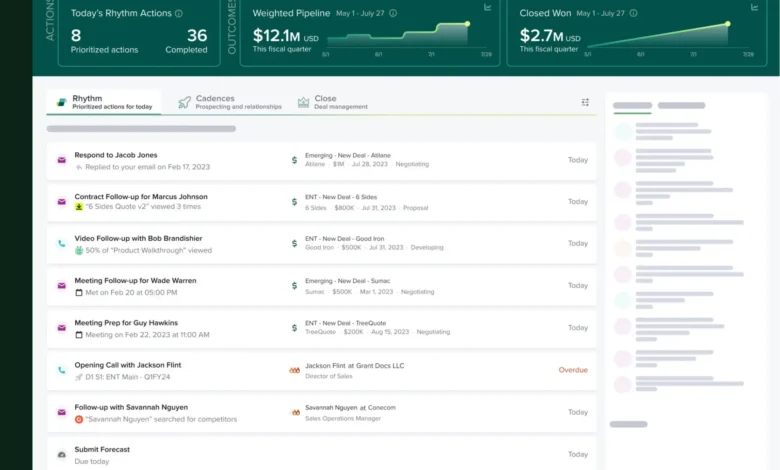
The modern go-to-market (GTM) landscape has shifted dramatically over the past decade, moving away from siloed departmental software toward integrated revenue operations (RevOps) ecosystems. Historically, marketing, sales, customer success, and finance operated on isolated platforms, leading to fractured data sets, dropped handoffs, and inconsistent customer experiences. Today, organizations are increasingly adopting holistic RevOps frameworks, treating their technology stack not as a collection of point solutions, but as a unified engine designed to optimize the entire customer lifecycle from initial touchpoint to renewal.
Background and Context of the RevOps Movement

The rise of RevOps is rooted in the explosive growth of software-as-a-service (SaaS) and digital-first B2B buying behaviors. Throughout the 2010s, departmental tech stacks expanded rapidly. Marketing teams adopted advanced automation platforms, sales teams deployed engagement dialers and tracking software, and customer success teams implemented specialized health-scoring tools. However, this unchecked expansion—often referred to as tool sprawl—created critical operational friction.
Data discrepancies quickly became a primary pain point for enterprise leadership. When a prospect’s record was updated in a marketing automation platform but failed to sync accurately to the customer relationship management (CRM) system, revenue projections were compromised. Leaders found themselves relying on lagging indicators and fragmented reporting to forecast quarterly performance. The need to eliminate these blind spots catalyzed the emergence of Revenue Operations as a distinct discipline, bridging the gap between data architecture, process optimization, and cross-functional alignment.
Anatomy of a Modern RevOps Technology Stack

Building a scalable RevOps infrastructure requires a meticulous approach to software selection and data architecture. Industry analysts categorize the modern stack into several foundational layers:
- The System of Record (CRM): Serving as the single source of truth, modern AI-powered CRMs—such as HubSpot Smart CRM—anchor the architecture, housing core customer, account, and deal records.
- Data Hygiene and Enrichment: Platforms like Clay allow GTM engineers to pull data from hundreds of third-party providers, ensuring that inbound leads and accounts are automatically enriched with accurate intent signals and firmographics.
- Revenue Intelligence and Analytics: Tools such as Gong and Aviso AI capture buyer-seller interactions, meetings, and communications to provide qualitative context that goes far beyond standard CRM deal stages, dramatically improving risk detection and pipeline forecasting.
- Orchestration and Routing: Solutions like LeanData manage complex territory rules, lead-to-account matching, and service-level agreements (SLAs), ensuring smooth handoffs across teams without manual intervention.
- Engagement and Enablement: Platforms like Salesloft and Highspot standardise outreach, coaching, and buyer enablement, ensuring sales representatives execute strategies with consistent messaging.
The Chronology of RevOps Maturity
Organizations typically evolve through three distinct operational phases as they scale their revenue operations infrastructure:

Startup Phase: Early-stage companies generally prioritize agility and cost-efficiency. The tech stack at this juncture is lean, frequently relying on a foundational CRM with built-in email tracking and basic automation. The primary objective is establishing initial product-market fit and capturing clean baseline data without overcomplicating workflows.
Mid-Market Phase: As headcount and inbound volume increase, companies encounter structural bottlenecks. Territories expand, inbound routing becomes complex, and manual data entry begins to break down. During this phase, mid-market organizations typically integrate specialized point solutions for enrichment, advanced routing, and sales engagement to maintain momentum.
Enterprise Phase: Enterprise operations demand rigorous governance, multi-layered data orchestration, and robust predictive forecasting. At this stage, tech stacks often encompass dozens of specialized applications. RevOps leaders must enforce strict data protocols, ensure seamless bidirectional syncing, and deploy sophisticated security measures to protect sensitive customer data across global business units.

The Integration Challenge and Data Flow Design
Despite the availability of advanced software, technology alone cannot resolve foundational process failures. A recurring challenge for RevOps leaders is managing integrations to prevent data latency and synchronization errors. When data flows improperly between systems, teams are forced into manual reconciliation, eroding trust in internal reporting.
To mitigate these risks, successful organizations establish strict data governance policies. The CRM must remain the undisputed system of record, while specialized tools act as specialized contributors—either feeding refined intelligence into the CRM or pulling data to execute specific workflows. Before implementing any new software, RevOps teams must map out the exact data lifecycle: identifying the origin of the data, the permissions governing updates, and the destination of the resulting outputs.

The Impact of Artificial Intelligence and Autonomous Agents
Artificial Intelligence has fundamentally altered the operational capacity of RevOps teams. Rather than serving merely as predictive scoring mechanisms, modern AI applications are evolving into autonomous agents capable of executing complex, multi-step workflows under strict rule parameters.
In contemporary revenue operations, AI is deployed across several critical areas:

- Automated Prospecting and Research: AI agents scour public and proprietary data sources to build highly targeted account lists and draft personalized outreach strategies.
- Pipeline Risk Detection: Machine learning models analyze historical close rates, communication cadences, and buyer engagement sentiment to flag deals at risk of stalling before human managers notice the warning signs.
- Post-Sale Orchestration: AI tools streamline onboarding by automatically extracting contract details, updating billing profiles, and notifying customer success teams of specific product adoption milestones.
However, the proliferation of AI necessitates robust governance frameworks. RevOps leaders must establish clear boundaries regarding agent permissions, requiring human approval for high-impact actions such as contract modifications or automated pricing negotiations.
Strategic Implications for Business Leaders
The implementation of a disciplined, well-integrated RevOps strategy directly impacts top-line growth and operational efficiency. By eliminating redundant tools, streamlining handoffs, and establishing reliable data pipelines, businesses can significantly reduce sales cycles and improve customer retention.

Ultimately, the goal of revenue operations is to transform cross-functional alignment from an administrative hurdle into a sustainable competitive advantage. Organizations that successfully harmonize their data, technology, and human talent are better positioned to navigate market volatility, scale predictably, and deliver a seamless experience throughout the entire customer journey.
Related posts: