Mastering Modern Sales Prospecting: Why Warm, Signal-Driven Methods Outperform Cold Outreach


In the rapidly evolving landscape of B2B commerce, sales organizations are increasingly moving away from high-volume, impersonal cold outreach in favor of repeatable, permission-based prospecting strategies. Industry data indicates that modern buyers are heavily desensitized to generic cold emails and high-frequency dialing campaigns. Consequently, sales leadership teams are pivoting toward structured methodologies that rely on contextual signals, social familiarity, and trusted referrals to build predictable, high-quality pipelines.
Choosing the right prospecting method has become a foundational operational decision for enterprise growth. While communication channels—such as email, phone, social media, and messaging applications—frequently shift and evolve, the underlying methodology governing how a prospect is identified, prioritized, and engaged remains the bedrock of successful sales execution.
The Anatomy of a Modern Prospecting Method
At its core, a sales prospecting method defines the systematic approach a team uses to discover potential buyers, determine their viability, and initiate a constructive dialogue. Unlike a mere outreach channel, a robust prospecting method integrates three distinct operational components: the source, which dictates how a prospect enters the workflow; the trigger signal, which identifies the optimal timing for engagement; and the approach strategy, which shapes the initial messaging.
Historically, top-of-funnel strategies relied heavily on blanket outreach, characterized by low response rates and diminished brand equity. Recent market trends, however, highlight a distinct shift toward permission-aware engagement. According to findings from the 2024 Edelman Trust Barometer, global trust continues to retreat from broad institutional channels toward peer networks and familiar sources. In a B2B context, this dynamic heavily favors methodologies that leverage existing relationships and contextual relevance over sheer volume. When a conversation begins with a verified point of contact or an observable market trigger, the traditional barrier of establishing legitimacy is significantly lowered.

Chronology and Evolution of Outbound Sales Strategies
The transition from unstructured cold calling to sophisticated, signal-driven prospecting did not happen overnight. Over the past decade, sales operations have undergone a measurable transformation driven by advancements in CRM technology, data enrichment tools, and artificial intelligence.
During the early 2010s, the widespread adoption of cloud-based sales automation tools allowed teams to scale outbound email volume exponentially. This era of high-volume cadence work initially yielded strong results, but quickly led to widespread inbox saturation. By the late 2010s, reply rates for generic cold outreach plummeted, prompting sales leaders to explore alternative strategies focused on account-based marketing (ABM) and targeted social selling.
By 2023 and 2024, the integration of artificial intelligence into sales workflows accelerated this evolution. According to HubSpot’s 2024 State of AI in Business and Sales research, approximately 73% of sales professionals report that AI tools directly assist them in extracting valuable insights from data streams that would otherwise go unnoticed. This technological leap enabled the rise of signal-based and trigger-led prospecting, transforming how organizations monitor buyer intent, job changes, funding rounds, and content engagement.
Core Frameworks for Warm, Permission-Based Selling
To achieve sustainable pipeline growth without alienating prospective buyers, successful sales teams typically deploy one of three primary method families: referral-based, social-selling-based, or trigger-based prospecting.
Referral Prospecting
Sourcing opportunities through existing customer relationships, strategic partnerships, and professional networks remains one of the highest-converting methodologies in B2B sales. Referrals fundamentally alter the dynamic of an initial conversation. Because a trusted mutual contact has vouched for the interaction, the prospect bypasses the initial skepticism phase, allowing sales representatives to focus immediately on business alignment and value proposition. Operationalizing this requires systematic logging within a CRM to track who introduced the lead, ensuring that referral sources are properly acknowledged and cultivated over time.

Social Selling
Social selling involves utilizing professional networking platforms—predominantly LinkedIn and specialized industry communities—to establish familiarity and credibility long before direct outreach occurs. Representatives who consistently share insightful commentary, engage thoughtfully with prospect content, and participate in niche industry forums create a warm foundation for future messaging. Industry experts note that sales professionals who dedicate a modest portion of their daily routine to genuine social engagement routinely outperform peers who rely solely on transactional outreach.
Trigger-Based and Content-Driven Prospecting
Trigger-based prospecting monitors observable actions taken by a target account, such as a leadership change, a recent financial investment, a product launch, or specific digital footprint behaviors like content downloads and pricing page visits. By anchoring outreach to a timely, relevant event, sales representatives can craft messages that address an immediate business need. Lead scoring models play an essential role here, helping teams filter through raw data streams to prioritize accounts that exhibit genuine buying intent.
Strategic Implementation: Choosing the Right Motion
Attempting to execute every available prospecting method simultaneously often leads to fragmented execution and diluted pipeline results. Industry analysts recommend a focused approach: select one primary prospecting method that directly aligns with the natural buying behaviors of your Ideal Customer Profile (ICP), paired with a single supporting method to diversify lead sources.
When establishing a structured prospecting motion, sales leaders must evaluate four critical factors:
- Alignment with existing customer acquisition patterns.
- The team’s natural operational strengths and skill sets.
- The specific buying habits and preferences of the target market.
- The technological capability of the organization’s CRM to capture and track relevant signals.
Organizations that successfully balance these elements avoid the common pitfalls of the "sales prospecting paradox"—the historical trade-off where high-volume strategies sacrifice lead quality, while hyper-targeted approaches struggle to generate adequate volume.

Technological Enablement and the Role of AI
The operational complexity of modern prospecting demands robust technological infrastructure. Centralizing data within a smart CRM allows sales teams to maintain a comprehensive system of record, logging every referral, social interaction, and trigger event against specific contact and company profiles.
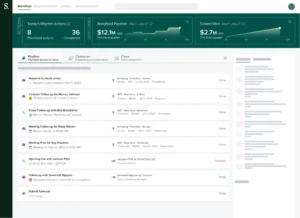
Modern sales hubs further streamline execution by offering automated task queues, multi-touch sequences, and integrated communication tools that keep representatives focused on high-value activities rather than manual administrative work. Furthermore, the advent of AI-driven prospecting agents has introduced new efficiencies into the research and initial drafting phases of outreach. While these tools significantly reduce the time required to gather context and draft personalized communications, industry consensus emphasizes that human oversight remains vital. Sales professionals must review and refine all automated outputs to ensure message authenticity, brand alignment, and compliance with privacy regulations such as GDPR and CCPA.
Broader Implications and Future Outlook
The continuous refinement of sales prospecting methodologies underscores a broader industry shift toward efficiency, relevance, and buyer-centric engagement. As data privacy regulations tighten and buyers become increasingly sophisticated, the tolerance for intrusive, untargeted sales tactics will continue to decline.
For B2B organizations, the path forward lies in operational discipline. By pairing a well-defined, permission-based prospecting methodology with modern CRM infrastructure and disciplined execution, sales teams can build resilient, predictable pipelines that withstand market fluctuations. The underlying tools and communication channels will undoubtedly continue to evolve, but the core principle remains unchanged: relevance, trust, and timely engagement are the ultimate drivers of commercial success.
Related posts: