Global Finance Professionals Turn to the FMVA Certification to Master Financial Modeling and Valuation Skills Amid Shifting Industry Standards

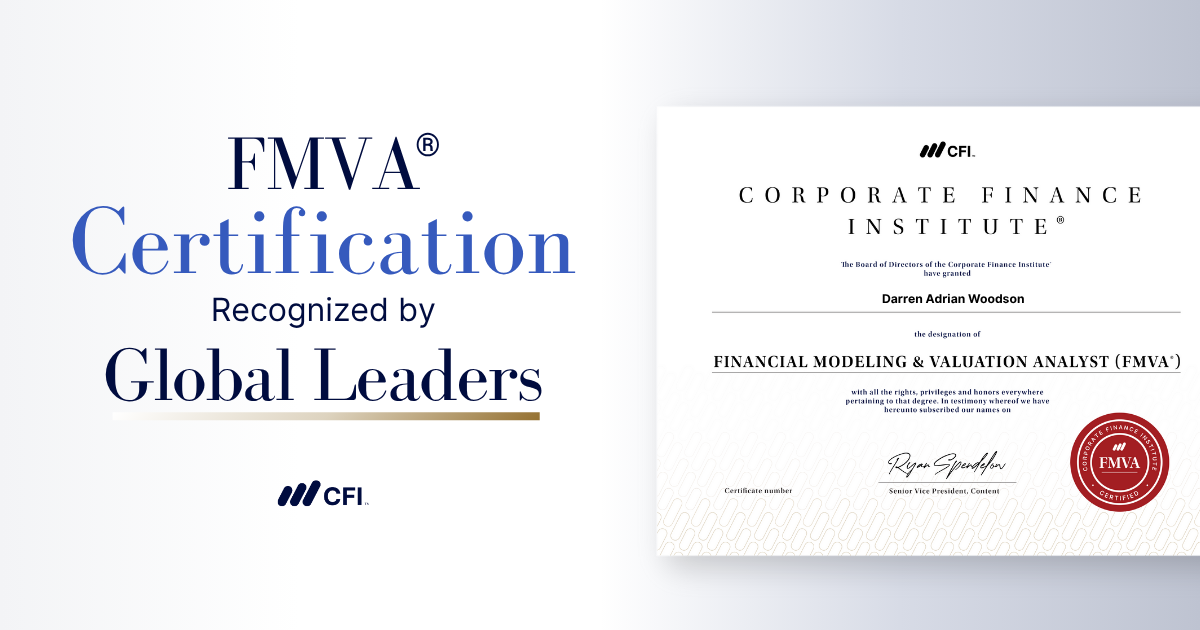
The modern corporate landscape demands rigorous analytical capabilities, precise financial modeling, and data-backed decision-making. As global markets grow increasingly complex, professionals across investment banking, private equity, corporate development, and financial planning and analysis (FP&A) face heightened pressures to deliver accurate, auditable valuations from day one. In response to this industry-wide skills gap, the Financial Modeling & Valuation Analyst (FMVA) certification program, developed by the Corporate Finance Institute (CFI), has emerged as a premier credential. Trusted by over three million finance practitioners across 190 countries, the program bridges the gap between theoretical academic finance and the practical, desk-ready tools required in top-tier corporate environments.
Background Context of Modern Financial Training
For decades, entering the upper echelons of corporate finance required traditional graduate degrees or grueling, unstructured on-the-job training. Junior analysts frequently inherited opaque financial models built by predecessors, leading to widespread inefficiencies, auditing blind spots, and a steep learning curve that slowed strategic implementation. Recognizing that Excel remains the undisputed primary tool of the trade, industry veterans and practitioners established CFI to codify best practices into a comprehensive, standardized curriculum.

The FMVA program was designed to solve this exact bottleneck. By stripping away redundant academic theory and focusing intensely on practical execution, the certification has redefined how analysts prepare for high-stakes environments. Alumni span major global institutions, including Goldman Sachs, Deloitte, Target, Verizon, Boeing, and Exxon, underscoring the credential’s widespread institutional acceptance.
Core Curriculum and Skill Development
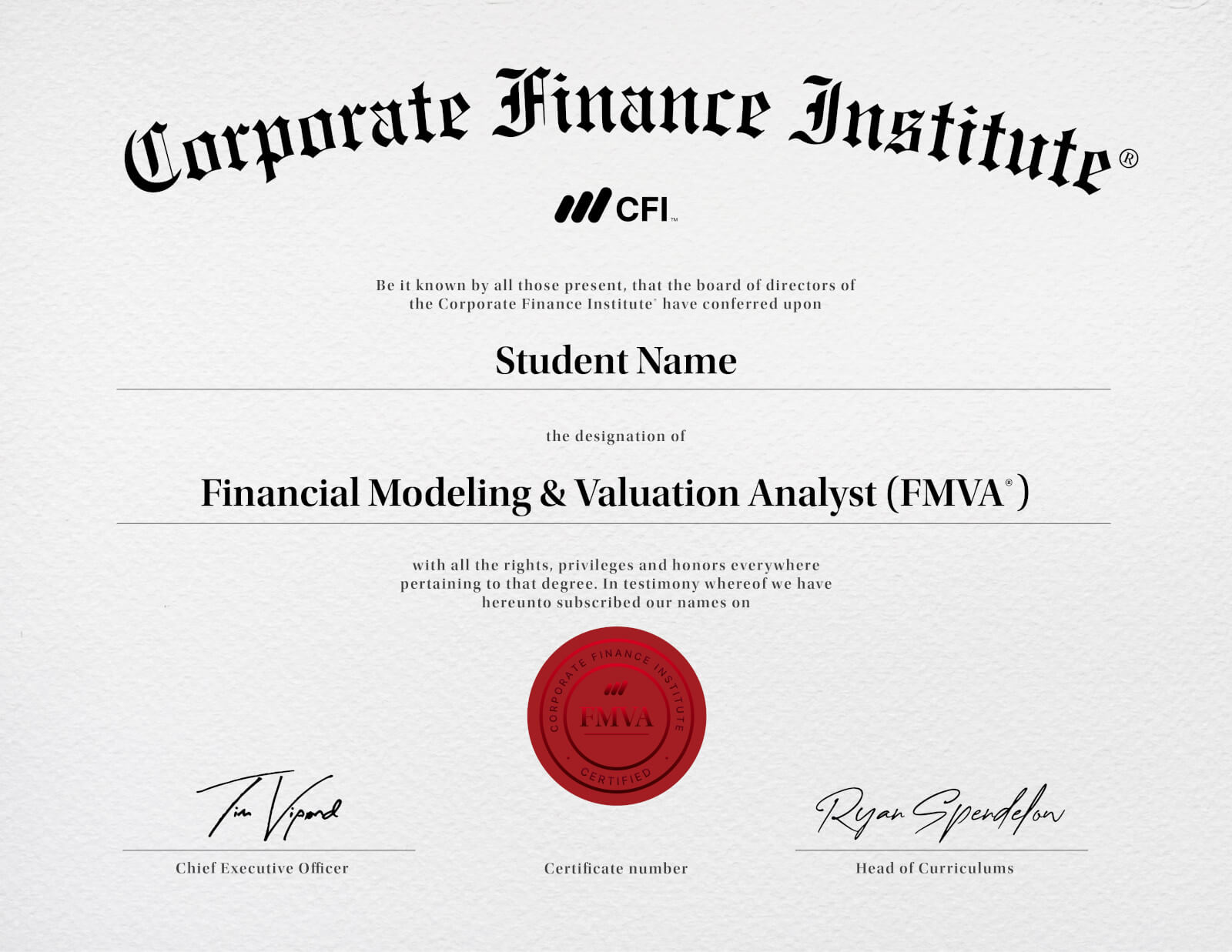
The FMVA curriculum is structured to guide learners through a rigorous progression of foundational knowledge, core modeling techniques, and specialized electives. The program is divided into distinct learning modules that ensure comprehensive proficiency.
Optional foundation courses allow beginners and career-switchers to brush up on essential competencies, including Excel fundamentals, accounting principles, corporate finance math, workflow best practices, and the integration of artificial intelligence into daily financial workflows.

The core curriculum forms the backbone of the credential, requiring candidates to master 15 essential courses. These include Financial Analysis Fundamentals, Financial Modeling Guidelines, Introduction to 3-Statement Modeling, 3-Statement Modeling, and Auditing and Balancing a 3-Statement Model. Furthermore, analysts are trained in operational modeling, introduction to business valuation, Discounted Cash Flow (DCF) modeling fundamentals, applied DCF valuation modeling, comparable valuation fundamentals, forecasting techniques, and scenario and sensitivity analysis in Excel. To ensure professionals can effectively communicate their findings to leadership, the core phase also mandates training in Excel data visualization, PowerPoint pitchbooks, and professional ethics.
Beyond the core requirements, learners must complete a minimum of three specialized electives chosen from a robust catalog of twelve advanced topics. These include monthly cash flow modeling, advanced Excel formulas, comparable valuation analysis, mining financial models, startup and e-commerce valuations, corporate strategy, bank valuation, normalizing income statements, real estate financial modeling, communication and presentation skills, strategic problem solving, and sell-side equity research.

Real-World Application and Case Studies
A defining characteristic of the FMVA program is its heavy reliance on practical case studies and simulations. Rather than relying solely on multiple-choice testing, candidates must solve real-world business problems. Recent additions to the curriculum incorporate cutting-edge challenges, such as renewable energy solar financial modeling, analyzing and benchmarking businesses using IBISWorld, Tesla earnings analysis via sell-side research case studies, and advanced AI prompting for financial analysis.

Furthermore, CFI has integrated specialized artificial intelligence modules into the workflow. Learners are trained to leverage AI tools to draft, format, and audit 3-statement models efficiently, reflecting the technological evolution reshaping modern financial analysis departments.
Industry Recognition and Professional Accreditations

The credibility of any professional designation relies heavily on external validation and regulatory accreditation. The Corporate Finance Institute maintains rigorous educational standards, holding accreditation from the Better Business Bureau (BBB) and recognition from leading global professional bodies. These include the National Association of State Boards of Accountancy (NASBA) in the United States and CPA institutions in Canada, ensuring that completed coursework qualifies toward continuing professional education (CPE) and continuing professional development (CPD) requirements.
Additionally, the program is recognized by international professional bodies such as The London Institute of Banking & Finance, an institution authorized by the Financial Conduct Authority. These partnerships validate the FMVA curriculum as a rigorous, standardized benchmark for financial competency across global jurisdictions.

Testimonials and Career Impact
The value of the FMVA credential is best illustrated by the career trajectories of those who have completed it. George Slabbert, an FMVA graduate, noted that the program "accelerated my ability to produce robust, auditable valuation work and shortened the time from idea to implementation."

Similarly, Alonso Saponara Rivva, an Investment Banking Analyst at Goldman Sachs, credits the designation with helping him secure his role. "The FMVA was incredibly valuable during the Goldman Sachs interview process," Rivva stated. "I had it open on my second screen while working through the case study, which required building a model and presenting strategic alternatives. When I interviewed at Goldman Sachs, two of the three interviewers were familiar with the FMVA and spoke highly of it. I aced all my interviews thanks to the knowledge and skills I gained."
Chris Caldwell, a CFA Charterholder and Treasury Director, offered a comparative perspective on the program’s efficiency. "As a CFA Charterholder who put a good 900 hours into that designation, I found just as much value in your FMVA program. This designation only took me about 60 to 70 hours to complete. What I like about the approach is that it’s very practical for the workplace as opposed to just pure theory."

Leadership and Expert Instruction
The quality of the FMVA curriculum is maintained by a distinguished faculty of industry practitioners and corporate leaders. Duncan McKeen serves as the Executive Vice President of Financial Modeling, bringing years of curriculum design experience since joining in 2014. Scott Powell, Co-Founder of CFI, brings three decades of experience in financial services and capital markets training. Jeff Schmidt, Vice President of Financial Modeling, has spent over a decade teaching valuation concepts to international audiences.

The executive leadership team also includes CEO and Co-Founder Tim Vipond, Senior Vice President of Training and Curriculum Ryan Spendelow, Vice President of BIDA Sebastian Taylor, and subject matter experts such as Carl Seidman and Antoine Bishara. Together, this leadership team ensures that the coursework continuously evolves to meet the changing demands of global financial markets.
Implications and Future Outlook

As data analytics, automation, and artificial intelligence continue to transform corporate finance, the demand for adaptable, highly skilled analysts will only intensify. Programs like the FMVA are setting a new standard for professional development by bridging the gap between foundational accounting principles and advanced, tech-enabled modeling techniques. For students, career transitioners, and seasoned executives alike, acquiring desk-ready operational skills has become a mandatory prerequisite for career advancement. With flexible self-study subscription models, global institutional backing, and a curriculum built entirely by seasoned practitioners, the FMVA certification is poised to remain a cornerstone of professional excellence in corporate finance for years to come.
Related posts: