From Commercial Driver to Corporate CHRO: The Extraordinary Journey of MSIG USA’s Darin Conselyea

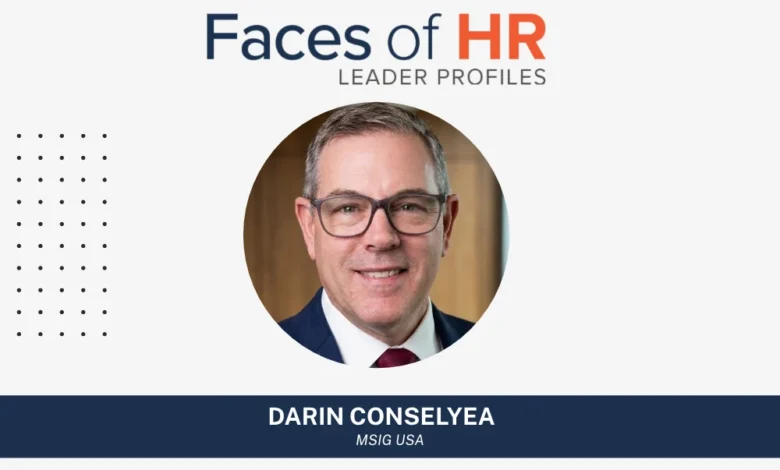
The modern corporate landscape demands human resources leaders who do more than simply manage compliance and payroll; it requires strategic architects who understand the fundamental mechanics of business growth. Darin Conselyea, Chief Human Resources Officer at specialty property and casualty insurer MSIG USA, embodies this modern standard. Spanning a distinguished career of more than 25 years across multiple continents, heavily regulated industries, and major financial institutions, Conselyea’s trajectory offers a compelling blueprint for contemporary talent leadership. His career bridges the gap between grassroots operational experience and executive-level human capital transformation, demonstrating how frontline understanding can forge exceptionally effective enterprise leadership.
The Formative Years: Ground-Level Logistics and Early Lessons in Talent
Conselyea’s entry into the corporate sphere was unconventional, defying the traditional linear path of contemporary executives. While pursuing his Bachelor of Arts in Business Management from Pace University through evening classes, he maintained a demanding schedule working for a beverage distributor. To meet the operational needs of this role, he earned his commercial driver’s license—a practical credential that ultimately served as the catalyst for his professional pivot.
Armed with his commercial license, Conselyea secured a position at United Parcel Service (UPS), initially stepping into the organization’s safety department. Within the rigorous, highly structured environment of global logistics, his analytical approach and interpersonal aptitude caught the attention of senior human resources leadership. Recognizing his potential to influence organizational culture and workforce performance, these mentors encouraged Conselyea to transition fully into the HR function. This pivotal shift planted the seeds for a philosophy that would define his professional life: comprehensive HR leadership must always be anchored in a deep, foundational understanding of core business operations.
A Global Footprint Across Highly Regulated Industries
Over the subsequent quarter-century, Conselyea cultivated a vast portfolio of leadership experience, scaling complex organizational hierarchies across some of the world’s most prominent financial services and insurance institutions. His career trajectory features influential tenures at Guardian Life, Barclays, Prudential Financial, and MetLife. These roles frequently required navigating complex regulatory landscapes, massive workforce restructurings, and periods of rapid technological disruption.
Crucially, Conselyea’s professional evolution extended beyond domestic borders. His career encompasses high-stakes international assignments in Tokyo, Japan, and Dublin, Ireland. These global postings required him to master cross-cultural management, navigate disparate labor laws, and align localized talent strategies with overarching multinational corporate objectives. Today, as the Chief Human Resources Officer at MSIG USA, he applies this cumulative global insight to direct talent acquisition, retention, and organizational development for a major specialty P&C insurance provider operating within a highly competitive market.
Calculated Risks and the Evolution of Executive Leadership
Reflecting on the milestones that shaped his progression, Conselyea advocates for a philosophy of deliberate risk-taking and professional self-reliance. He maintains that career-defining growth rarely occurs within comfortable, predictable confines; instead, it is forged by stepping into unfamiliar domains, relocating internationally, and accepting assignments before feeling entirely prepared.
"Go in with your eyes open, but don’t let uncertainty keep you from moving forward," Conselyea observes, summarizing a mindset that has allowed him to thrive across diverse industries.
Yet, this bias for action has not been without its early miscalculations. Recalling his most instructional professional mistake, Conselyea notes that early in his career, he frequently mistook speed for progress. Possessing a natural inclination for swift operational execution, he would quickly identify structural bottlenecks or strategic necessities and push forward, expecting organizational momentum to naturally follow.
Through these experiences, he learned a vital lesson in change management: having the correct strategic answer is insufficient if the broader organization lacks alignment. Employees and stakeholders must understand the overarching destination, the rationale behind the transition, and their individual agency within the process. Consequently, Conselyea learned to pair his inherent bias for action with transparent communication, inclusive dialogue, and shared ownership, transforming solitary directives into collaborative enterprise goals.
Redefining Recruitment: The Genesis of ‘Driving Women’
Perhaps the most enduring testament to Conselyea’s innovative approach to human resources dates back more than thirty years to his early days at UPS. Faced with a persistent recruitment challenge—the systemic underrepresentation of women in commercial driver roles—Conselyea and his management team rejected the passive strategy of waiting for qualified applicants to respond to traditional job postings. Believing that talent could not be sourced effectively from behind an office desk, they took a proactive approach to community engagement.
The turning point occurred during a routine stop at a local diner. Observing the stamina, manual dexterity, spatial awareness, and customer service skills demonstrated by a waitress working tirelessly on her feet, Conselyea realized that the core competencies required for commercial driving frequently existed outside conventional candidate pools. The team successfully recruited her, paving the way for her successful career as a UPS driver.
This empirical insight inspired Conselyea to conceptualize and spearhead "Driving Women," an innovative community outreach initiative. The program bypassed traditional recruitment channels, stationing recruiters at women’s softball leagues and community venues to engage prospective candidates directly. The initiative achieved widespread industry recognition for its creativity and measurable impact. More importantly, it solidified a foundational leadership philosophy for Conselyea: exceptional talent does not always arrive in a predictable format, and true leadership requires looking beyond a traditional resume to extend calculated opportunities.
The Strategic Evolution of Human Resources
In analyzing the current trajectory of the human resources profession, Conselyea emphasizes the necessity of positioning HR as a core component of business strategy rather than an administrative afterthought. Sustainable organizational success, he argues, occurs only when business strategy and people strategy are formulated concurrently. When executive leadership integrates HR into early-stage growth and transformation discussions, human resources professionals can accurately forecast and develop the critical capabilities required to execute corporate objectives.
Simultaneously, Conselyea addresses the administrative friction that frequently bogs down HR departments. He advocates for the aggressive integration of emerging technologies and artificial intelligence to automate routine tasks, thereby liberating human capital professionals to focus on higher-order advisory functions, complex workforce challenges, and relationship-building. By reducing bureaucratic overhead, technology enables HR leaders to return to the human element of the workplace: mentoring talent, providing objective counsel to executives, and fostering supportive corporate cultures.
Balancing Support with Rigorous Professional Stretch
Within his executive framework, supporting a workforce does not equate to fostering complacency. Conselyea maintains that the most profound professional development occurs when employees are trusted with stretch assignments that challenge their perceived limitations.
"As a leader, I try to recognize potential, sometimes before someone sees it themselves, and create opportunities to test it," Conselyea notes. By offering employees ownership, structural trust, and psychological safety—the foundational freedom to ask questions and acknowledge vulnerabilities—leaders can cultivate high-performing teams capable of navigating complex operational environments.
Industry Outlook and Future Implications
Looking toward the next five years, Conselyea views rapid technological innovation, particularly artificial intelligence, as the primary force fundamentally altering the nature of work and the valuation of specific professional skill sets. As automation redefines job descriptions, the mandate for human resources will be twofold: guiding employees through continuous upskilling while preserving the relational empathy that underpins resilient corporate cultures.
For professionals entering the human resources field today, Conselyea’s guidance remains remarkably consistent with the principles that governed his own ascent: master the mechanics of the business, understand how the enterprise generates revenue, evaluate what customers truly value, and maintain an unwavering commitment to active listening and empathy. By bridging operational acumen with human-centric leadership, practitioners can transform human resources from a supportive department into an indispensable driver of long-term organizational endurance.
Related posts: