Walmart Deepens Strategic Partnership with Symbotic Through Six Billion Dollar Expansion of Automation Technology

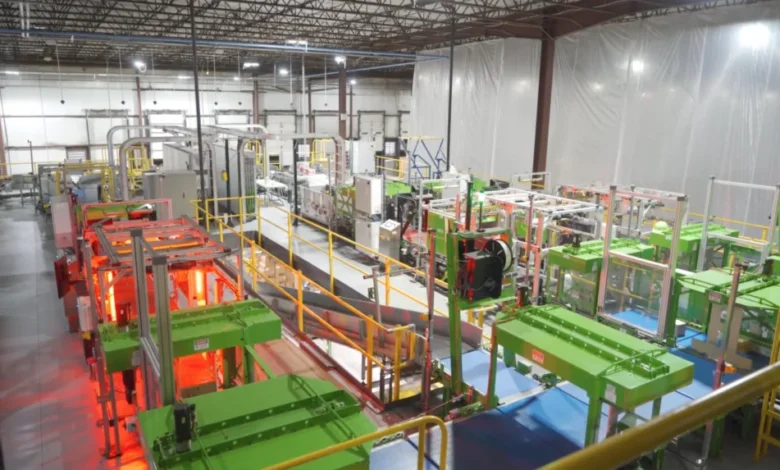
Walmart Inc. has solidified its commitment to high-speed, automated logistics by announcing a monumental $6 billion expansion of its commercial partnership with Symbotic Inc. The deal, which was publicly disclosed on October 29, represents a significant escalation in the retail giant’s ongoing efforts to modernize its supply chain infrastructure. By integrating advanced robotics and proprietary software into 25 additional U.S. regional distribution centers, Walmart is positioning itself to handle the increasing demands of a modern omnichannel retail landscape. This financial commitment serves as a testament to the success of a decadelong collaboration that has transformed how the world’s largest retailer manages its inventory, fulfills online orders, and navigates the complexities of global commerce.
A Decade of Technological Integration
The relationship between Walmart and Symbotic did not emerge overnight. It is the culmination of more than ten years of iterative development, beginning with a pilot program involving a single product line. Over the past decade, the partnership has evolved from experimental automation to a foundational element of Walmart’s fulfillment strategy. This journey has seen the deployment of increasingly sophisticated robotics within Walmart’s massive distribution network.
The evolution of this partnership reached a critical milestone in early 2025, when Walmart entered an agreement to acquire a segment of Symbotic’s robotics business. This move signaled that Walmart was no longer just a customer of Symbotic’s technology, but an active participant in its development. The current $6 billion expansion, therefore, is not merely a purchase of hardware; it is the realization of a long-term roadmap to fully automate the upstream inventory management process, thereby reducing manual labor, decreasing the margin for human error, and accelerating the flow of goods from warehouses to storefronts and residential doorsteps.
Technological Capabilities and Operational Impact
At the heart of this expansion are two of Symbotic’s core technological offerings: the "BreakPack" system and "SymMicro." The BreakPack technology is designed to handle the complexities of small-order fulfillment and mixed-inventory environments, which are common in the modern retail sector where consumers expect rapid delivery of individual items rather than bulk shipments. Meanwhile, the SymMicro solution is tailored for micro-fulfillment, an essential component for companies that utilize physical stores as localized distribution nodes for online orders.
These hardware solutions are underpinned by a robust software suite that manages the entirety of the fulfillment workflow. By automating the sorting, storage, and retrieval processes, Walmart expects to achieve greater density in its distribution centers—essentially increasing the volume of products that can be stored and processed within the same physical footprint. For an organization the size of Walmart, which maintains a massive global presence, the ability to optimize existing space is a significant capital efficiency.
Beyond the hardware deployment, the agreement includes a $125 million investment from Walmart specifically earmarked for research and development. This funding will target "next-generation" racking technology, advanced picking mechanisms, and enhanced process flow systems. By investing in the R&D side of the equation, Walmart is ensuring that it remains at the forefront of AI-driven supply chain management, maintaining its status as a leader in the Top 1000 database of North American online retailers.
Strategic Rationale for Massive Capital Investment
Rob Montgomery, executive vice president for Walmart U.S. supply chain operations, emphasized that the decision to expand this partnership is rooted in the company’s broader mission: to bring more items to more customers with greater speed. The modern consumer, according to Walmart’s internal data, is increasingly platform-agnostic, expecting a seamless experience whether they are purchasing goods for in-store pickup, curbside retrieval, or home delivery.
The implications for the supply chain are clear. Manual fulfillment centers are increasingly unable to keep pace with the hyper-competitive expectations set by e-commerce giants. By shifting to an automated model, Walmart is not only lowering its operational costs but also simplifying the work environment for its associates. The transition allows human workers to pivot toward more complex tasks, leaving the repetitive, physically taxing, and high-precision tasks to the robotics systems. This shift is expected to improve employee retention and safety metrics while simultaneously increasing the throughput capacity of Walmart’s regional centers.
Broader Implications for the Retail Industry
The scale of this investment serves as a benchmark for the entire retail industry. As firms grapple with labor shortages, rising fuel costs, and the need for faster delivery windows, the transition toward "lights-out" or highly automated warehousing is becoming a necessity rather than a luxury. Walmart’s position as No. 37 in the AI Commerce Rankings highlights its aggressive stance on integrating artificial intelligence into its commercial operations.
Market analysts observe that this move by Walmart exerts significant pressure on competitors who have yet to achieve a similar level of automation. The competitive moat created by such an investment is profound; by lowering the unit cost of fulfillment, Walmart gains the pricing flexibility required to dominate both the physical and digital retail spaces. Furthermore, the partnership with Symbotic creates a symbiotic feedback loop: Walmart provides the scale and testing ground for Symbotic’s technology, while Symbotic provides the technological innovation that allows Walmart to scale its operations globally.
Chronology of the Partnership
- Early 2010s: Initial partnership begins with a pilot program involving a single product category.
- Mid-2010s: Expansion into multi-facility testing and early-stage warehouse automation.
- 2020-2024: Accelerated adoption of Symbotic technology across major regional distribution centers; increased focus on e-commerce fulfillment.
- January 2025: Walmart announces the acquisition of a portion of Symbotic’s robotics business, marking a deeper structural alignment between the two companies.
- October 29, 2025: Formal announcement of the $6 billion, 25-facility expansion and the $125 million R&D funding initiative.
Looking Toward the Future
Rick Cohen, chairman and CEO of Symbotic, characterized the expanded agreement as a reflection of a partnership defined by "trust and shared ambition." From the perspective of both companies, the deal represents a long-term commitment to the digitization of the retail backbone. As the collaboration continues, the focus will likely shift toward further integrating AI into inventory forecasting and predictive logistics, allowing Walmart to anticipate demand shifts with greater accuracy.
The $6 billion investment is not merely a fiscal line item; it is a strategic maneuver to ensure that Walmart’s supply chain remains resilient in the face of global economic volatility. By consolidating its relationship with a key technology provider, Walmart is mitigating the risks associated with supply chain fragmentation and ensuring that its fulfillment capabilities can scale alongside its growing e-commerce revenue.
In conclusion, the expansion of the Walmart-Symbotic partnership underscores a broader trend in global retail: the transition from human-centric to machine-assisted logistics. As Walmart continues to integrate these systems across its network, the impact will be felt by consumers through improved product availability and faster delivery times. For the retail industry at large, the move serves as a clear indicator that the future of commerce will be written in code, processed by robotics, and delivered at a speed that was once considered impossible. As the company moves forward with its 25-facility rollout, industry observers will be watching closely to see how these automated nodes translate into bottom-line performance in the coming fiscal years.