Troubleshooting Facebook Ads Not Delivering: 10 Common Causes and Expert Solutions for Digital Marketers

The digital marketing landscape relies heavily on precision, timing, and automated ad delivery systems to connect brands with consumers. For modern media buyers and digital advertising professionals, few occurrences are as disruptive or financially costly as logging into the Meta Ads Manager to discover that an active campaign has completely ground to a halt. When Facebook ads fail to deliver, marketing momentum stalls, return on ad spend (ROAS) plummets, and acquisition pipelines dry up.
Understanding why these delivery bottlenecks occur requires a deep dive into the complex auction dynamics, algorithmic parameters, and strict compliance policies governing Meta’s advertising ecosystem. Industry analysis indicates that delivery failures are rarely random; rather, they are typically the byproduct of specific technical triggers, budget restrictions, audience constraints, or policy violations. To mitigate these disruptions, digital advertising professionals must understand the root causes of delivery failures and implement immediate, data-driven corrective measures.
Decoding the "Not Delivering" Status in Meta Ads Manager
When an ad campaign carries a "Not delivering" status in the Ads Manager dashboard, it means that active advertisements are failing to serve impressions to the specified target audience. This phenomenon can impact newly launched creatives as well as long-standing campaigns that previously performed without issue.

Media buyers can diagnose these issues by navigating to the Ads Manager interface and inspecting the Delivery column. If a systemic or technical roadblock prevents distribution, the sub-status will often display as "Update required." Meta’s automated infrastructure relies on continuous feedback loops between user behavior, advertiser bids, and content relevance. When any variable in this delicate equation falls outside acceptable thresholds, the ad delivery engine pauses distribution to protect user experience and preserve advertiser capital.
Examining the ten most frequent catalysts for ad delivery failures reveals clear diagnostic pathways and immediate operational fixes for marketing teams.
1. Unavailability of the Associated Social Post
A surprisingly common yet easily overlooked cause of delivery failure is the underlying unavailability of the social media post attached to the ad. When brands promote existing organic posts or leverage specific page content that is subsequently deleted, archived, or subjected to restricted privacy settings, the ad loses its structural anchor.
The Fix: Digital marketers must verify that the target post remains active and publicly accessible on the associated Facebook Page or Instagram profile. If the original post has been altered or removed, administrators should select an alternative creative asset within Ads Manager, update the post permissions to public viewing, and toggle the ad set status back to active. Once resolved, the "Update required" notification will automatically clear from the dashboard.
2. Extended Ad Review and Moderation Queues
Every advertisement submitted to Meta undergoes a mandatory review process before it is cleared for public distribution. This moderation phase utilizes a dual-layer approach combining automated machine learning algorithms with manual reviews conducted by human support staff.
According to Meta’s Business Help Centre, the vast majority of advertisements are reviewed within 24 hours. However, peak retail seasons, global holidays, and periods of high submission volume frequently trigger review backlogs, extending approval times well beyond the standard window. Furthermore, modifying existing, active ads—such as altering the destination URL, creative assets, or primary text—automatically forces the campaign back into the review queue, immediately halting delivery.
The Fix: Proactive campaign planning is vital. Advertisers should schedule campaigns several days in advance of their intended launch date to accommodate potential manual reviews. Crucially, media buyers must refrain from editing live ads during their initial review phase to avoid resetting the moderation clock.
3. Campaign Rejections Due to Policy Non-Compliance
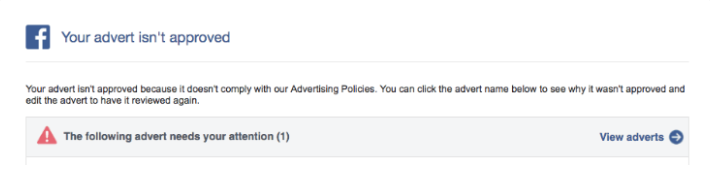
If an advertisement violates Meta’s extensive advertising policies, it is systematically rejected and barred from reaching target audiences. Policy infractions are a frequent pain point for digital marketers, often resulting in email notifications and explicit rejection warnings within the Ads Manager dashboard.
Meta enforces strict prohibitions across numerous categories, including misleading claims, prohibited substances, sensationalized content, discriminatory targeting, and intellectual property infringements. Importantly, automated moderation systems also evaluate the post-click landing page. If the destination URL features broken links, misleading headlines, or products that misalign with the ad creative, the entire campaign will be flagged.
The Fix: When an ad is disapproved, marketers have two primary courses of action: rectify the policy violation within the creative copy or landing page and resubmit, or submit a formal appeal through Account Quality if the rejection is believed to be an algorithmic error. Additionally, advertisers operating within Special Ad Categories—such as employment, housing, or social issues—must correctly declare their status to avoid unnecessary delivery restrictions.
4. Reaching Account-Level Spending Limits
Account spending limits represent a hard financial ceiling established by the advertiser to govern total expenditures across all campaigns tied to a specific ad account. While this tool is vital for preventing runaway budgets, it is frequently forgotten by marketing teams managing multiple concurrent initiatives. Once cumulative spending reaches the pre-set threshold, Meta immediately ceases all ad delivery across the account.
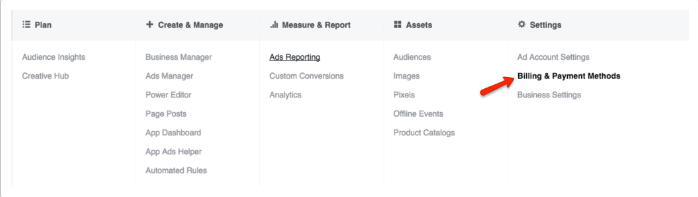
The Fix: Resolving this bottleneck requires administrative intervention within the Ads Manager billing interface. By navigating to Settings, Billing, and Payment Methods, marketers can review their current expenditure against the established limit. Resetting, increasing, or removing the account spending limit allows ad delivery to resume almost instantaneously.

5. Overly Restrictive Budgets and Bid Caps
Meta’s delivery algorithm requires sufficient financial runway and data volume to successfully optimize campaign performance. When daily budgets or bid caps are set too conservatively, the algorithm lacks the financial leverage necessary to test audiences and gather statistically significant performance data.
For instance, assigning a nominal daily budget of three dollars prevents the delivery engine from securing enough impressions to determine ad efficacy, forcing the system to halt distribution entirely. Similarly, combining a moderate daily budget with an artificially tight bid cap restricts the system’s ability to win auctions in competitive digital environments.
The Fix: Advertisers should structure budgets to provide adequate financial support for the algorithm’s learning phase. Utilizing lifetime budgets allows Meta to intelligently distribute capital across the campaign’s lifespan. Furthermore, adopting the lowest-cost automatic bidding strategy during initial launch phases ensures that bid pricing remains competitive, allowing marketers to introduce manual bid caps only after baseline performance data has been established.
6. Extremely Narrow Audience Targeting Parameters
Hyper-segmentation is a powerful strategy for reaching niche consumer bases, but narrowing audience parameters excessively can entirely choke ad delivery. Meta’s advertising infrastructure generally requires an estimated audience size of at least 1,000 users within a given target set to operate effectively. If custom customer lists fail to meet minimum volume thresholds or if detailed targeting filters reduce the addressable market to a microscopic scale, delivery stops.
The Fix: Marketers experiencing delivery stalls due to audience restriction should broaden their targeting criteria. Effective expansion strategies include removing overly niche demographic filters, enabling Advantage+ Audience expansion features, incorporating lookalike audiences based on broader seed pools, or combining multiple smaller ad sets into a consolidated campaign structure.
7. High Auction Overlap and Internal Competition
In a busy digital marketplace, advertisers constantly compete against external brands for consumer attention. However, when an individual ad account features multiple campaigns or ad sets targeting identical or highly overlapping audiences, the account begins competing against itself—a phenomenon known as auction overlap.
To protect advertisers from artificially inflating their own costs, Meta’s auction system evaluates competing ad sets from the same account and selects the creative with the highest total value to enter the auction, automatically pausing underperforming counterparts. While designed to maximize budget efficiency, high auction overlap frequently leads to unexpected delivery pauses and suppressed campaign reach.
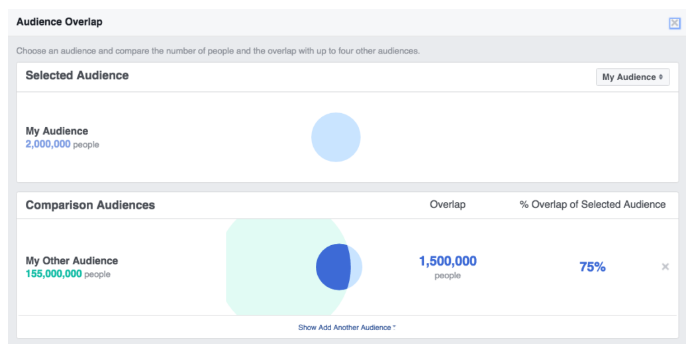
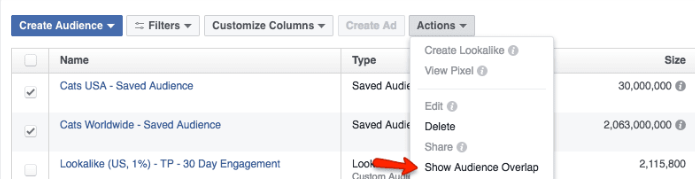
The Fix: Digital marketing teams should utilize the native Audience Overlap tool located within the Audiences tab of Ads Manager. By analyzing overlap percentages between suspicious ad sets, marketers can determine if internal competition is harming delivery. Recommended remedies include merging overlapping ad sets into a single streamlined campaign, refining distinct exclusion parameters, or utilizing dynamic creative optimization.
8. Suboptimal Ad Engagement and Low Relevance Diagnostics
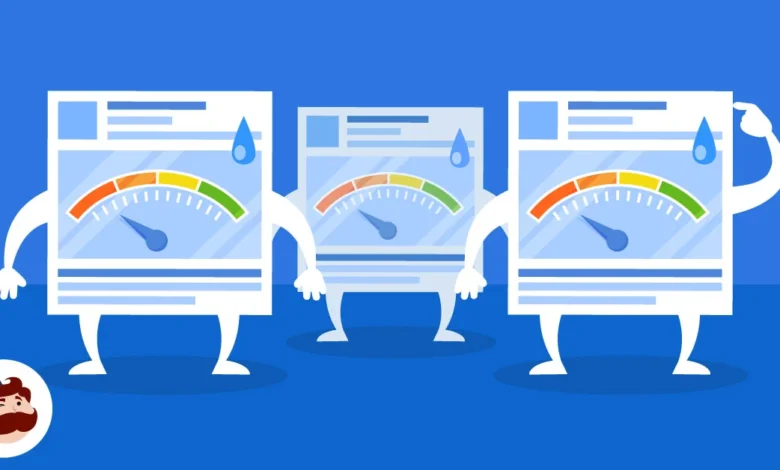
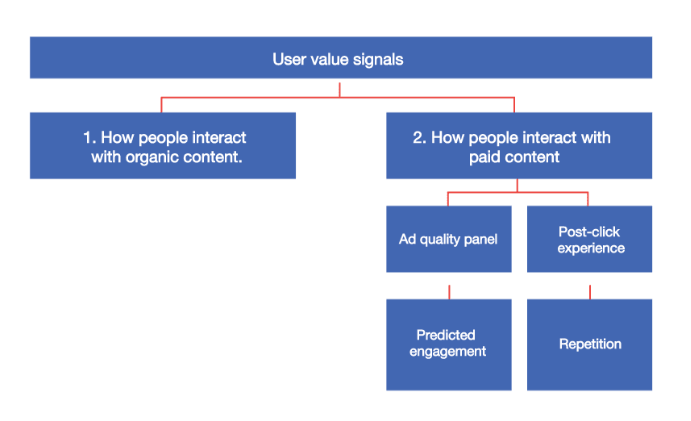
Meta’s core business model relies on delivering engaging, relevant content to its user base. Consequently, the platform’s ad delivery algorithm constantly evaluates user interaction signals—such as click-through rates, negative feedback, and conversion rates—to score ad relevance.
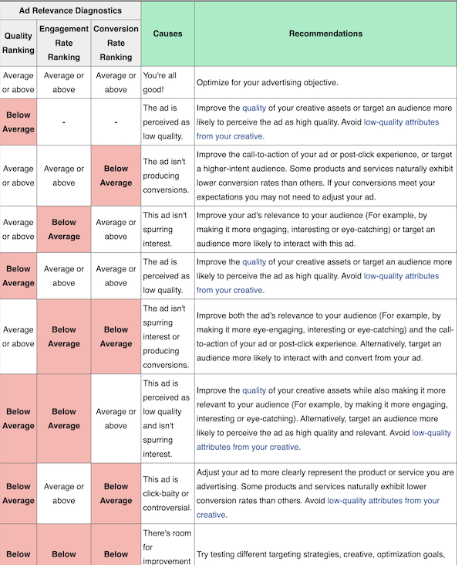
Meta provides specific ad relevance diagnostics, including quality ranking, engagement rate ranking, and conversion rate ranking. Ads that score poorly in these metrics are systematically deprioritized in favor of more engaging creative content.
The Fix: Improving low relevance rankings requires a qualitative overhaul of the ad creative, copywriting, and visual assets. Marketers should analyze performance diagnostics to pinpoint specific weaknesses—such as low engagement versus poor conversion rates—and adjust their messaging, refresh visual elements, or refine post-click landing page experiences to align more closely with audience intent.
9. Scheduling Misconfigurations and Exceeded Timelines
Temporal execution errors represent some of the simplest yet most frustrating causes of ad delivery failure. Because Meta strictly enforces scheduling parameters, campaigns will fail to serve impressions if specific time-based constraints are violated. Common issues include campaigns with end dates that have already passed, ad sets that remain manually paused, or flight schedules restricted by specific day-parting configurations that do not match current operating hours.
The Fix: Marketers must audit their campaign schedules within the ad set settings. If a campaign end date has elapsed, administrators must extend the timeline. If the campaign status is toggled to paused, switching it to active will immediately trigger the delivery queue.
10. Unrealistic Optimization Goals and Conversion Starvation
When configuring a campaign, advertisers select an optimization goal that instructs Meta’s algorithm on the specific consumer action to target—such as link clicks, lead form submissions, or online purchases. The algorithm analyzes user value signals to locate individuals most likely to complete the desired action.
However, optimizing for bottom-funnel conversion events like high-value purchases can backfire if historical conversion data is sparse. If an ad fails to generate early conversions, the algorithm cannot gather the behavioral signals required to identify interested users, ultimately halting delivery.
The Fix: Advertisers encountering delivery stalls driven by conversion starvation should temporarily pivot their optimization goals toward upper- or mid-funnel actions that occur more frequently, such as landing page views, link clicks, or "add to cart" events. By shifting to a higher-volume optimization goal, the algorithm can quickly accumulate performance data and successfully deliver impressions to a responsive audience. Once consistent conversion volume is established, marketers can seamlessly transition the optimization goal back to their primary conversion event within Ads Manager.
Broader Implications and Industry Best Practices
The multifaceted nature of Meta’s ad delivery infrastructure underscores the reality that successful digital advertising demands constant vigilance, rigorous technical oversight, and adaptive strategic planning. As automated machine learning algorithms increasingly dictate media buying efficiency, the role of the digital marketer has shifted from manual execution to strategic troubleshooting and data interpretation.
By maintaining structured operational workflows—such as pre-scheduling campaigns well in advance, avoiding unnecessary edits during active review phases, continuously monitoring audience overlap, and balancing optimization goals with realistic data thresholds—organizations can safeguard their marketing investments against unexpected delivery disruptions. Ultimately, mastering the diagnostics of ad delivery ensures sustainable campaign performance, maximized return on ad spend, and resilient digital acquisition channels in an increasingly competitive online marketplace.