Navigating the Post-Election Workplace: How Leadership Can Mitigate Cultural Fallout and Retain Talent

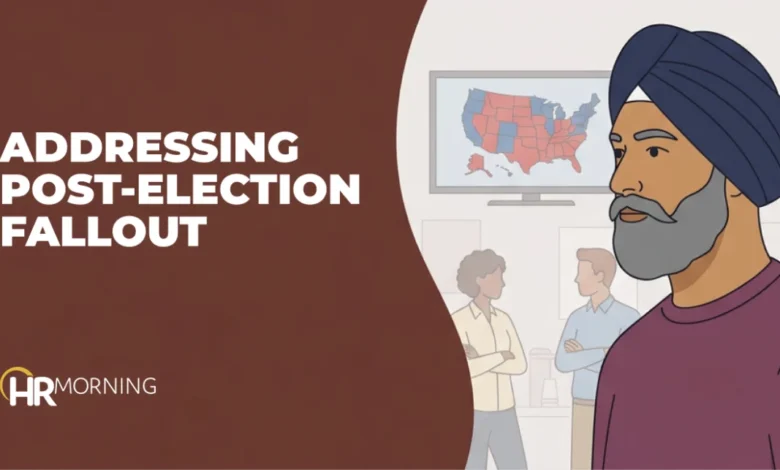
The conclusion of an election cycle rarely signals the end of political friction within the American workforce. As the dust settles on midterm results and the legislative landscape shifts, organizations across the country are grappling with the reality that political polarization does not stop at the office door. For HR departments and executive leadership teams, the post-election period represents a critical juncture where the management of employee sentiment, team cohesion, and professional conduct becomes paramount. Failure to address the underlying tensions—often manifested as incivility or a decline in psychological safety—can lead to measurable attrition and a long-term degradation of organizational culture.
Recent data underscores the urgency of this challenge. According to extensive research from the Society for Human Resource Management (SHRM), more than one-quarter of employees have indicated a propensity to leave their positions following major election cycles, largely driven by a perceived rise in workplace incivility. Among those who reported experiencing or witnessing such behavior, 56% identified differing political viewpoints as the primary catalyst. This statistic serves as a warning to leadership: political polarization is no longer merely a social issue but a functional risk to human capital management and talent retention.
The Chronology of Workplace Tension
The trajectory of workplace friction typically follows a predictable, albeit intense, chronology. In the weeks leading up to an election, tension is often characterized by heightened anxiety and speculative discussions. As the results are tallied and the new balance of power in Congress is established, this tension often transitions into a phase of "post-election fallout."
During this phase, employees may experience a range of reactions, from professional anxiety regarding policy shifts that could impact their industry to personal frustration regarding the outcome. For managers, this period is often marked by a spike in interpersonal conflicts. These disputes, if left unchecked, can escalate into formal harassment complaints or, more commonly, a "quiet quitting" phenomenon where disengaged employees withdraw from collaborative efforts. The window of opportunity to intervene is narrow; the first 72 hours following an election are critical for setting the tone regarding acceptable office behavior and maintaining professional norms.
The Leadership Mandate: Silence as a Strategy
One of the most common pitfalls for leadership during contentious political climates is the inclination to remain silent in hopes that the storm will pass without intervention. However, communication experts, such as David Grossman of the Grossman Group, argue that silence is a decision in itself—and one that employees frequently interpret as a lack of support or awareness.
"Silence is a decision, and employees read it as one," Grossman notes. "Leaders don’t need to weigh in on who won or lost an election. But they do need to recognize that people are bringing different emotions and concerns into the workplace. The opportunity here is to reinforce respect, acknowledge uncertainty, and remind employees that they are part of the same team. That’s not political commentary. That’s good leadership."
The distinction between partisan posturing and principled leadership is vital. Effective leaders do not attempt to arbitrate the validity of political viewpoints; instead, they pivot the focus back to the organizational mission. By acknowledging the reality of the external environment without validating one political outcome over another, leadership can validate the human experience of their staff while maintaining the integrity of the workplace as a neutral, professional environment.
Data-Driven Implications for Retention
The impact of failing to manage this environment extends far beyond immediate office morale. When political discourse turns toxic, the organization suffers from what researchers call "cultural drift." High-performing employees who feel alienated by the discourse are often the first to seek opportunities elsewhere. In a competitive labor market, the loss of institutional knowledge due to a toxic cultural environment is a preventable cost.
Research suggests that organizations with clear, communicated policies regarding workplace conduct—specifically those that distinguish between protected political expression and harassment—experience lower levels of friction. The implication is clear: the absence of a proactive strategy is a vulnerability. Companies that fail to set expectations regarding civil discourse are implicitly inviting the volatility of the national political climate into their internal operations.
Strategic Tools for HR and Management
To navigate this landscape, organizations should employ a two-tiered strategy: reactive intervention and proactive cultural maintenance.
1. Reactive Intervention: Addressing the Moment
When tensions become visible, HR and managers must act to de-escalate. This involves direct, transparent communication. A suggested approach for leaders is to issue a statement that centers on shared values. This message should:
- Acknowledge that the election has concluded and that feelings among staff may be mixed.
- Reiterate the company’s commitment to a respectful, inclusive environment.
- Remind employees of existing codes of conduct regarding harassment and professional discourse.
- Invite employees to focus on collective goals and the work that unites the team.
By taking this approach, leadership signals that they are present and aware of the environment, which often reduces the need for employees to "vent" their frustrations in unproductive or hostile ways.
2. Proactive Cultural Maintenance
Beyond reactive statements, companies can utilize established communication frameworks to get ahead of the fallout. One effective model, often used to navigate periods of transition or uncertainty, involves a structured approach to communication:
- The "What": Define the situation clearly and objectively.
- The "Why": Explain the impact on the organization and the team.
- The "How": Outline the expectations for behavior and support moving forward.
- The "Support": Provide clear pathways for employees to express concerns or seek assistance, such as Employee Assistance Programs (EAPs) or one-on-one sessions with HR.
This formula works because it provides structure to emotional situations. By providing a clear framework, leadership reduces the uncertainty that often fuels political anxiety.
The Broader Impact on Organizational Health
The long-term health of an organization depends on its ability to transcend the tribalism that frequently characterizes modern political discourse. As the United States moves further into an era of high political engagement, the workplace remains one of the few settings where individuals with vastly different backgrounds and beliefs are forced to interact regularly.
When managed correctly, this diversity of thought can be an asset; when left unmanaged, it is a liability. The organizations that thrive in the post-election landscape will be those that view political friction not as a nuisance, but as a test of their internal culture.
Leadership must recognize that the goal is not to eliminate political identity, but to ensure that the professional identity—built on mutual respect, shared purpose, and common objectives—remains the dominant force within the office. As the legislative agenda shifts in the coming months, companies that have invested in communication, clear behavioral standards, and a focus on shared values will be better positioned to retain their talent, maintain productivity, and foster a stable environment regardless of the external political climate.
In conclusion, the post-election period is a litmus test for management. By acknowledging the difficulty of the transition, maintaining a neutral stance on political outcomes, and doubling down on the foundational values of the organization, leaders can steer their teams through the fallout. The path forward requires intentionality, a commitment to professional norms, and the recognition that in a healthy organization, the team must always remain greater than the sum of its political parts. Organizations that master this balance will not only survive the transition but will likely emerge with a more resilient and cohesive workforce.