FOBO and the AI Re-entry Crisis: How Rapid Technological Evolution is Redefining Job Security and Workforce Mobility


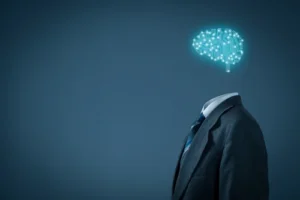
The global labor market is currently navigating a period of profound structural transformation as artificial intelligence integrates into the core of industrial and administrative operations. While much of the initial discourse surrounding AI focused on the potential for mass job displacement, a more complex and nuanced challenge has emerged: the difficulty of workforce re-entry and the psychological phenomenon known as FOBO, or the Fear Of Becoming Obsolete. As roles evolve and task-based work is increasingly absorbed by automated systems, the gap between traditional professional experience and modern employer demand is widening at an unprecedented rate.
Recent analysis from Goldman Sachs suggests that these anxieties are grounded in measurable economic shifts. According to their research, workers displaced by technological advancement are facing significantly longer periods of unemployment compared to those displaced by traditional economic cycles. Furthermore, when these individuals do find new employment, they frequently face substantial pay cuts and struggle to return to the same seniority level they previously held. This "re-entry penalty" is largely attributed to the fact that their existing skill sets have fallen out of sync with a market that is prioritizing AI-native capabilities and digital fluency over historical tenure.
The Psychological and Structural Rise of FOBO
For decades, the threat of automation was largely confined to blue-collar manufacturing and routine manual labor. However, the current wave of generative AI has brought this pressure into the white-collar sphere, impacting sectors ranging from legal services and finance to marketing and human resources. This shift has precipitated the rise of FOBO. Unlike general job insecurity, FOBO is characterized by the specific fear that one’s hard-earned expertise is being rendered irrelevant by an algorithm that can perform similar tasks faster and at a lower cost.
The scale of this concern is reflected in PwC’s 2025 Global Workforce Hopes and Fears Survey. The report found that 36% of UK workers believe AI will significantly alter their job descriptions within the next three years. Perhaps more telling is the high degree of uncertainty regarding which skills will be required to remain competitive. This is not a localized issue; it is a global trend where the speed of technological adoption is outstripping the capacity of traditional educational and corporate training frameworks to respond.
The impact of AI is often incremental rather than catastrophic. Roles are rarely deleted overnight; instead, they are hollowed out as routine responsibilities—such as data synthesis, initial drafting, and basic scheduling—are automated. This leaves a "skills vacuum" where the remaining human tasks are highly complex, requiring a level of strategic oversight and AI-collaboration that many veteran workers have not been trained to provide.
A Chronology of the AI Integration Cycle
To understand the current state of FOBO, it is necessary to examine the rapid timeline of AI’s integration into the workforce over the last few years.

In late 2022, the public release of advanced generative AI models marked the beginning of the "Awareness Phase," where businesses began to experiment with the technology in isolated pockets. By mid-2023, the "Integration Phase" saw large enterprises embedding AI tools into standard software suites, such as word processors and spreadsheets. By 2024, the "Optimization Phase" took hold, with companies restructuring departments to maximize the efficiency gains offered by these tools, often resulting in "quiet hiring" for AI roles or "quiet displacement" of entry-level positions.
As we move through 2025, the market has entered the "Relevance Phase." In this current era, the premium on "job-ready" candidates has reached an all-time high. Employers are increasingly reluctant to invest in long-term training for new hires, preferring candidates who can immediately leverage AI to drive productivity. This has created a significant barrier for anyone who has been out of the workforce for even a short period, as the "tools of the trade" are being updated in monthly cycles rather than yearly ones.
The Data of Displacement and the Skills Gap
The World Economic Forum’s Future of Jobs Report 2025 provides a stark outlook on the volatility of modern professional skills. The report estimates that nearly half (44%) of workers’ core skills will need to change within the next five years to keep pace with technological advancement. This rapid "half-life" of professional knowledge means that a career break of six to twelve months can now result in a significant erosion of marketability.
The shrinking of entry-level roles is a particularly concerning trend identified in recent labor market data. As AI absorbs routine tasks typically assigned to junior staff, the traditional "ladder" of career progression is being dismantled. This makes it harder for new entrants to gain the foundational experience needed for senior roles, and it makes it nearly impossible for career-switchers or those re-entering the market to find a "foothold" position.
LinkedIn’s 2025 UK Workforce Report corroborates this shift, noting a sharp increase in "skills-based hiring." Employers are moving away from valuing static credentials—such as degrees from specific universities or long tenures at prestigious firms—and are instead focusing on demonstrable learning agility and the ability to adapt to new digital workflows. While this democratizes opportunity for some, it creates a high-stakes environment for the existing workforce, where the pressure to "upskill or perish" is constant.
Why Re-entry is Becoming More Difficult
Historically, a career break for childcare, health reasons, or personal development was manageable. A professional could return to their industry and expect a period of adjustment. In the AI era, however, the "re-entry gap" has become a "re-entry chasm."
The primary driver of this difficulty is skills erosion. In an AI-driven environment, the tools used for data analysis, content creation, and project management are evolving so quickly that being "out of the loop" for six months can feel like being out for six years. For example, a marketing professional returning after a year away may find that the SEO strategies, content distribution algorithms, and data visualization tools they once mastered have been replaced by autonomous AI agents.

Furthermore, there is a growing "confidence gap." Displaced workers or those returning from breaks often feel overwhelmed by the new landscape, leading to a loss of professional identity. When combined with an employer’s perception that a returning worker represents a "training risk," the result is a cycle of exclusion that is difficult to break.
Corporate and Policy Implications: Moving Beyond External Hiring
Many organizations are attempting to solve their AI skills shortage by looking externally for "AI-ready" talent. However, analysts warn that this strategy is fundamentally flawed. The pool of candidates who possess both deep industry expertise and advanced AI fluency is extremely small, and the competition for this talent is driving up salary costs to unsustainable levels.
Industry leaders, including Robin Adda, CEO of SkillsAssess, argue that organizations cannot "hire their way out" of the AI transition. Instead, the focus must shift toward internal mobility and the preservation of institutional knowledge. By upskilling existing employees—who already understand the company’s culture, clients, and internal processes—businesses can integrate AI more effectively than by bringing in external "experts" who lack context.
To address the FOBO crisis, a multi-stakeholder approach is required:
- For Employers: Recruitment processes must be modernized to identify "learning agility" rather than just "prior experience." Career returner programs and targeted upskilling initiatives should be treated as essential business investments rather than HR afterthoughts.
- For Educators and Policymakers: The focus must shift from "front-loaded" education (degrees earned in one’s early 20s) to "lifelong learning" frameworks. This includes providing tax incentives for corporate training and creating accessible "bridge programs" for displaced workers.
- For Individuals: Adaptability is becoming the most valuable currency in the labor market. Staying relevant requires a shift from a "fixed mindset" to a "growth mindset," where engaging with new technology is seen as a continuous part of the job rather than a one-time hurdle.
Analysis of Broader Societal Impact
The long-term implications of the FOBO phenomenon extend beyond individual career anxiety. If left unaddressed, the widening gap between the "AI-fluent" and the "AI-displaced" could lead to increased economic inequality and social fragmentation. There is a risk of creating a "two-tier" labor market: one tier of highly paid, adaptable professionals who use AI to augment their creativity and strategy, and a second tier of workers who are either permanently sidelined or relegated to low-wage, non-automatable manual labor.
However, the transition also offers an opportunity to humanize work. By delegating routine, repetitive, and "soul-crushing" tasks to AI, there is potential for roles to become more focused on relationship management, ethical oversight, and complex problem-solving—areas where human intuition remains superior.
The organizations and societies that thrive in the coming decade will be those that view AI not as a replacement for human labor, but as a catalyst for human evolution. The challenge of the AI era is not just about the technology itself, but about how we support the people who must navigate the change. As the World Economic Forum and Goldman Sachs data suggest, the window for proactive intervention is narrowing. The goal must be to ensure that AI serves to expand opportunity rather than narrowing the path to professional success.