Media Industry Shakeup: Carson Daly Expands Role at Today While CNBC and MS NOW Announce Major Strategic Realignment

The landscape of American television broadcasting is undergoing a significant transformation this month, characterized by high-profile talent shifts, extensive executive restructuring at major business networks, and aggressive technological expansion into the connected television (CTV) space. As media conglomerates navigate the transition from traditional cable dependency to digital-first streaming models, these strategic moves reflect a broader industry effort to consolidate resources and deepen viewer engagement.
Carson Daly Increases Footprint at NBC News
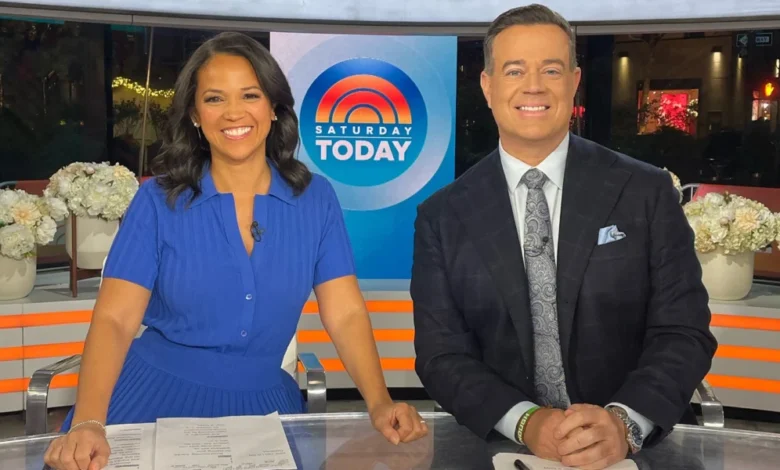
In a notable shift for the network’s flagship morning program, NBC News has officially tapped Carson Daly to serve as co-anchor of Saturday Today, effective November 7. This appointment marks an expansion of Daly’s existing responsibilities, as he will maintain his established role on the weekday broadcast, effectively moving to a six-day-a-week schedule.
Daly, who has been a staple of the Today brand since he joined in 2013 to host the “Orange Room,” is stepping into a role that has been vacant since the departure of Peter Alexander in March. Alexander, a veteran presence at NBC for over two decades, concluded his tenure with the network to pursue a new opportunity as a daytime anchor for MS NOW.
The integration of Daly into the Saturday lineup is viewed by industry analysts as a move toward stabilizing the weekend morning slot by leveraging a recognizable, multi-platform personality. Daly will join a seasoned team that includes co-anchor Laura Jarrett, feature anchor Joe Fryer, and meteorologist Angie Lassman. The move signals NBC’s commitment to maintaining a consistent editorial voice across its entire seven-day programming cycle, ensuring that viewers receive the same high-touch, personality-driven content on weekends as they do during the high-stakes weekday morning hours.
Strategic Realignment at CNBC: Leadership and Content Evolution
Concurrently, CNBC is implementing a sweeping restructuring of its dayside operations and editorial hierarchy. The network’s announcement follows the news that it has secured a long-term agreement with market commentator Jim Cramer. A centerpiece of this renewed partnership is the planned launch of a premium subscription tier for the “CNBC Investing Club” in 2027, highlighting the network’s focus on diversifying revenue streams beyond traditional advertising.
The organizational changes are extensive, aimed at streamlining operations and sharpening the focus of the network’s business-day programming. Key executive shifts include:
- Todd Bonin: Appointed to lead Business Day programming from 5 a.m. to noon ET.
- Sandy Cannold: Transitioned to oversee all network programming from noon to 6 p.m. ET.
- Editorial Continuity: Anne Tironi will continue her stewardship of the iconic Squawk Box, while Lisa Villalobos remains responsible for the three-hour block of Squawk on the Street. Both will report directly to Bonin, creating a unified leadership structure for the network’s morning and midday blocks.
- Content Development: Matt Quayle, formerly the senior executive producer for The Exchange and Power Lunch, will pivot to a newly created role dedicated to cross-platform content development, reflecting the network’s prioritization of digital integration.
- Specialized Units: Maria Boden has been tasked with an expanded portfolio, adding Fast Money to her existing oversight of Closing Bell: Overtime.
On the reporting front, Lacy O’Toole, in her capacity as vice president and managing editor, will now oversee the network’s specialized Specials unit. This consolidation places the majority of the network’s correspondents under her direct supervision, with the exception of those working within the strategic verticals led by Max Meyers. Furthermore, the network is decentralizing its regional management: MC Wellons will oversee correspondents in Washington, D.C., while Christina Passariello will take charge of the San Francisco bureau. The Investigations unit, a critical component of CNBC’s editorial integrity, will now fall under the purview of Ken Brown, with veteran investigators Scott Zamost and Paige Tortorelli reporting to him.
MS NOW: Branding and CTV Expansion
MS NOW is simultaneously executing a two-pronged strategy focused on brand messaging and accessibility. The network recently unveiled a new campaign, “Now There’s More That Unites Us,” which leadership claims is a response to the current socio-political climate and the rising tide of civic engagement. The campaign is designed to position the network as a platform for diverse voices and communal participation.
Beyond the marketing shift, MS NOW is aggressively expanding its digital reach. By launching its direct-to-consumer experience, MS NOW Membership, on major connected TV (CTV) platforms—including Roku, Apple TV, Samsung, Google TV, and Amazon Fire TV—the network is bypassing traditional cable gatekeepers. This move allows members to access the 24/7 live linear feed and a comprehensive library of on-demand content directly through their smart TVs.
The financial implication of this shift is significant. By decoupling its live feed from the traditional cable bundle, MS NOW is positioning itself to capture a younger, cord-cutting demographic that prioritizes on-demand, streaming-first consumption. This pivot mirrors similar moves by other major news organizations attempting to insulate themselves against the ongoing decline in linear cable subscriptions.
Personal Milestones in the Media Landscape
Amidst the corporate maneuvering, the television news community has seen notable personal milestones. Fox News’s Peter Doocy recently welcomed his third child, Molly Kate Doocy, on October 22. Similarly, CNN’s Abby Phillip announced the arrival of her second child, Maxwell Elias Richardson, born on October 27. These developments serve as a reminder of the human element behind the high-pressure environment of national news broadcasting.
Analytical Overview: The Future of News Broadcasting
The convergence of these events highlights three critical trends defining the current media landscape:
- The Rise of the "Super-Anchor": By utilizing personalities like Carson Daly across more days of the week, networks are seeking to maximize the utility of their highest-paid talent. This trend minimizes risk by relying on proven audience favorites to carry the load across expanded time slots.
- Vertical Integration and Subscription Models: CNBC’s commitment to the “Investing Club” and MS NOW’s CTV expansion demonstrate a clear industry-wide shift toward direct-to-consumer monetization. The traditional ad-supported model is being heavily supplemented by subscription-based services that provide exclusive, value-added content, such as financial analysis or extended on-demand access.
- Operational Efficiency and Bureaucracy: The restructuring at CNBC suggests a lean-forward approach to news gathering. By streamlining reporting chains—specifically under the managing editor’s office—networks are attempting to reduce internal silos. This creates a more cohesive editorial voice, which is essential for maintaining brand identity in an increasingly fragmented digital media environment.
As these changes take effect throughout the remainder of the year and into 2025, the industry will be watching closely to see if these structural shifts yield the desired improvements in audience retention and digital revenue. For NBC, CNBC, and MS NOW, the primary challenge remains the same: how to keep the legacy of linear television relevant while aggressively building a future in the digital, on-demand marketplace. The success of these initiatives will likely serve as a blueprint for other networks grappling with the same fundamental industry pressures.