Google Ads introduces channel prioritization to grant advertisers granular control over budget allocation

For years, the Google Ads ecosystem has been defined by a rigid, all-or-nothing approach to channel distribution. Advertisers launching Performance Max campaigns or standard Search campaigns often found themselves tethered to an automated system that distributed budgets across Google’s sprawling network—Search, Maps, Gmail, YouTube, Discover, and the Display Network—with limited oversight. While this "black box" automation was intended to maximize efficiency through machine learning, it frequently left sophisticated marketers frustrated by an inability to dampen spending on underperforming or brand-unsafe placements.
This long-standing limitation is finally shifting. In a significant move toward transparency and user control, Google announced last month the rollout of "channel prioritization," a new feature set designed to allow advertisers to assign "High" or "Low" priority labels to specific advertising channels. This update marks a pivot in Google’s strategy, acknowledging that while automation is powerful, human oversight remains a critical component of successful campaign management.
The Evolution of Campaign Control
Historically, Google’s transition toward automated campaign types—most notably Performance Max—was met with mixed reactions. Performance Max, which became the standard for many retail and lead-generation advertisers, automates budget allocation across the entire Google ecosystem. Because the system prioritizes conversion volume above all else, it often shifts funds to channels with the highest reach or lowest cost-per-click, even if those clicks do not result in high-quality leads or sales.
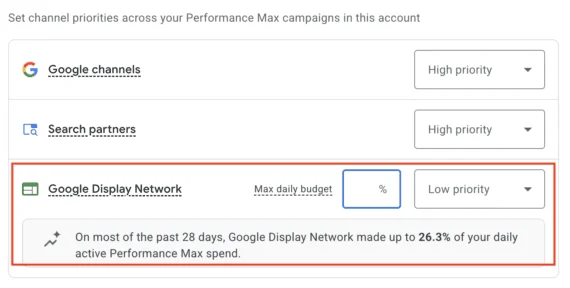
Previously, if an advertiser identified that the Display Network was consuming a disproportionate share of the budget without delivering a commensurate return on investment, the only recourse was to exclude the channel entirely. This binary choice—"on" or "off"—made testing new channels or managing risk difficult. The introduction of channel prioritization bridges this gap, allowing marketers to signal to the algorithm that a specific channel should be treated with caution, rather than being completely excluded.

Mechanics of the New Prioritization Feature
The new interface, integrated directly into the Google Ads console, provides a dashboard where users can toggle channel settings. When a channel is marked as "Low priority," advertisers gain the ability to set a maximum daily spend percentage. This constraint acts as a "guardrail" for the machine learning model, preventing it from over-allocating budget to channels that may be underperforming.
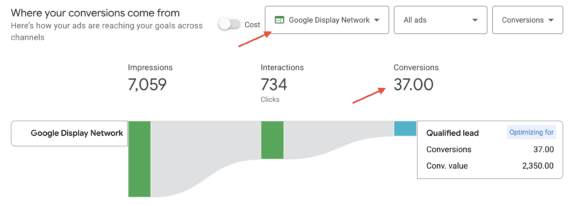
To determine which channels deserve a "High" or "Low" designation, Google has enhanced its "Insights and Reports" section. The channel performance report provides a side-by-side analysis of spend versus conversions. For example, if a campaign shows that 26% of the budget is allocated to the Display Network but that channel accounts for nearly 50% of total conversions, the data justifies a "High" priority status. Conversely, if a channel consumes 30% of the budget but yields less than 5% of conversions, it becomes a candidate for a "Low" priority setting with a strict budget cap.
Strategic Implications for Campaign Managers
The ability to influence, rather than dictate, budget distribution is expected to have a profound impact on cross-channel marketing strategies. For performance marketers, this change is particularly significant for Search partners. Many advertisers have long argued that traffic from Search partners—sites that syndicate Google search results—is often of lower quality compared to traffic from the primary Google Search engine.
Previously, excluding Search partners was a common defensive tactic to preserve budget for "core" search traffic. With the new prioritization tool, an advertiser can choose to keep Search partners active but limit their budget to a nominal percentage. This enables "controlled testing," allowing the algorithm to continue learning from broader data sets without the risk of significant budget waste on unqualified traffic.
The "Google Channels" Limitation
Despite the excitement surrounding this update, technical analysts have noted a significant caveat. The feature currently bundles five distinct platforms—Search, Discover, Gmail, Maps, and the Display Network—under the singular umbrella of "Google channels." This grouping presents a logical inconsistency: Google allows users to view the performance of each of these channels individually in the reporting dashboard, yet forces them to apply a single priority setting across the entire group.
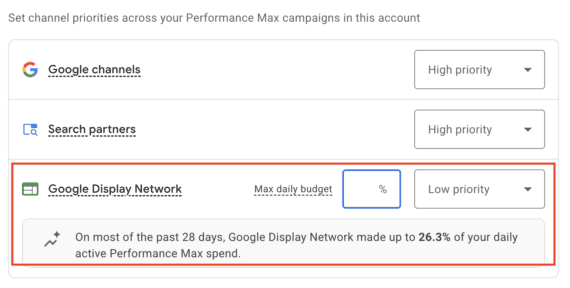
This constraint suggests that the current implementation is still in its infancy. For an advertiser whose campaign thrives on Google Search but struggles on Maps, there is currently no mechanism to prioritize one while suppressing the other. Critics suggest this remains a form of "constrained choice," where Google provides the appearance of control while still mandating a degree of algorithmic homogeneity.
Market Context and Future Outlook
This update follows a broader trend within the digital advertising industry, where platforms are increasingly under pressure to provide more transparency. Regulatory bodies and major enterprise clients have increasingly scrutinized the "black box" nature of automated advertising. By offering these controls, Google is likely attempting to stave off further regulatory intervention while increasing advertiser confidence in its automated products.
From a chronological perspective, the rollout of this feature is part of a 2026 initiative to make Google Ads more "human-centric." Throughout the year, Google has released a series of updates aimed at simplifying reporting and enhancing manual control, likely in response to the growing popularity of competing platforms that offer more transparent bidding and placement controls.
Analyzing the Long-Term Impact
The true effectiveness of channel prioritization will be measured by how strictly the Google Ads algorithm adheres to these new constraints. In the past, automated bidding strategies have sometimes ignored manual caps if the machine learning model deemed them detrimental to overall conversion goals. If the system "respects" the new maximum daily spend percentages, it will represent a major victory for advertisers who have felt their agency slipping away in recent years.
For now, industry experts recommend a cautious approach. Marketers should use the first 30 days of the feature’s availability to monitor spend patterns, particularly to ensure that applying a "Low" priority status does not inadvertently tank the overall performance of a campaign. Because Google’s algorithms rely on broad data sets to optimize, severely restricting spending across major channels could lead to a decline in conversion volume if the system is starved of the data it needs to find prospects.
As this feature matures, it is likely that Google will expand the granularity of these settings. If the feedback from high-volume accounts remains positive, the industry may see the removal of the "Google channels" grouping, allowing for true, channel-by-channel budget management.
For the modern media buyer, the task is no longer just about optimizing bids and creative content; it is about managing the interface between human strategy and machine-led execution. Channel prioritization is an essential step in that direction, providing a more balanced, albeit still imperfect, environment for managing digital investments. As the platform continues to evolve, advertisers who master these new levers of control will likely see better efficiency, lower wastage, and more predictable results in an increasingly automated landscape.