
How WooCommerce is Leveraging AI and Proactive Auditing to Fortify Global E-commerce Security

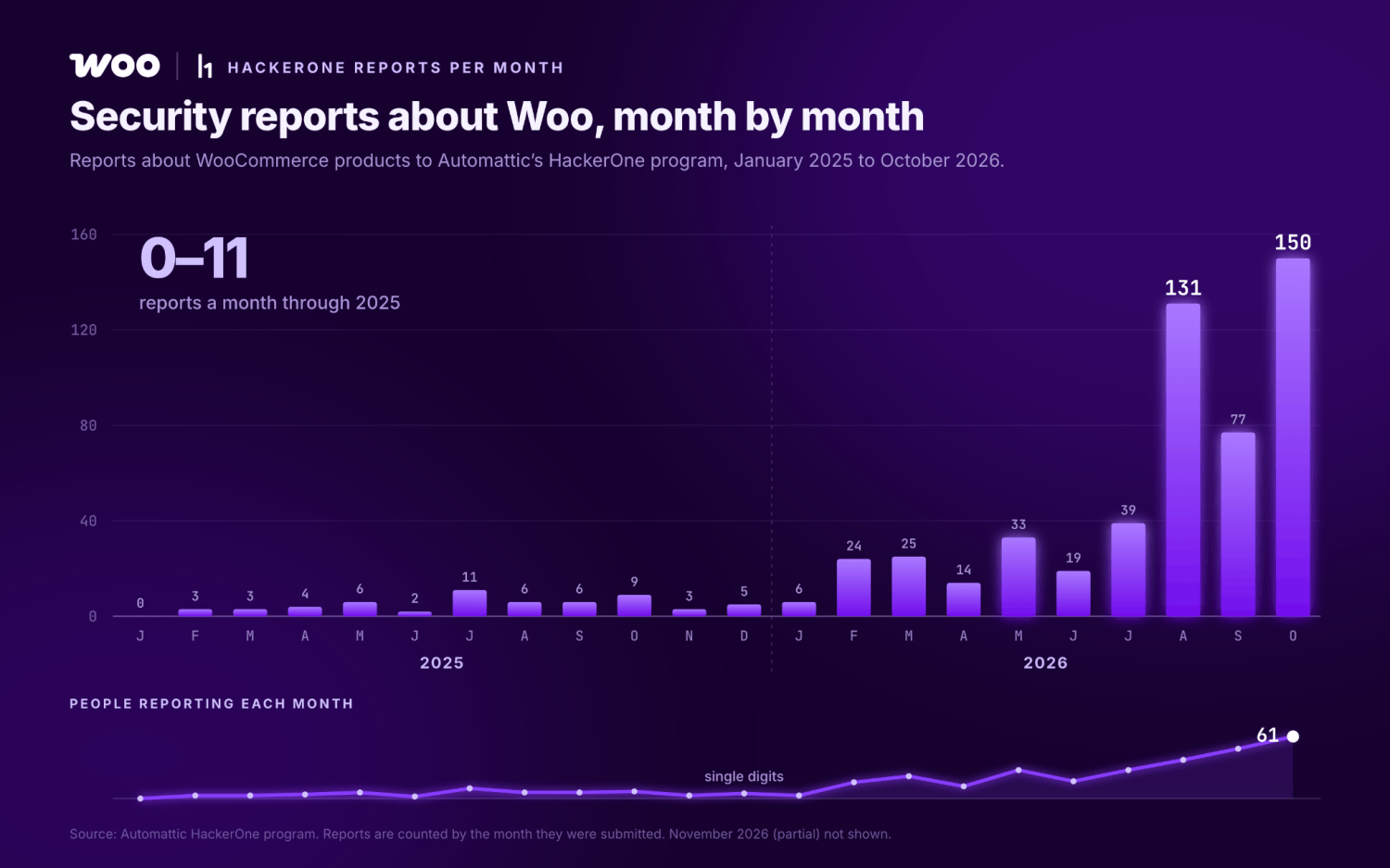
The digital landscape for e-commerce is undergoing a radical transformation as the proliferation of Large Language Models (LLMs) significantly lowers the barrier for vulnerability discovery. In response to a nine-fold increase in security reports submitted via its HackerOne program over the past year, WooCommerce—the world’s most popular e-commerce platform—has fundamentally overhauled its approach to code integrity. By shifting from a reactive model to a proactive, AI-augmented defense strategy, the platform is attempting to stay ahead of automated threat actors who are increasingly capable of chaining minor vulnerabilities into significant security risks.
The New Era of AI-Driven Vulnerability Discovery
Historically, software security relied heavily on human-led code reviews and external researcher reports. However, the integration of generative AI into the developer and hacker toolsets has shifted the paradigm. Automated scanners and LLM-based analysis tools can now ingest massive repositories of open-source code to identify patterns that previously required hours of manual auditing.
This shift has created a dual-edged sword for open-source projects like WooCommerce. Because the platform’s code is transparent and accessible, it allows for community-driven improvements, but it also provides a clear roadmap for bad actors using AI to map out potential weaknesses. Automattic, the parent company of WooCommerce, noted that reports from external researchers have surged, with a significant number of these reports being duplicates. This indicates a concentrated effort by the security community to "stress-test" the platform using similar automated toolsets.
A Chronology of the Shift
The transition toward a proactive security posture began in earnest in mid-2026. Prior to this, security patches were often bundled into standard feature releases, a strategy that inadvertently created a bottleneck. If a major update contained both a security patch and a buggy feature, administrators were forced to roll back the entire update, thereby re-exposing their stores to known vulnerabilities.
- May 2026: WooCommerce shifts its internal development philosophy, prioritizing automated, proactive scanning over traditional manual-only review processes.
- August 2026: Following a global trend in open-source software, WordPress launches its "Core Security Initiative" to address the rising volume of vulnerability reports.
- October 2026: A critical PHP security advisory underscores the importance of server-level maintenance, prompting WooCommerce to implement stricter support policies for legacy PHP versions.
- November 2026: The release of WooCommerce 11.2.2 establishes a new precedent: delivering security patches as independent, standalone updates to ensure faster, safer deployment without feature-related regressions.
Data-Driven Security: The SentrySift Initiative
To manage the influx of reports, Automattic developed an internal tool called SentrySift. This system utilizes AI to conduct a "first-pass" assessment of every incoming report within minutes. By automating the sorting process, the security team can triage vulnerabilities, identify duplicates, and prioritize the most critical threats.
The effectiveness of this strategy is evident in the numbers. Since the adoption of internal, AI-driven scanning, the WooCommerce team has identified more than twice as many valid core vulnerabilities as those reported by external researchers. This inversion of the reporting dynamic is a critical milestone; it suggests that the platform is catching and neutralizing threats before they can be exploited in the wild.
Implications for Store Owners and Developers
The implications of this heightened security environment are twofold. For store owners, the most immediate change is the frequency and nature of updates. WooCommerce has introduced a mechanism where security releases can be marked as "required" for stores connected via the WooCommerce.com marketplace. This allows for the automatic propagation of critical patches, even on sites where manual updates are typically restricted.
For developers, the mandate is clear: the era of passive security maintenance has ended. The platform is increasingly enforcing higher standards for extensions and plugins. Developers are now encouraged to integrate automated scanning into their own CI/CD (Continuous Integration and Continuous Deployment) pipelines. Failure to do so risks not only the integrity of their clients’ stores but also the potential removal of their software from official distribution channels.
The Broader Ecosystem: PHP and Server Integrity
Security at the application layer is ineffective if the underlying server environment is compromised. The October 2026 PHP vulnerability highlighted the systemic risk posed by outdated server configurations. With older versions of PHP, such as 7.4 and 8.0, no longer receiving official security support, WooCommerce has begun issuing automated warnings to administrators.
The roadmap for 2027 is aggressive: by February 2027, with the release of version 11.6, the platform will mandate PHP 8.1 or newer. This decision reflects a broader industry consensus that maintaining compatibility with legacy software is a significant security liability. While this may impose a temporary technical burden on smaller merchants, it is a necessary step to ensure that the entire ecosystem remains resilient against modern exploit vectors.
Future Outlook and Strategic Priorities
The current engineering roadmap for WooCommerce has been reorganized to place security as the paramount priority. While this has resulted in the delay of several non-critical feature releases, the consensus among stakeholders is that the trade-off is essential for the long-term viability of the platform.
"Adding new features in the software has no value if you can’t trust that what has already shipped is safe and secure," noted Darren Ethier, an engineering lead at the company. The goal is to move beyond "all-hands-on-deck" emergency responses and instead build a "hard target" infrastructure where security is a routine, automated byproduct of the development process.
As AI continues to evolve, the cat-and-mouse game between defenders and attackers will likely intensify. The success of WooCommerce’s new security posture will depend on its ability to keep its AI-driven detection tools more sophisticated than the automated tools used by attackers. For now, the platform is betting that by embracing transparency and automation, it can turn the open-source model into its greatest security asset.
Best Practices for Maintaining a Secure Store
For those managing WooCommerce environments, the following steps are now considered the gold standard for maintaining a secure posture:
- Prioritize Core and Extension Updates: Treat security releases as mandatory. Enable automated updates for extensions through the WooCommerce Marketplace to ensure immediate protection against critical flaws.
- Modernize Server Infrastructure: Ensure your hosting environment is running a supported, current version of PHP (8.1 or higher). Consult with your hosting provider if you are currently running PHP 8.0 or older.
- Audit Third-Party Plugins: Reduce your attack surface by removing unused or outdated plugins. Only install extensions from reputable sources that maintain active security update cycles.
- Adopt Proactive Monitoring: If you are a developer, integrate automated static analysis tools into your development workflow. If you are a merchant, utilize security plugins that offer real-time monitoring and threat alerts.
- Maintain Regular Backups: Irrespective of security patches, a robust, off-site backup strategy is the final line of defense against both human error and malicious activity.
As the industry looks toward 2027, the focus remains on resilience. The transformation of the WooCommerce security model serves as a case study for how large-scale platforms must adapt to the era of AI-accelerated threats, proving that the most effective way to secure a platform is to automate the defense to match the speed of the attack.
Related posts: