The Evolution of Healthcare Operations: Implementing AI Receptionists to Manage Patient Inflows, Compliance, and Administrative Burnout


Modern medical practices and healthcare networks face an unprecedented administrative bottleneck at the front desk. Front-desk personnel are routinely tasked with simultaneously greeting patients checking in at the physical reception counter, managing continuous inbound phone queues, and fielding complex scheduling inquiries. Calls that remain unanswered do not simply vanish; they frequently convert into unreturned voicemails, leading to frustrated patients who ultimately disconnect and seek care at competing local clinics. Furthermore, once standard office hours conclude, incoming calls typically hit automated dead ends, leaving patients with limited recourse until the following business day.
Historically, medical operations attempted to resolve these persistent staffing strains by hiring additional personnel. However, prevailing labor market shortages, escalating employment costs, and high staff turnover rates render this traditional approach increasingly unsustainable. Consequently, practice owners and operations leaders are turning their attention toward specialized conversational artificial intelligence. These advanced software solutions are designed to answer, schedule, and document patient interactions seamlessly without requiring an expansion of full-time headcount. Yet, deploying automation in a clinical environment introduces unique challenges. Unlike general retail or consumer-grade automation tools, healthcare technology must navigate rigorous regulatory frameworks to ensure that all patient interactions remain entirely secure and compliant.
Understanding Healthcare-Grade Conversational AI Systems
An artificial intelligence receptionist engineered for the medical sector utilizes sophisticated voice recognition and natural language processing to interact dynamically with callers. These tools differ substantially from traditional, legacy auto-attendant menus or rudimentary interactive voice response (IVR) systems. While an older IVR menu merely forces a caller to navigate a rigid series of button prompts—frequently resulting in frustration and hang-ups—a modern AI receptionist comprehends spoken intent in real time.
Operating within clinical guidelines, these systems can independently answer incoming telephone calls, book or reschedule appointments, field recurring administrative inquiries, and immediately route urgent clinical emergencies to appropriate human staff members. Crucially, they execute these tasks while continuously safeguarding protected health information. By processing routine conversational inputs naturally, the technology permits patients to secure appointments or resolve administrative questions within a single phone interaction, eliminating prolonged hold times and mitigating the risk of lost patient retention.
The Operational Mechanics Within Medical Practices
The workflow integration of an artificial intelligence receptionist is structured to minimize friction for both the patient and the medical staff. When a patient initiates a call, the system answers instantly, initiates a natural spoken greeting, and ascertains the precise purpose of the contact. Utilizing secure application programming interfaces, the AI interacts directly with the practice’s electronic health record and scheduling infrastructure to locate available appointment slots, verify demographic details, or log pre-visit intake information.
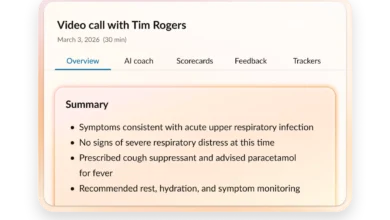
Once the dialogue concludes, the system automatically generates a concise, accurate call summary and logs it directly into the practice management database. This automated record-keeping ensures that administrative staff can seamlessly review interactions and pick up precisely where the system concluded. According to industry analyses, such as Deloitte’s comprehensive 2005 outlook on healthcare management, generative artificial intelligence and workflow automation possess the capability to reduce the time revenue-cycle staff spend on routine administrative tasks by up to 50 percent. Furthermore, freeing clinical personnel from repetitive burdens can yield significant dividends, granting nursing staff an estimated 20 percent more time to focus on direct patient care and clinical oversight.
Delineating Capabilities: What AI Can and Cannot Handle
A successful implementation of front-desk automation relies heavily on establishing clear operational boundaries regarding what the technology is authorized to manage independently versus what must be instantly escalated to human professionals.

Routine, repeatable tasks represent the core competency of healthcare AI receptionists. These include booking initial or follow-up visits, sending appointment reminders, providing logistical details such as parking instructions and office hours, verifying basic insurance network participation, and collecting standard patient intake data. By offloading these high-volume inquiries, practices can maintain operational continuity even during peak calling periods.
Conversely, certain categories of communication must always bypass automated systems and connect directly to qualified personnel. These mandatory human touchpoints encompass requests for clinical medical advice, complex medication queries extending beyond standard administrative refills, and interactions involving distressed or acutely vulnerable callers. Furthermore, robust systems are pre-programmed to recognize critical keywords indicating medical emergencies—such as chest pain or severe respiratory distress—promptly interrupting standard booking dialogues to redirect the caller to emergency protocols or human clinical staff.
Industry forecasts suggest that the scope of automated handling will continue to expand. Projections from major technology research firms indicate that agentic artificial intelligence systems could autonomously resolve up to 80 percent of standard, routine customer service interactions across various industries by the year 2029. Within healthcare environments, this trajectory points toward a future where the vast majority of administrative overhead is managed autonomously, leaving human professionals to focus exclusively on empathetic patient engagement and complex clinical decision-making.
The Driving Forces Behind Front-Desk Automation Adoption
The widespread migration toward front-desk automation is propelled by converging pressures, notably severe workforce shortages and escalating consumer expectations regarding healthcare accessibility. Patients increasingly demand modern, frictionless digital experiences that mirror the convenience found in other consumer sectors.
Data from recent healthcare executive surveys underscore the pervasive nature of workforce challenges. More than half of surveyed health system leaders identify talent shortages, recruitment friction, and employee retention as primary strategic hurdles. An understaffed front office inevitably struggles to keep pace with ringing telephone lines, creating a direct pipeline of missed appointment opportunities.
Compounding these operational vulnerabilities is the reality of modern consumer behavior. Patients frequently manage personal logistics outside of traditional business hours, making phone calls during evenings or weekends when physical offices are closed. Without an intelligent after-hours solution, a patient needing to reschedule an appointment is relegated to leaving a voicemail that may not be processed until mid-morning the following day, frequently resulting in a wasted appointment slot that could have been reallocated to another individual in need. Deploying conversational artificial intelligence bridges this temporal gap, ensuring round-the-clock accessibility and supporting comprehensive patient engagement strategies.
Navigating HIPAA Compliance and Patient Privacy Mandates
In the healthcare sector, regulatory compliance supersedes all other considerations when evaluating software vendors. Any conversational artificial intelligence tool deployed within a medical practice must strictly adhere to the Health Insurance Portability and Accountability Act and be backed by a legally binding Business Associate Agreement. Additionally, advanced security accreditations, such as HITRUST certification, serve as critical indicators of robust data protection practices.
Practice administrators must demand rigorous security safeguards from prospective technology vendors. Essential requirements include end-to-end data encryption both in transit and at rest, strict minimization of stored protected health information, comprehensive audit logging capabilities to track system access, and adherence to established data retention policies.
It is vital to acknowledge that vendor compliance pertains exclusively to the underlying platform infrastructure. How an individual medical practice configures, manages, and utilizes the tool remains the direct legal responsibility of the healthcare organization. Consequently, internal staff training, role-based access controls, and ongoing security audits are mandatory components of a successful deployment across all digital communication channels, including messaging platforms and telehealth portals.

Strategic Evaluation and Implementation Frameworks
Selecting the appropriate artificial intelligence receptionist requires a methodical, step-by-step evaluation process. Practices are advised to prioritize selection criteria in a strict hierarchical order: compliance first, system integration capabilities second, call-handling scope third, and overall patient experience fourth.
To streamline the vetting process, decision-makers should evaluate potential solutions against four core operational questions:
- Does the vendor provide a signed Business Associate Agreement and maintain verifiable healthcare security certifications?
- Does the software integrate cleanly with the practice’s existing electronic health record and scheduling systems without requiring manual data re-entry?
- Can the system reliably differentiate between routine administrative requests and urgent clinical scenarios requiring human intervention?
- Does the conversational interface offer a natural, low-friction experience that elderly or technologically hesitant patients can navigate comfortably?
Once a short list of compliant vendors is established, practices should demand live, unscripted demonstrations that showcase how the software manages complex edge cases, such as overlapping phone calls, background noise, or callers who alter their requests mid-conversation.
To mitigate operational risk, experts recommend adopting a phased rollout strategy. Rather than redirecting all inbound telephone traffic simultaneously, practices should initiate pilots within a limited scope, such as managing exclusively after-hours inquiries, deploying the tool within a single specialized department, or testing it at one specific clinic location. This incremental approach allows administrative and clinical teams to build familiarity, observe system performance under real-world conditions, and fine-tune configurations before scaling the technology enterprise-wide.
The Role of Advanced Healthcare AI Solutions
As the market matures, specialized enterprise-grade platforms are emerging to meet the rigorous demands of medical practices. Solutions such as RingCentral’s AI Receptionist and its advanced counterpart, AIR Pro for Healthcare, illustrate the modern convergence of conversational artificial intelligence and clinical compliance.
Designed specifically to support front-desk operations, these systems handle core tasks including inbound call management, intent-based routing, and automated appointment scheduling. Furthermore, healthcare-optimized iterations are built to support HIPAA compliance, feature robust HITRUST certification frameworks, and integrate directly with legacy medical records databases. This allows practices to verify patient identities, book appointments according to specific clinical priorities, and route urgent inquiries directly to designated staff members without forcing organizations to abandon their established communication ecosystems.
Conclusion and Future Outlook
Integrating conversational artificial intelligence into the front office represents a fundamental evolution in healthcare administration. By prioritizing stringent regulatory compliance and robust security standards ahead of feature sets, medical practices can successfully automate high-volume routine workflows without compromising patient privacy or trust.
As workforce pressures persist and patient expectations for immediate accessibility continue to rise, the strategic implementation of compliant artificial intelligence receptionists offers a viable pathway for medical practices to recover valuable staff hours, optimize appointment scheduling, and enhance overall operational resilience.