Mastering the Economics of Ecommerce Growth: How to Scale Operations Without Inflating Costs


In the digital retail landscape, the distinction between simple growth and true scalability is the primary determinant of long-term commercial viability. While many businesses celebrate the expansion of their order volume, industry analysts note that growth often masks hidden inefficiencies that can erode profit margins if not addressed systematically. True scalability is defined by a business’s ability to increase output—measured in order volume and revenue—at a rate that significantly outpaces the growth of its operational overhead. When a company can process 500 orders with the same labor and infrastructure footprint previously used for 100 orders, it has successfully scaled. When it requires a proportional five-fold increase in human capital and administrative complexity to reach that same milestone, it has merely grown, often at the cost of its long-term financial health.
The core metric for evaluating this dynamic is the cost per order (CPO). By dissecting the CPO, stakeholders can identify whether their infrastructure is becoming leaner or more bloated as they enter new markets, add product lines, or expand their customer base.

The Mechanics of Scalability and Operational Efficiency
The fundamental challenge for growing ecommerce enterprises lies in the relationship between fixed costs and variable volume. In the early stages of an online business, manual workflows—such as updating stock levels, managing product listings, and handling customer correspondence—are manageable. However, as volume increases, these manual tasks compound, creating a "labor trap." According to recent industry benchmarks, firms that fail to automate these repetitive processes often see their administrative costs rise in a linear fashion with their revenue, effectively neutralizing the benefits of increased sales.
Professional logistics and management consultants advocate for a rigorous breakdown of the cost per order to pinpoint where these inefficiencies manifest. The formula is straightforward but essential: divide the total monthly expenditure—including platform licensing, hosting, third-party applications, payment processing fees, and labor—by the total number of orders processed in that same period.
For example, an enterprise processing 5,000 monthly orders with a Gross Merchandise Value (GMV) of $400,000 might face a $15,000 monthly cost, resulting in a $3.00 cost per order. While this figure serves as a baseline, its true utility emerges when tracked over time. If that CPO rises while the Average Order Value (AOV) remains stagnant, the company is effectively losing ground. Conversely, a rising CPO can be justified if the AOV increases at a faster rate, suggesting that the brand is moving up-market or successfully implementing cross-selling strategies.

Categorizing Costs for Strategic Planning
Not all costs behave the same way during periods of rapid expansion. Understanding the nature of these expenditures is critical for forecasting and budgeting.
- Fixed Subscription Costs: These include software and platform licensing fees. They remain flat regardless of volume until a specific threshold is hit, necessitating a move to a higher-tier plan.
- Variable Percentage-Based Fees: Costs such as payment gateway transaction fees or revenue-share agreements grow in lockstep with GMV. Because these are percentage-based, they rarely offer economies of scale unless the merchant negotiates better rates based on higher volume.
- Fixed Transactional Fees: These include per-order processing charges. While they scale with volume, they are often the first area where optimization, such as batch processing or consolidated shipping, can yield significant savings.
- Stepped Infrastructure Costs: Hosting and service tiers often involve "cliffs" where costs jump significantly once a certain capacity limit is exceeded.
The strategic goal for any scaling business is to maximize the efficiency of fixed and stepped costs. By leveraging automation, companies can keep these expenses stable even as order counts climb.
The Role of Automation in Workforce Optimization
The most common failure point for scaling companies is the reliance on human intervention for tasks that are inherently algorithmic. When a business reaches a certain scale, the manual movement of data between disconnected systems—such as ERPs, CRM platforms, and shipping providers—becomes a bottleneck.
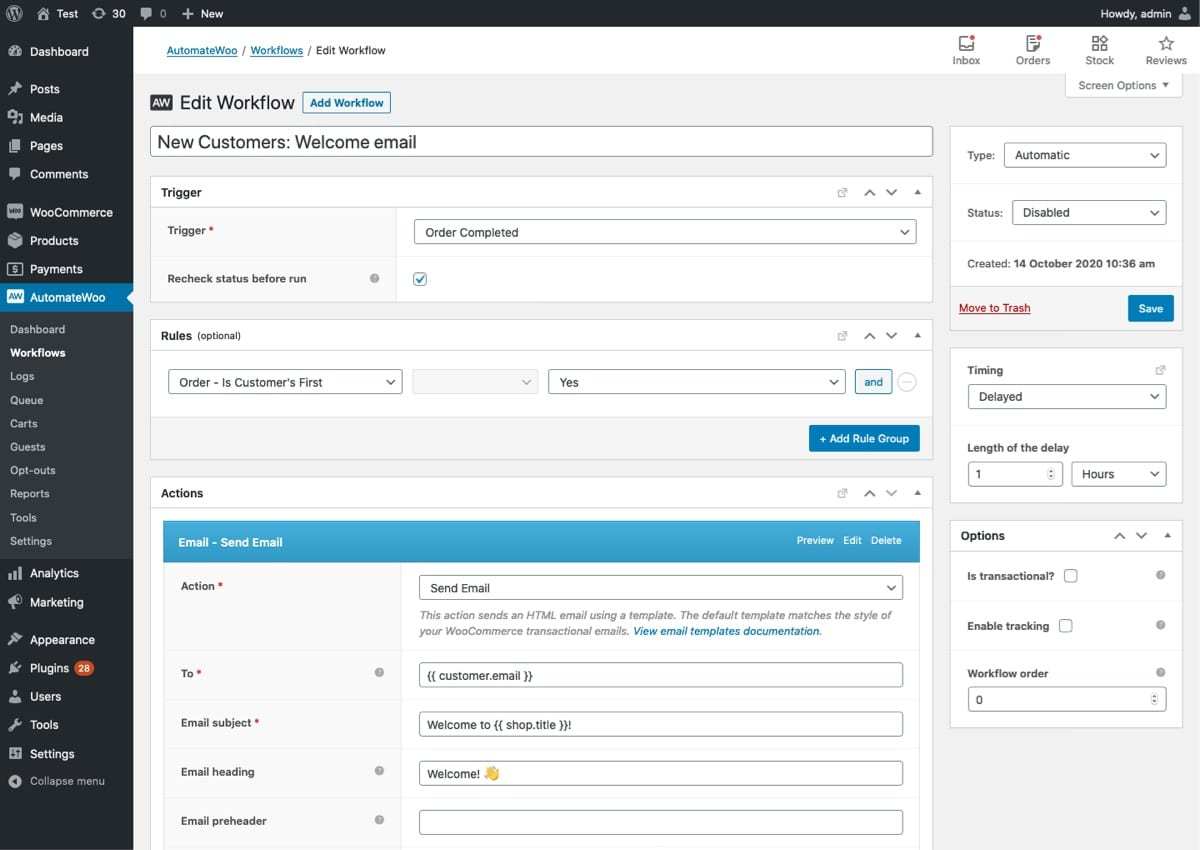
Modern ecommerce platforms, including WooCommerce and its suite of integrated tools like AutomateWoo, provide a framework for neutralizing this administrative bloat. By implementing automated workflows, businesses can handle transactional emails, follow-up sequences, and inventory updates without manual oversight. For instance, a trigger-based system that sends a personalized welcome email to a first-time buyer performs a task that would otherwise require constant human monitoring. By offloading these repetitive, rule-based duties to software, the business can reallocate human capital toward high-value activities such as brand strategy, customer experience design, and merchandising.
Fulfillment and Infrastructure: The Final Frontier
Fulfillment represents the most significant recurring variable cost in the ecommerce ecosystem. Small inefficiencies in the pick-and-pack process, when multiplied by thousands of orders, can result in substantial margin leakage. Inventory management is particularly critical; inaccuracies often lead to overselling, split shipments, and costly returns—all of which inflate the cost per order.
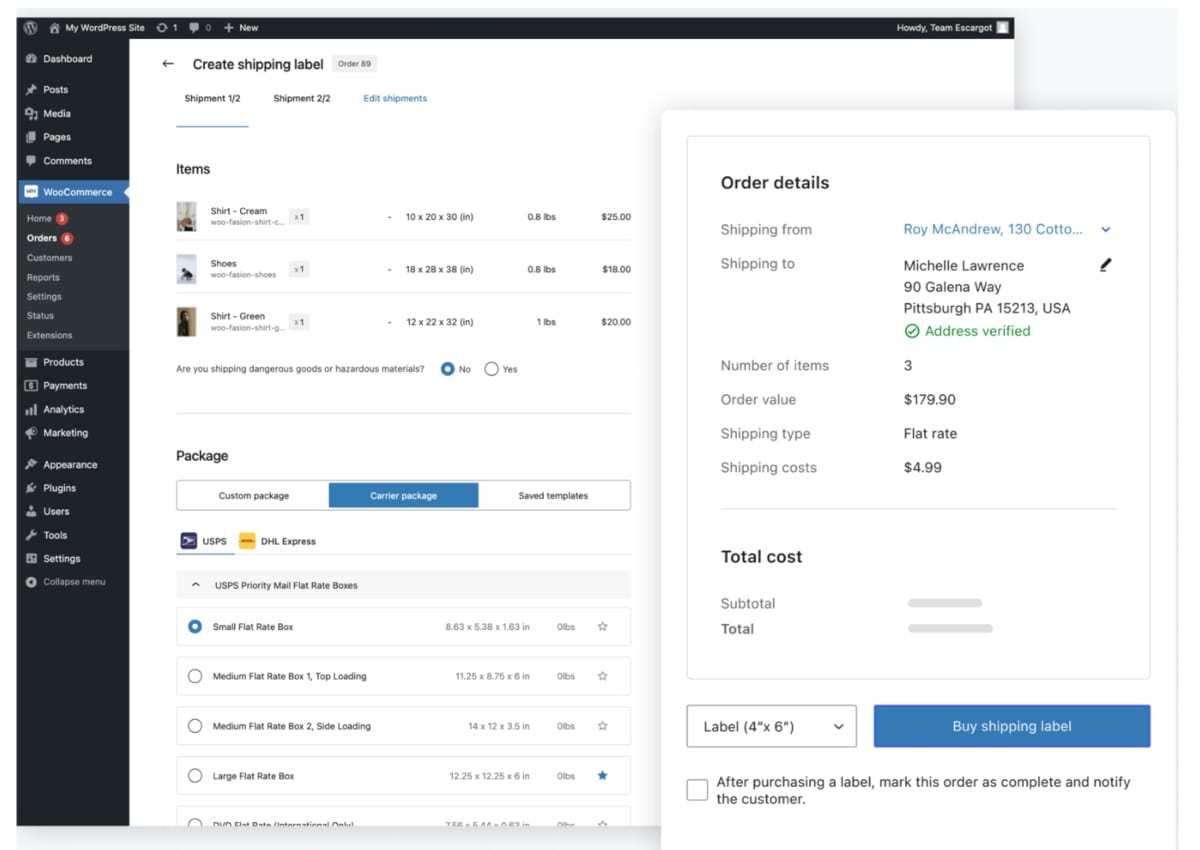
To combat this, successful retailers are increasingly turning to centralized shipping management tools like WooCommerce Shipping or enterprise-grade solutions like ShipStation. These platforms allow for the consolidation of labeling, the optimization of carrier selection, and the integration of multiple warehouses. Even minor improvements in shipping rates or packaging efficiency, when scaled across a high volume of orders, contribute directly to the bottom line.
Infrastructure, specifically hosting, also requires proactive management. As businesses grow, they must transition from shared hosting environments to high-performance, scalable cloud solutions. Providers like Pressable offer tiered plans designed to handle specific traffic volumes and storage needs, but they also impose overage charges. A failure to monitor these thresholds can lead to unexpected spikes in operational costs. The industry standard suggests that retailers conduct performance testing under simulated load conditions, particularly before peak shopping seasons, to ensure that their infrastructure can handle traffic surges without triggering expensive, last-minute upgrades.
The 1% Benchmark and Total Cost of Ownership
To maintain long-term health, many industry experts recommend that a merchant’s Total Cost of Ownership (TCO) for their ecommerce platform—including development, maintenance, and third-party integrations—should remain below 1% of their total GMV.
This benchmark is not merely a budgetary goal but a metric of operational health. If the TCO exceeds 1% and continues to climb alongside revenue, it is a clear indicator that the business is suffering from "complexity creep." In such cases, the business is likely maintaining redundant systems or paying for features that no longer serve the current scale of the operation.

Implications for the Future of Ecommerce
The evolution of a business from a startup to a mature enterprise is rarely a linear process. It requires a constant, critical assessment of every line item on the profit and loss statement. As ecommerce continues to become more saturated, the ability to control the cost per order will distinguish the sustainable brands from those that burn out during growth spurts.
Companies that prioritize modular, scalable architecture—choosing platforms that allow for the seamless addition of new sales channels, subscription models, and B2B functionalities—will be best positioned to weather market volatility. The transition to new markets or new selling models should only occur after a thorough analysis of the associated marginal costs. For example, expanding into international markets introduces currency conversion and cross-border tax complexities that can significantly alter the CPO.
In summary, scaling is not a destination but a continuous process of refinement. By treating the cost per order as a vital health metric and aggressively automating administrative and fulfillment workflows, businesses can ensure that their growth is not just a temporary increase in activity, but a sustainable increase in enterprise value. The objective is to decouple revenue growth from cost growth, creating a lean, agile operation capable of thriving in an increasingly competitive global marketplace.