B2B Paid Playbook 2026: Audience, Channels, AI – The New Frontier of Marketing Effectiveness

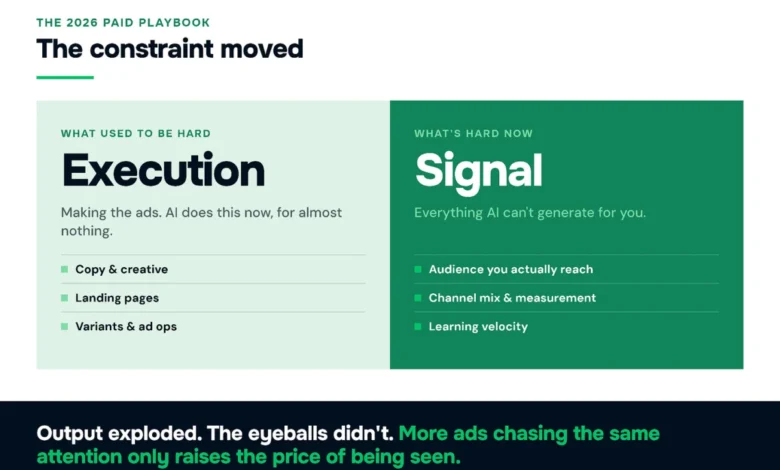
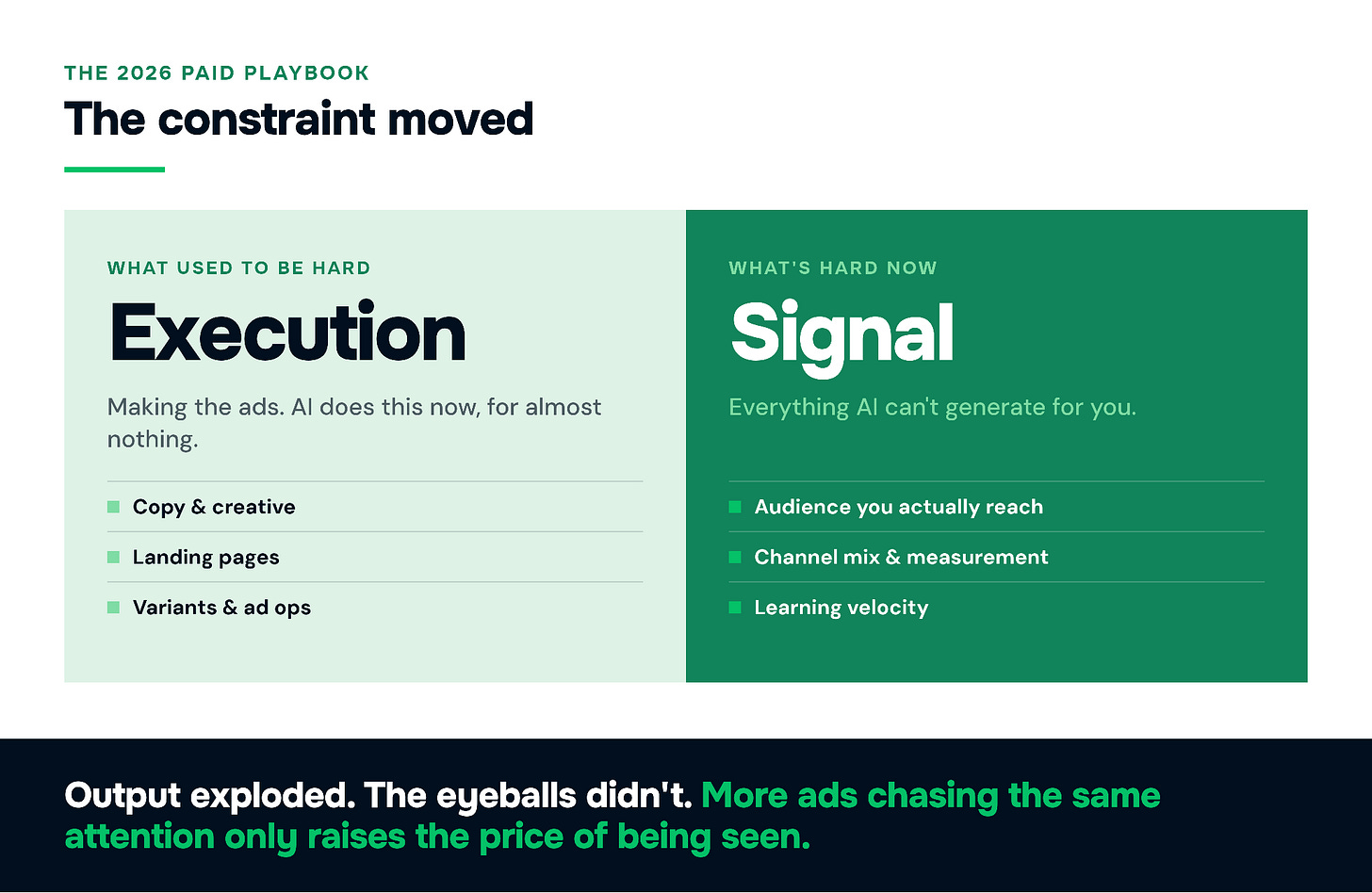
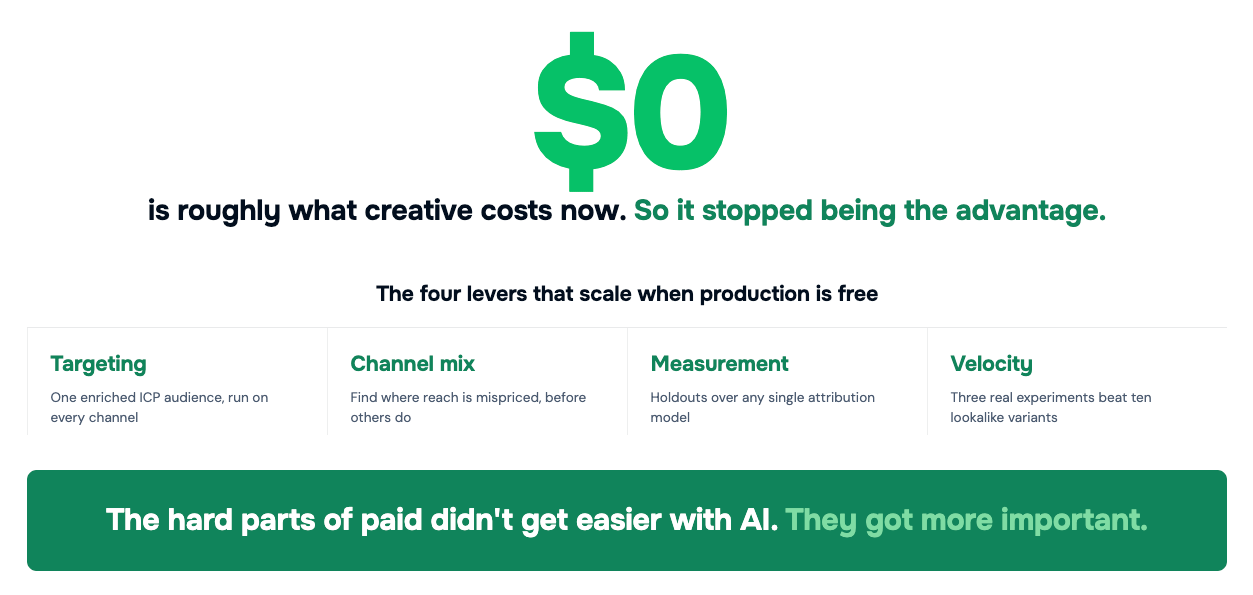
The landscape of B2B paid marketing has undergone a seismic shift, driven primarily by the pervasive integration of Artificial Intelligence. While AI has drastically reduced the cost and effort associated with content production – from copy generation and creative variants to landing page development and ad operations – it has paradoxically failed to improve the scalability of most B2B paid programs over the past three years. This stagnation points to a fundamental reordering of market dynamics: the primary constraint has moved from production efficiency to the finite supply of human attention. AI, by enabling an unprecedented glut of content, has intensified competition within existing channels, driving up the cost of visibility as more ads chase the same limited pool of eyeballs. In this new paradigm, competitive differentiation no longer hinges on creative output, which AI now renders nearly free, but rather on strategic acumen: precisely defining and targeting audiences, optimizing channel selection, rigorously measuring impact, and accelerating the pace of learning. This comprehensive playbook delves into these critical areas, offering a strategic framework for B2B marketers to thrive in an AI-saturated environment, focusing on an uncopyable audience layer, a channel-by-channel analysis of current efficacy, and the future evolution of AI in marketing.

The AI Paradox: Production Abundance Meets Attention Scarcity
The advent of generative AI has ushered in an era where the mechanical aspects of marketing production are virtually cost-free. Tasks that once required significant time and resources – crafting compelling ad copy, designing diverse creative assets, building targeted landing pages, and managing ad operations – can now be automated or accelerated with remarkable efficiency. This technological leap has democratized content creation, allowing businesses of all sizes to produce vast quantities of marketing materials. However, this liberation of production has not translated into easier scaling for B2B paid programs. The core issue lies in the unchanging nature of human attention. AI has not created new social networks or expanded the cognitive bandwidth of consumers; instead, it has flooded existing digital channels with an overwhelming volume of content, much of which is, frankly, mediocre. This influx means more ads vying for the same limited attention spans, inevitably driving up advertising costs across the board. The fundamental economic principle of supply and demand dictates that when the supply of content explodes but the supply of attention remains static, the price of capturing that attention escalates. This necessitates a profound re-evaluation of marketing strategies, shifting focus from mere content generation to the art and science of connecting with the right audience in a meaningful way.
Mastering the Audience Layer: The New B2B Edge
In a world where creative assets are easily replicated, the most robust and defensible competitive advantage in paid marketing lies in superior audience targeting. Competitors can readily reverse-engineer channel strategies, dissect creative campaigns, and imitate messaging; however, the intricate details of a company’s targeting remain opaque, making audience strategy a durable differentiator.
Building a Unified ICP Audience for Cross-Channel Efficacy: Ad platforms, by design, optimize within their proprietary ecosystems. They lack a holistic understanding of a B2B company’s true Ideal Customer Profile (ICP), including which job titles consistently convert into loyal customers, category-specific win-loss rates, existing customer bases, or lost opportunities. To overcome this inherent limitation, marketers must proactively feed these platforms with enriched, first-party data. The recommended approach involves constructing a single, comprehensive ICP audience. This audience should then be layered with CRM data to meticulously exclude existing customers and known competitors, ensuring advertising spend is directed solely towards genuine prospects. This enriched audience, identical in its composition and exclusions, is then synced across all primary advertising platforms, including Meta (Facebook/Instagram), Google, LinkedIn, and Reddit. This consistent signal empowers platform algorithms to optimize for genuine revenue-generating conversions rather than merely cheap form submissions. Meta’s algorithm, in particular, has demonstrated significant advancements in this area, making it a powerful, albeit often overlooked, channel for B2B. For most B2B teams, the objective should be high penetration within a precisely defined, smaller audience, especially on LinkedIn, rather than broad, unfocused reach.
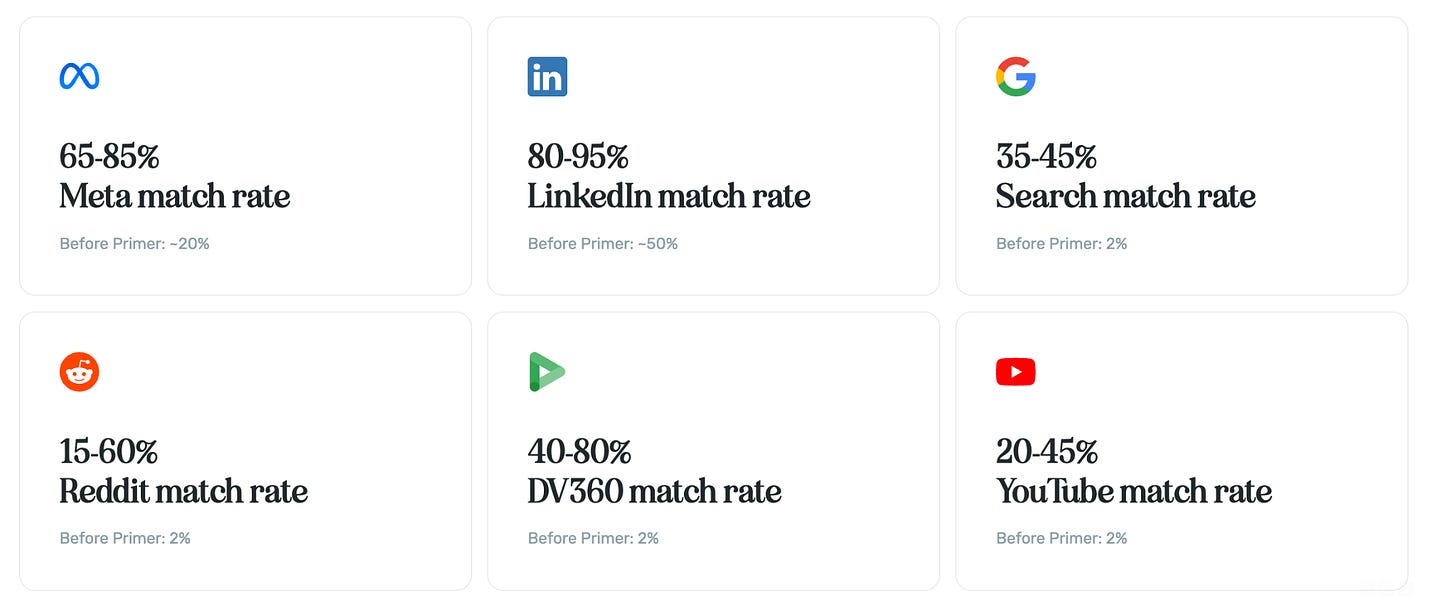
Match Rates: The Unlocked Gateway to Cheaper Channels: A critical barrier preventing many B2B teams from leveraging more cost-effective channels like Meta or Reddit has been identity resolution. Uploading lists of work emails to these platforms typically yields abysmal match rates, often ranging from 2% to 10%, because users rarely register with their professional email addresses. However, by enriching audience lists with B2C identifiers such as personal emails and mobile phone numbers (obtained from consent-compliant sources), match rates can dramatically improve. Data from Primer customers, for instance, shows Meta match rates soaring from 10-20% to over 75%, transforming previously unusable campaigns into highly efficient ones, averaging a $50 cost per qualified lead on Facebook. This "identity resolution first" strategy is paramount. It’s crucial to understand that match rates are not uniform; they serve as a map of where different personas actively engage. For example, Reddit exhibits 70-80% match rates for IT and engineering audiences but drops to around 4% for legal and procurement professionals. Doctors are less present on LinkedIn, as are many in the education sector. Conversely, Gen Z and Millennial professionals frequently engage with Instagram, TikTok, or X (formerly Twitter) in their personal time. Therefore, the optimal channel mix should be dictated by persona-specific match rates, rather than defaulting to industry norms. Resolving identity issues first is the key to unlocking the full potential of cheaper, broader-reach channels.
Buying Credibility, Not Just Impressions: The Rise of B2B Influencer Marketing: The shift observed in B2C, where consumers increasingly trust individuals over brands, is now profoundly impacting the B2B sector. Cultivating credibility through established thought leaders who already command the attention of target audiences is becoming a more potent strategy than attempting to manufacture it organically as a brand. While still nascent, B2B influencer marketing is gaining traction. Platforms like Meta and LinkedIn now offer mechanisms for promoting third-party thought leadership. Meta allows whitelisted access to a creator’s account to run ads as them, while LinkedIn has introduced similar capabilities for promoting posts from influential figures outside a company. Promoting content from trusted external voices is an undervalued tactic in B2B paid marketing, offering a credible pathway to reach skeptical buyers.
Measurement: Triangulation Over Single-Source Truth: A pervasive error in B2B measurement is the reliance on any single attribution model as the ultimate truth. First-touch, last-touch, and multi-touch models each present their own biases and limitations. The complex, multi-device, and often anonymous B2B buyer journey defies simplistic attribution. Buyers may research on a mobile device during a meeting, click through on a desktop during lunch, engage with a demo on a personal laptop, and finalize a deal from a phone. Work emails represent one identity, personal logins another, and corporate VPNs further obscure tracking. Most traditional attribution systems fail to account for this fragmented journey, often over-crediting channels responsible for the final desktop click while systematically undercounting mobile-heavy channels that initiate the journey. This inherent bias leads to suboptimal budget allocation, with marketers over-investing in easily measurable channels like LinkedIn and Search, and under-investing in high-impact but harder-to-track channels like Meta, Reddit, and YouTube.
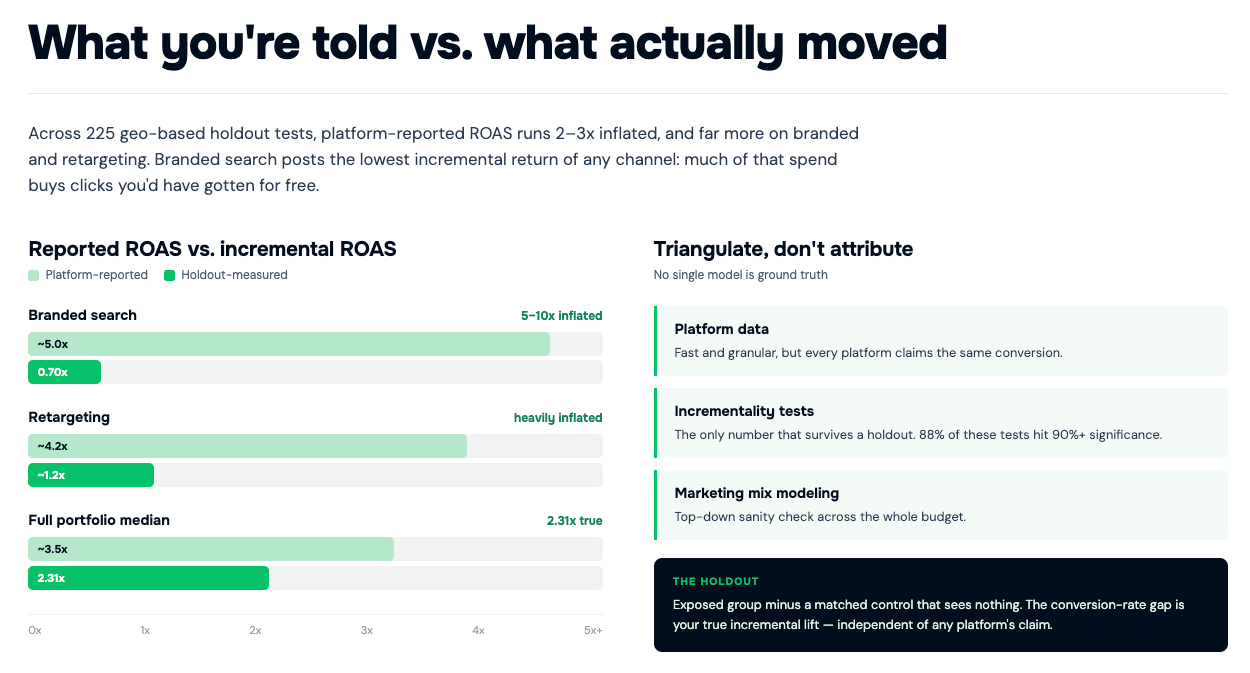
The remedy lies in embracing triangulation: combining multiple data signals, seeking agreement across them, and maintaining a healthy skepticism towards absolute certainty. Crucially, this involves running causal experiments alongside existing attribution models. Holdout groups are a powerful yet underutilized tool. By deploying a campaign to a specific audience on a platform like Meta while withholding it from an equivalent control group, marketers can compare conversion rates between the exposed and control groups. The observed delta represents the true incremental lift, independent of any platform’s self-reported metrics. Such experiments can achieve statistical significance with audiences as small as 5,000, making them accessible beyond enterprise-level budgets. This mirrors Zoom’s historical approach of geo-testing without complex digital attribution. Research on geo-based incrementality tests indicates that branded search often yields the lowest incremental Return on Ad Spend (ROAS) at 0.70x, implying significant spend on clicks that would have occurred organically, while platform-reported ROAS can be 2-3x inflated. The holdout is arguably the most cost-effective piece of analytics infrastructure most B2B teams neglect to build, yet it provides the only truly reliable number for assessing incremental impact. Triangulating cross-platform data, incrementality, and mix modeling is the robust path forward, where the holdout remains the unimpeachable metric.
The Missing Piece: Persona-Specific Benchmark Data: A significant void in B2B paid marketing today is the absence of trusted, anonymized benchmark data aggregated by persona. Such data, detailing performance metrics for campaigns targeting cybersecurity, HR, or fintech professionals, would de-risk investment decisions and empower marketers to confidently explore new channels. While elite marketers will always adopt a first-principles approach, credible peer data would provide invaluable guidance, encouraging teams to diversify budgets beyond traditional channels. As data infrastructure matures, the emergence of such benchmarks is anticipated, poised to fundamentally reshape how marketing budgets are allocated.
Navigating the Evolving Channel Landscape
While LinkedIn and Search have historically been the default B2B channels due to their inherent ICP filters and proven efficacy, they are increasingly expensive and prone to hitting performance ceilings quickly. The astute marketer must identify and capitalize on mispriced attention across a broader channel mix.
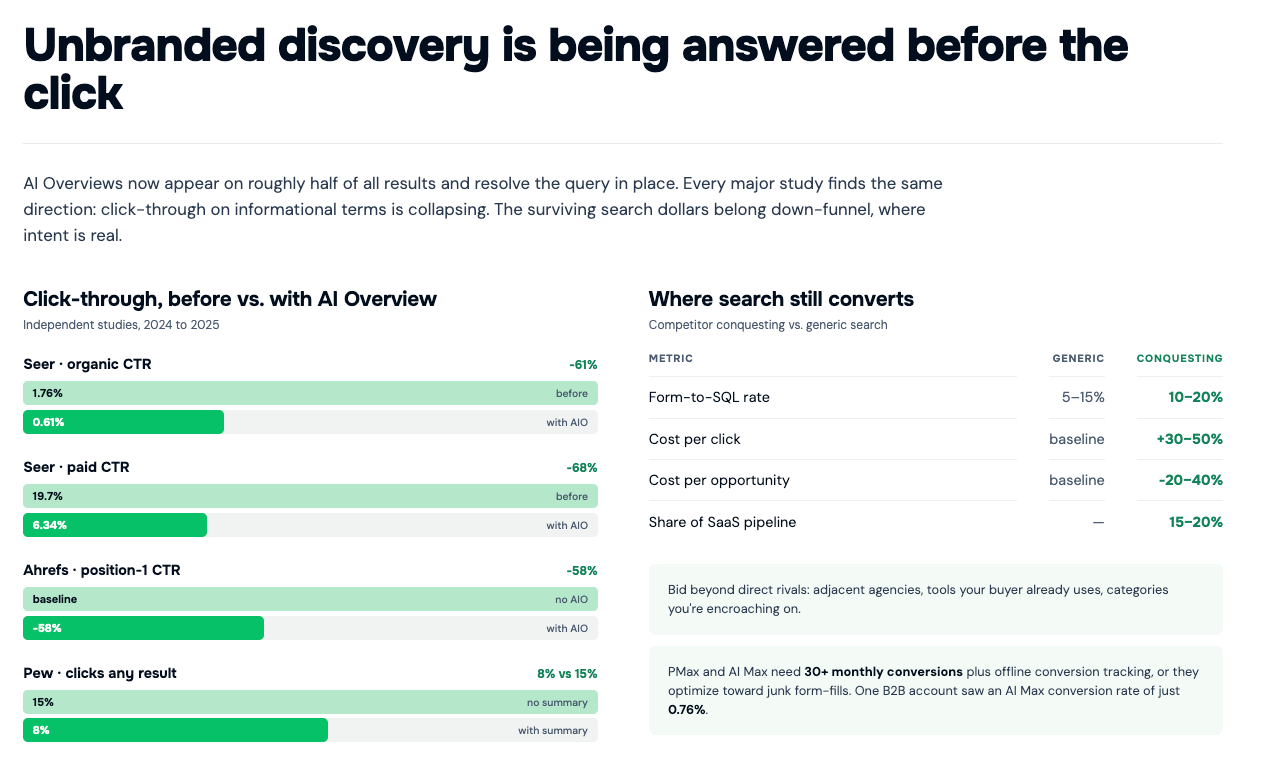
Search in the AI Era: Search, traditionally the high-intent workhorse, is undergoing rapid transformation. AI Overviews, increasingly integrated into search engine results, are diminishing click volume for unbranded, top-of-funnel queries. Pew Research indicates that when an AI summary appears, only 8% of users click traditional results, compared to 15% without a summary, with a quarter of sessions ending without any click. This signals the demise of cheap discovery through unbranded search. Two areas, however, continue to convert effectively:
- Competitor Conquesting: Beyond direct rivals, bidding on adjacent terms like agencies in your space, complementary tools, or encroaching categories yields high-intent traffic. Competitor-intent keywords convert at 10-20% form-to-SQL (vs. 5-15% for generic search), and despite 30-50% higher click costs, the cost per qualified opportunity is 20-40% lower. This remains a high-ROI strategy, though its cost is rising as more marketers adopt it. Google’s strategic exclusion of AI Overviews from most branded queries underscores its value.
- Brand and High-Intent Terms: These still convert but require honest measurement via holdout testing. Platforms like PMax and AI Max, designed for broad consumer audiences, often struggle with limited B2B conversion data. For B2B teams with small Total Addressable Markets (TAMs) and dozens of monthly conversions, these algorithms lack sufficient signal. One advertiser reported a dismal 0.76% conversion rate for AI Max. When using such platforms, robust suppression lists (bad-fit titles, customers, disqualified leads) are critical. The current trend of doubling down on search at $8K per qualified opportunity, without exploring cheaper alternatives, indicates a failure to adapt. The surviving search dollars belong to down-funnel, high-intent queries.
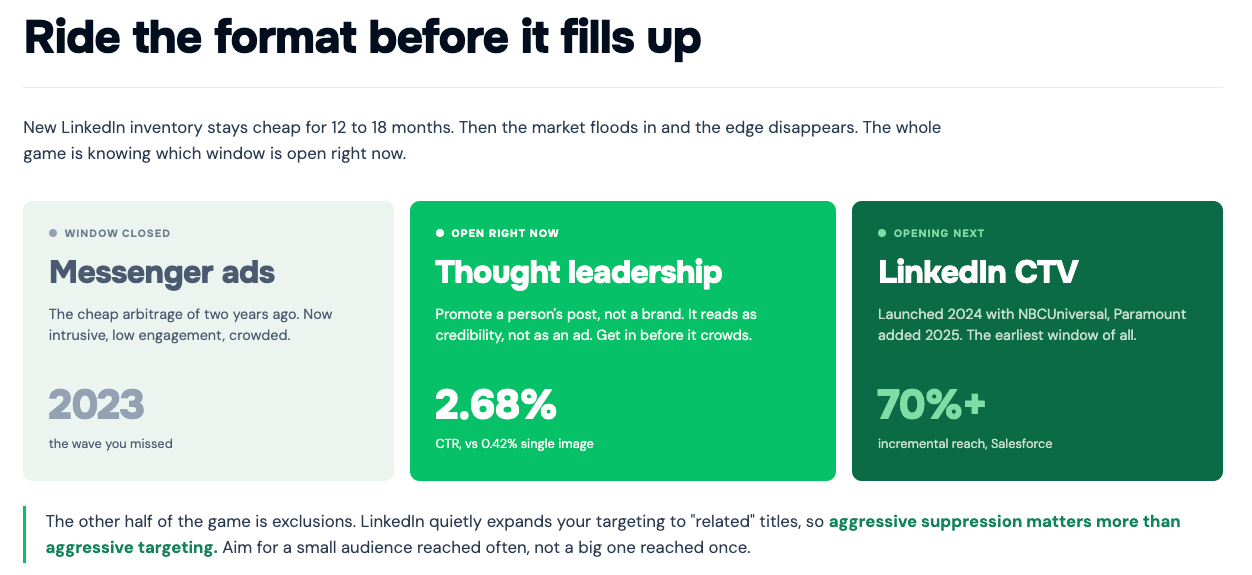
LinkedIn’s Shifting Dynamics: LinkedIn, while offering unparalleled ICP filters, has become notoriously expensive, with CPMs escalating from approximately $20 to several hundred dollars for competitive US audiences over the last 18 months. The key to success on LinkedIn now is to exploit new placements and formats during their early adoption phase, before they become saturated and costly. LinkedIn consistently introduces new inventory, and there’s typically a 12-18 month window where CPMs are reasonable due to lower competition.
- Thought Leadership Ads: These are currently replacing previously cheap options like Messenger ads. They promote a real person’s post rather than a brand’s, lending them credibility. Data shows median click-through rates of 2.68% for thought leadership ads (vs. 0.42% for single-image ads) at a median cost per click of $2.29.
- Document Ads: Continue to perform well when backed by genuinely useful, opinionated content.
- LinkedIn CTV: Launched in 2024 with NBCUniversal and expanded to Paramount inventory in 2025, Connected TV offers unskippable ads, with Salesforce reporting over 70% incremental reach for its target audience.
Another common pitfall on LinkedIn is insufficient exclusion targeting. The platform’s tendency to broaden targeting under the hood, clustering roughly 45% of profile titles into "Super Titles" (e.g., a Marketing Specialist being served under a CMO target), leads to wasted spend. Aggressive exclusions are paramount: disable Audience Expansion and Audience Network, restrict location to "permanent only," and build an exclusion list that often surpasses the inclusion list in length. The format arbitrage window on LinkedIn is critical – new inventory remains cost-effective for 12-18 months before market saturation.
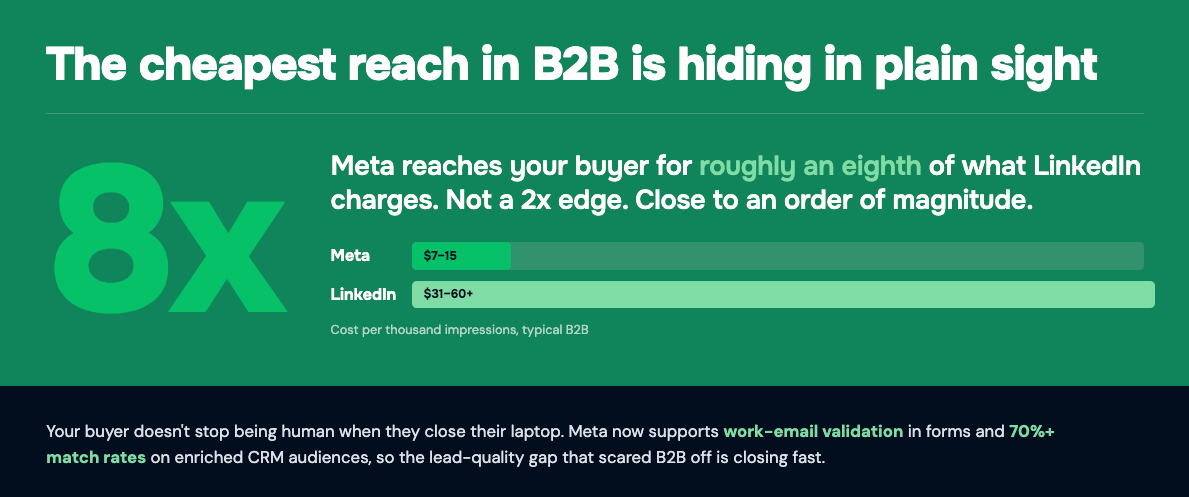
Unlocking Meta’s B2B Potential: Meta (Facebook and Instagram) remains the most underrated channel for B2B paid advertising, offering a significant cost advantage. CPMs on Meta typically range from $7 to $15, a stark contrast to LinkedIn’s $31-100+. This is an order-of-magnitude difference, often overlooked by B2B marketers who mistakenly believe their ICP isn’t on these platforms. In reality, professionals do not cease to be human outside of work hours; they scroll Instagram and Facebook, providing a rich, often mispriced, attention pool.
Historically, B2B teams avoided Meta due to targeting and measurement challenges. However, recent platform improvements are closing this gap:
- Work-Email Validation: Meta now supports work-email validation in instant forms, addressing the persistent issue of receiving personal Gmail addresses from B2B leads.
- Audience-Centric Optimization: The real unlock lies in leveraging first-party data. Uploading ICPs as custom audiences, building lookalike audiences from closed-won CRM data, and maintaining robust suppression lists (existing customers, disqualified leads) empower Meta’s genuinely excellent algorithm to optimize for high-quality B2B conversions. Marketers who previously dismissed Meta should reconsider, as its capabilities for B2B have matured significantly.
A key consideration for Meta is audience saturation. Its algorithm can over-serve specific pockets of an audience, leading to increased frequency and flattened incremental conversions. Regular audience rotation, creative refreshes, and layering anti-ICP suppression onto lookalikes are essential to maintain performance. Meta’s cost-per-thousand advantage over LinkedIn is not incremental, and its targeting capabilities for B2B are rapidly improving.
The Next Tier: Reddit, YouTube, TikTok, Programmatic: Beyond Meta, a similar arbitrage opportunity exists in broad-reach channels that many B2B marketers neglect. These platforms are often mispriced for B2B due to market inertia.

- Reddit: Experiencing a surge in B2B demand, with CPMs under $15. Success on Reddit hinges on creating native ad content that feels like a genuine, thoughtful contribution rather than an overt advertisement, which users tend to ignore.
- YouTube and Programmatic Display: Remain wide open for B2B targeting.
- TikTok: A few audacious B2B brands are experimenting successfully here, leveraging its massive reach.
For teams with the necessary audience infrastructure to properly feed these channels, these platforms offer a significant arbitrage opportunity that is increasingly rare in the paid marketing ecosystem.
Across all algorithmic channels, the strategy for creative is to provide ample variance in formats and messages (especially video) and allow the system to identify winning combinations. This makes the ability to rapidly iterate and produce diverse creative variants a critical competitive advantage.
AI’s Analytical Frontier: Beyond Generation
The initial wave of AI in marketing has primarily focused on generative tasks: producing copy, creative assets, chatbot interactions, and landing pages. These are areas where large language models (LLMs) excel at generating plausible text and pixels. While purely AI-generated video is still evolving, AI-edited cuts combined with B-roll are becoming prevalent, further reducing the cost and effort of variant production.

However, the more profound and ultimately more valuable application of AI in marketing lies on the analytical side. Most marketing and Go-to-Market (GTM) challenges are fundamentally "numbers problems," requiring structured data analysis, statistical reasoning, and causal inference. While current LLMs are not inherently superior to traditional analytical methods for core math, their strength lies in their ability to act as "little analysts" reasoning over complex outputs. Imagine an AI sifting through vast datasets, identifying patterns, asking "why" certain trends emerge (e.g., "Why did Meta’s cost per lead spike last Tuesday?"), explaining discrepancies (e.g., "Why is the Bay Area cohort converting 3x better than New York this month?"), and connecting dots across disparate systems that no human team has the time to manually analyze. This analytical layer, still maturing, represents the next significant unlock for marketing effectiveness. Teams with clean data and robust measurement infrastructure will be best positioned to leverage this future analytical AI.
The New Inventory: Ads Within LLMs: The AI narrative also includes the emergence of the models themselves as new advertising channels. The year 2026 marks a significant turning point in this evolution. OpenAI, for instance, began testing contextual sponsored recommendations within ChatGPT in February 2026, clearly labeled after the answer. By May, it had rolled out a self-serve platform, removing the earlier high beta minimums, and announced custom audience targeting for mid-July. Early reports suggest CPMs around $60, roughly three times that of Meta, reflecting the scarcity and novelty of this new, high-demand inventory.

A contrasting example is Perplexity, which, after experimenting with ads since late 2024, completely discontinued its ad program in February 2026. Perplexity argued that ads erode user trust in AI-generated answers, highlighting a critical philosophical divergence within the AI industry. This split indicates that while high-volume assistants like ChatGPT are embracing advertising, others prioritize an unadulterated user experience. For B2B, the key question is whether the targeting and identity resolution capabilities within these LLM ad platforms will be sophisticated enough to reach specific ICPs, or if they will remain broad-reach brand plays for the foreseeable future. Given Google’s success in monetizing intent, the evolution of LLM advertising will be a fascinating space to watch. For now, it should be treated as an experimental budget line rather than a core channel. The models are indeed becoming ad channels, with some leaning in and others opting out, and the effectiveness of B2B targeting remains an open question.
Strategic Imperatives for the Modern Marketer

Regardless of the specific channel mix, several enduring principles will guide successful marketing operations through this cycle:
- Optimize for Learning Velocity, Not Just CAC: Instead of running numerous minor variations of the same idea, focus on conducting fewer, but truly distinct, experiments (e.g., testing a completely different audience, channel, or offer). The team that executes the most clean experiments per quarter will accumulate knowledge and compound its effectiveness faster.
- Build Where the Platform Can’t See: Recognize that ad platforms only optimize against data within their own walls. Therefore, proactively construct a unified ICP audience, layer in CRM exclusions for customers and competitors, and deploy this same enriched audience across all platforms (Meta, Google, LinkedIn, Reddit). Consistency in audience and exclusions is paramount.
- Spend 80% of Judgment on Irreversible Decisions: Allocate the majority of strategic thought to high-impact, irreversible decisions such as hiring, market positioning, and core architectural choices. Conversely, agile iteration should govern reversible decisions like creative tests, audience refinements, and bid adjustments. Many teams err by over-deliberating on minor tactical changes while rushing crucial organizational or strategic shifts.
- Constraint as a Feature: The ease with which AI generates infinite variants often leads to paid teams running too many campaigns. This excessive fragmentation dilutes data, slows learning cycles, and complicates reporting. Deliberately limiting the number of active campaigns forces focus, concentrates data, and ultimately accelerates the rate of learning.
A baseline for effective paid marketing in this new era suggests an always-on program with a monthly spend upwards of $10,000, typically for companies at the 100-150 employee stage. At this level, paid marketing transcends a sporadic activity and becomes a sophisticated system ripe for continuous optimization.

In conclusion, while AI has commoditized creative production, the essence of competitive advantage in paid marketing has unequivocally shifted. It now resides in the nuanced understanding and strategic deployment of audience targeting, the intelligent allocation of resources across a dynamic channel mix, the adoption of rigorous, causal measurement methodologies, and a relentless pursuit of learning velocity. The hard problems of paid marketing have not vanished with AI; rather, they have become more critical. The constraint has migrated from execution capacity to the effective interpretation and application of market signals. Those teams that adeptly decipher their data and act decisively ahead of the competition are the ones poised for sustainable scaling throughout this transformative cycle.
Industry Developments & Further Reading
- Figma Acquires Bud Team: Figma, the collaborative design platform, has acquired the team behind Bud, a YC-backed "vibe-coding" and AI agent platform. This move signals Figma’s strategic expansion beyond design into broader application building, integrating capabilities from Codex and Claude Code, and now adding expertise in spinning up apps across mobile and web.
- Primer Exclusive Offer: Keith Putnam-Delaney and Primer are offering an extended 45-day trial and 15% off with code GTM15 for the GTMnow Network, providing access to their platform for enhanced marketing strategies.
- GTMnow Podcast: Explore further insights on go-to-market strategies by listening to "The GTMnow Podcast," featuring discussions such as "VC: Former NEA Partner Starts New Fund, Runs it Like a Startup (Memos, KPIs, R&D)" with Vanessa Larco (Premise) and "GTM: The Compensation Blueprint for a High-Performing Sales Team" with Brian Le (Notion).
- Proaction Secures $4.2M: Proaction has raised $4.2 million to revolutionize fleet management. Their AI-native platform aims to replace decades-old, opaque legacy services with AI agents and enhanced visibility for operators, addressing a long-standing industry pain point.
- Ollama Raises $65M Series B: Ollama, a popular open-source AI developer tool, secured $65 million in Series B funding. Its platform allows developers to run large language models locally, enhancing data privacy and control. With nearly 9 million developers and over 67,000 integrations, Ollama is now utilized within 85% of Fortune 500 companies.
- Velocity Emerges with $27M Seed Round: Velocity has exited stealth with a $27 million seed round to build essential monetization and distribution infrastructure for the burgeoning AI-native app ecosystem. Already powering millions of daily AI interactions within six months, Velocity is addressing the need for new monetization models as user engagement shifts increasingly towards AI products.
- GTMfund Job Board: Discover top Go-to-Market opportunities on the GTMfund Job Board.
Related posts: