Bridging the Divide How HR Leaders Can Align People Investments with Financial Strategy to Drive Corporate Performance

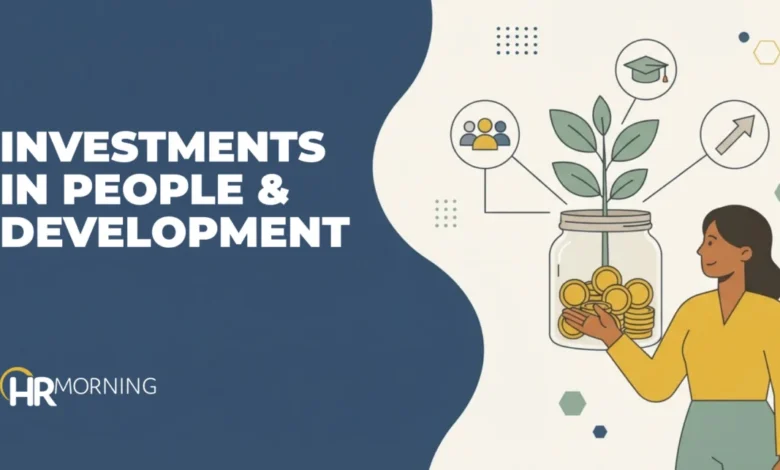
The historical relationship between Human Resources (HR) and Finance departments has often been characterized by a fundamental tension: HR advocates for increased spending on employee well-being and development, while Finance prioritizes fiscal discipline and cost reduction. However, a significant shift is occurring within the corporate landscape. As organizations grapple with the rapid integration of artificial intelligence (AI), rising rates of manager burnout, and persistent employee disengagement, the traditional "tug-of-war" is evolving into a necessary partnership. Today, the most successful organizations are those where HR leaders build people strategies that finance leaders can trust, quantify, and support as essential drivers of long-term business value.
The Evolving Nexus of HR and Finance
For decades, HR was largely viewed as a cost center—a department necessary for compliance and administration but secondary to the revenue-generating functions of the business. In contrast, the Chief Financial Officer (CFO) served as the gatekeeper of capital, often viewing workforce development through the lens of short-term expense rather than long-term asset appreciation.
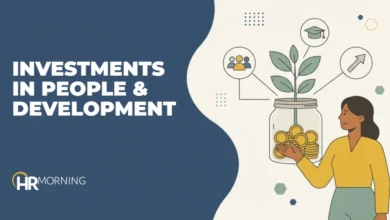
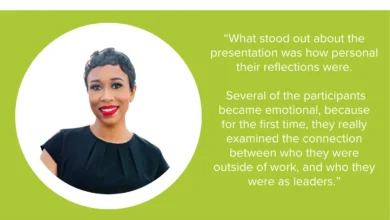
This dynamic began to shift following the global pandemic, which highlighted the fragility of the labor market and the direct link between employee resilience and organizational survival. According to Jolen Anderson, Chief People and Community Officer at BetterUp, the bridge between these two worlds is built on the realization that workforce development is not merely an HR initiative but a strategic business imperative. When development is tied directly to solving tangible business challenges, it transitions from an elective expense to a recognized investment in the company’s future.
The Economic Imperative: Quantifying the Cost of Disengagement
The urgency for this alignment is backed by sobering economic data. Recent research conducted by BetterUp, which analyzed behavioral data from 410,000 employees, revealed a startling trend: work performance has declined between 2% and 6% since 2019. This drop in productivity is not merely a statistical anomaly; it represents an estimated $2.2 trillion in lost performance over the last five years.
Furthermore, global engagement data from organizations like Gallup suggest that the "engagement gap" costs the global economy nearly $8.8 trillion annually, or approximately 9% of global GDP. These figures provide the "language of finance" that HR leaders need to capture the attention of the C-suite. The decline in performance is often attributed to a combination of "quiet quitting," the erosion of organizational culture in hybrid environments, and the lack of a growth mindset among employees who feel stagnant in their roles.
Anderson emphasizes that modern workforce development must go beyond simple skill-building. It is about restoring core capabilities—such as purpose, mental fitness, and a growth mindset—that directly influence how an employee navigates complexity and contributes to the bottom line.
Strategic Pillar 1: Transitioning from Training Programs to Business Solutions
To secure financial backing, HR professionals must reframe their proposals. Instead of presenting a "leadership training program," they should present a "solution for reducing middle-management turnover" or a "strategy to increase sales team productivity."
The traditional metric of "course completion" is increasingly viewed as a vanity metric by Finance departments. A CFO is less interested in how many employees finished a module and more interested in whether those employees are now performing their jobs more effectively. The focus must shift to meaningful behavior change. For example, if an organization is struggling with high turnover in its customer service department, HR should propose a development plan specifically designed to improve conflict resolution and emotional intelligence, with a clear KPI tied to retention rates and customer satisfaction scores.
By starting with the business challenge, HR ensures that every dollar spent on development is aligned with the organization’s overarching goals. This approach transforms HR into a proactive partner in problem-solving rather than a solicitor of funds.
Strategic Pillar 2: The CFO’s Scorecard—Utilizing High-Impact Metrics
The language of Finance is the language of data. To build a compelling case for people investments, HR must move beyond qualitative anecdotes and embrace quantitative rigor. Finance leaders look for evidence that an investment is producing measurable results that impact the balance sheet.
Key metrics that resonate with Finance include:
- Retention and Turnover Costs: Calculating the direct and indirect costs of replacing a high-performing employee (often estimated at 1.5x to 2x the employee’s annual salary).
- Internal Mobility: The rate at which current employees are promoted or moved into new roles, reducing the need for expensive external hiring.
- Speed to Proficiency: The time it takes for a new hire or an upskilled employee to reach full productivity.
- Leadership Readiness: The strength of the internal talent pipeline, which mitigates the risk of leadership vacuums.
- Employee Lifetime Value (ELV): A holistic measure of the total net value an employee contributes to an organization over time.
By presenting a data-driven evaluation of these outcomes, HR can demonstrate the Return on Investment (ROI) of people-centric initiatives. Reliability and consistency in data collection are paramount; if the CFO trusts the data, they are far more likely to trust the strategy.
Strategic Pillar 3: Early Integration and Shared Ownership
One of the most common mistakes HR leaders make is developing a strategy in a vacuum and presenting it to Finance only when the budget is needed. To foster true alignment, Finance should be involved from the inception of the planning process.
Early involvement allows the CFO to provide insights into broader business priorities that HR might not be fully aware of, such as upcoming shifts in market positioning or planned capital expenditures. This collaborative approach ensures that workforce development is treated as a component of the corporate strategy rather than a siloed HR project.
This shared ownership creates a culture of accountability. When Finance is involved in setting the expectations for a development program, they become stakeholders in its success. This partnership leads to more informed decision-making and ensures that the workforce is strategically prepared to support the organization’s long-term objectives.
The Role of AI and the Future of Workforce Development
The rise of agentic AI and automation adds a new layer of complexity to the HR-Finance relationship. As AI begins to handle routine tasks, the "human" element of work—creativity, critical thinking, and interpersonal leadership—becomes more valuable. Finance departments are increasingly aware that technology alone cannot drive growth; it requires a workforce capable of leveraging that technology.
However, the rapid pace of technological change also creates a "skills gap" that poses a financial risk to organizations. If a company does not invest in upskilling its workforce to work alongside AI, it risks obsolescence. In this context, people investment becomes a form of risk management. HR leaders who can articulate the cost of not investing in development—in terms of lost competitive advantage and technological lag—will find a more receptive audience in the Finance department.
Analysis of Implications: A New Corporate Paradigm
The shift toward HR-Finance alignment represents a fundamental change in corporate governance. It signals the end of the era where "people" and "profit" were seen as competing interests. In the modern economy, people are the profit engine.
Organizations that fail to bridge this gap likely face a cycle of high turnover, declining productivity, and stagnant growth. Conversely, companies that successfully integrate people strategy with financial planning are better positioned to weather economic volatility. This integration allows for more agile responses to market changes, as the workforce is continuously developed to meet new challenges.
Ultimately, the goal is to create a virtuous cycle: strategic investments in people lead to higher engagement and performance, which drives better financial results, which in turn provides more capital for further people investments.
Conclusion: Strengthening the Strategic Bond
The path forward for HR leaders is clear: they must become as comfortable with a balance sheet as they are with a performance review. By focusing on business challenges, utilizing the right metrics, and involving Finance as a strategic partner from the beginning, HR can secure the resources necessary to build a future-ready workforce.
As Jolen Anderson notes, the objective is to move from viewing development as an expense to recognizing it as a strategic business asset. In an era defined by rapid change and intense competition for talent, the ability to align human capital with financial strategy is not just a tactical advantage—it is the hallmark of a resilient and thriving organization. By speaking the language of value, HR can finally move from the periphery of the business to the very heart of its success.