Ecommerce Technology Evolution Squarespace Bluehost and TikTok Lead Surge in AI-Driven Merchant Tools


The landscape of global digital commerce is undergoing a significant transformation as major platform providers roll out a new generation of tools focused on artificial intelligence, localized logistics, and specialized selling models. From Squarespace’s foray into high-demand "drop" culture to TikTok’s expansion of managed services for merchants, the industry is moving toward a more automated, data-centric ecosystem. These updates reflect a broader trend where small and medium-sized businesses (SMBs) are gaining access to enterprise-level capabilities, such as robotic fulfillment, agentic AI, and sophisticated cross-border payment infrastructures. As the sector matures, the focus has shifted from merely hosting a digital storefront to optimizing every touchpoint of the customer journey, from the first marketing interaction to the final mile of delivery.
High-Stakes Retail: Squarespace and the Rise of the Drop Economy
Squarespace has officially entered the "limited-release" market, a sector of ecommerce traditionally dominated by high-end fashion and streetwear brands. By launching a suite of tools specifically designed for drops and limited releases, the platform is acknowledging the shift toward scarcity-based marketing. The new features include product badges and dedicated email campaigns to build anticipation, but the most technical addition is the "Reserved Cart" function. This tool holds items for a specific window during checkout, accompanied by a countdown timer, effectively managing the high-concurrency traffic spikes that often crash standard ecommerce sites during a popular launch.
Industry analysts suggest that this move democratizes the "hype economy." Previously, managing a high-volume product drop required custom-built infrastructure to prevent overselling and site failure. Squarespace’s integration of quantity limits and express checkout options allows independent creators and boutique brands to execute professional-grade launches. This shift is supported by recent consumer behavior data indicating that "limited edition" labeling can increase conversion rates by up to 30% for niche brands. By providing these tools, Squarespace is positioning itself as a hub for the "creator economy," where brand loyalty is driven by exclusivity rather than just mass availability.

The Dawn of Agentic AI: Bluehost and Mastercard Redefine Automation
A pivotal shift is occurring in how artificial intelligence is applied to business operations. Bluehost and Mastercard are leading the charge into "agentic AI"—systems that do not just provide information but take autonomous actions on behalf of the user. Bluehost’s new AI suite for small businesses features agents capable of building entire websites, managing online stores, capturing leads, and booking appointments without manual intervention. This moves beyond the traditional "copilot" model toward a "pilot" model, where the AI manages the administrative burden of running a digital business.
Simultaneously, Mastercard is expanding its Agent Suite with the "Pronto" platform in the United Kingdom. This initiative allows retailers to test whether their products and services are "discoverable" by autonomous AI agents—the software programs that will increasingly do the shopping for consumers in the future. As AI agents begin to handle tasks like price comparison and purchase execution, Mastercard is focusing on the security and trust of the payment experience. The implications are profound: merchants must now optimize their data not just for human search engines (SEO) but for AI agents that prioritize structured data and transactional reliability.
Logistics and Localized Delivery: The DoorDash-Shopify Integration
In the realm of logistics, the boundary between online and offline retail continues to blur. DoorDash has announced a direct integration with Shopify, allowing U.S. merchants with physical storefronts to sync their catalogs directly with the DoorDash marketplace. This integration eliminates the need for manual catalog uploads and separate onboarding processes. When a merchant updates their inventory in Shopify, the change is reflected on DoorDash in real-time.
This partnership addresses the growing consumer demand for "instant gratification" in the non-grocery sector. According to recent retail reports, same-day delivery is no longer a luxury but an expectation, with over 40% of consumers willing to pay a premium for local delivery within hours. For Shopify merchants, this provides a powerful alternative to traditional shipping methods, which are often plagued by rising costs and carrier delays. By leveraging DoorDash’s existing driver network, small retailers can effectively compete with the logistics of giants like Amazon.

TikTok Shop’s Managed Services: A New Paradigm for Social Commerce
TikTok Shop is currently testing a "managed services" program in the United States, a move that could fundamentally change how brands approach social commerce. In this pilot program, TikTok takes over the majority of a merchant’s operations, including marketing, automated advertising via its "GMV Max" tool, and the hiring of creators to produce content. This "hands-off" approach is designed to lower the barrier to entry for brands that have products but lack the expertise to navigate TikTok’s unique algorithm and content-heavy environment.
This model mimics the "fully managed" approach popularized by platforms like Temu and Shein, where the platform controls the customer experience while the merchant focuses on supply and fulfillment. If successful, this could lead to a surge in international brands entering the U.S. market via TikTok, as the platform effectively acts as a full-service marketing and sales agency. However, industry experts warn that this level of platform control could diminish a brand’s direct relationship with its customers, making them more dependent on TikTok’s internal ecosystem.
Advancements in Advertising and Retail Media
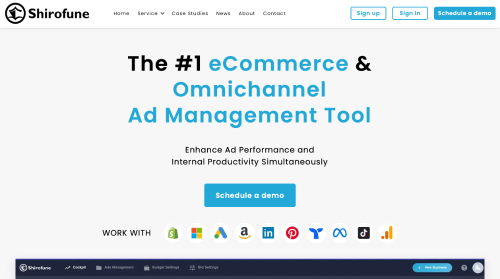
The growth of retail media—advertising on a retailer’s own platform—is being accelerated by new automation tools. Shirofune has integrated with Walmart Connect, allowing brands to manage their Walmart ad campaigns alongside Google, Meta, and other social channels. This centralization is crucial as the advertising landscape becomes more fragmented. Shirofune’s automation engine handles budget pacing and bid adjustments based on real-time performance, a task that has become increasingly difficult for human managers to handle across multiple platforms.
The importance of this integration is underscored by the rapid growth of Walmart’s advertising business, which saw a 24% increase in the most recent fiscal year. As retailers like Walmart and Amazon become major advertising players, tools that provide cross-platform visibility and automated optimization will be essential for brands looking to maintain efficient ad spend.
Robotics and Predictive Intelligence in Fulfillment
On the fulfillment front, Cytronic recently raised $13.5 million in seed funding to advance robotic fulfillment for small-parcel items like apparel and beauty products. The company’s focus on "fulfillment-as-a-service" aims to bring the efficiency of automated warehouses to smaller direct-to-consumer (DTC) brands. By utilizing robotics to handle compact merchandise, Cytronic intends to lower the cost per shipment, which remains one of the largest overheads for ecommerce businesses.
Complementing this physical automation is the rise of predictive inventory intelligence. Katana has launched a series of AI-powered components designed to forecast demand and automate procurement. Their "AI Replenishment" tool uses historical sales data to tell merchants exactly what to order and when, reducing the risk of stockouts or overstocking. This shift from reactive to predictive management is vital in a global economy where supply chain disruptions remain a constant threat.
Security, Stability, and the Future of Payments
The payment sector is seeing a dual focus on security and flexibility. Spreedly has launched a standalone "payment vault," allowing merchants to store and control their own payment credentials independently of their primary payment processor. This provides merchants with "portability," meaning they can switch providers or use multiple providers in different regions without having to ask customers to re-enter their credit card information.
In the international arena, the partnership between FinXP and Buckzy Payments highlights the growing role of stablecoins in cross-border transactions. By utilizing stablecoin infrastructure for real-time international payments, the partnership aims to reduce the fees and time delays associated with traditional SWIFT transfers. Meanwhile, PayPal is expanding its "Pay in 30 Days" feature to the U.K., offering interest-free delayed payments to its 30 million customers. This expansion of Buy Now, Pay Later (BNPL) services reflects a broader trend of providing consumers with more liquidity at the point of sale, which has been shown to increase average order values by up to 20%.

Addressing the Loyalty Crisis
As marketing costs rise, retaining existing customers has become more critical than ever. However, research from Dotdigital suggests a "loyalty crisis," with only 15% of consumers stating that brand marketing feels relevant to them. To combat this, Dotdigital has launched an AI-powered loyalty platform that integrates directly with Shopify. The tool uses data to create personalized rewards and tiers, moving away from generic "one-size-fits-all" loyalty programs.
Sprinklr is also tackling customer engagement through real-time AI, introducing "LLM Insights" to help brands understand how they are being represented in generative AI answers. As more consumers use tools like ChatGPT or Perplexity to research products, brands need to monitor and influence their "AI reputation" just as they once did for search engine rankings.
Broader Impact and Implications
The convergence of these technologies—AI agents, robotic fulfillment, and modular commerce—points toward a future where the technical barriers to global retail are virtually non-existent. For the merchant, the challenge is shifting from "how to sell" to "what to sell" and "how to brand." As platforms like TikTok and Bluehost take over the technical and operational heavy lifting, the human element of commerce—storytelling, product quality, and community building—will become the primary differentiators.
Furthermore, the acquisition of Arpalus by Instacart signals a move toward total inventory transparency. By using computer vision to track store shelves in real-time, retailers can ensure that the "digital shelf" always matches the physical one. This level of data accuracy is the final piece of the puzzle in creating a truly seamless omnichannel experience. As these tools become standard, the ecommerce industry will likely see a period of intense competition, where the winners are those who can best harness automation to provide a more personalized, efficient, and reliable customer experience.