
In the modern digital economy, customer acquisition costs (CAC) across major paid advertising channels such as Meta, Google, and TikTok have surged by more than 60% over the past five years. As digital ad fatigue sets in and privacy regulations constrain hyper-targeting capabilities, marketing executives and startup founders are desperately searching for sustainable, cost-effective growth loops. Amidst this macroeconomic landscape, industry analysts increasingly point to an underutilized asset sitting dormant in millions of databases: the existing email subscriber list. Recent data indicates that peer recommendations convert at a rate nearly four times higher than traditional display or social media ads, boasting a lifetime value (LTV) that averages 16% higher than customers acquired through paid acquisition. Despite these staggering metrics, business intelligence reports show that fewer than 15% of emerging e-commerce and SaaS brands have optimized their email infrastructure for active word-of-mouth generation.
The anatomy of a failing referral program typically boils down to structural neglect. Many founders treat referral programs similarly to an unused gym membership—it technically exists via a forgotten hyperlink tucked away in a website footer, but it yields zero measurable return because it lacks an active, intentional distribution strategy. When a brand relies solely on passive website traffic to drive referrals, it ignores the primary psychological driver of consumer behavior: trust by proxy. When a trusted friend asserts that a product is worth purchasing, the psychological friction of evaluation evaporates. No programmatic algorithm or advanced ad server can replicate the authenticity of a warm, peer-to-peer recommendation sent directly via text message, WhatsApp, or email.
To understand why traditional referral methods consistently underperform, business strategists must evaluate the historical evolution of word-of-mouth marketing. Decades ago, brand advocacy was entirely organic, relying on physical conversations and localized community networks. As commerce transitioned to the digital sphere, brands attempted to digitize this phenomenon by building static landing pages dedicated to affiliate and referral schemes. However, treating a referral initiative as a static web page rather than an integrated communications workflow fundamentally misses how consumers interact with digital media. Modern marketing automation platforms have fundamentally shifted this paradigm, allowing enterprises to operationalize word-of-mouth advocacy by embedding referral triggers directly into transactional and lifecycle messaging.
The Chronology of an Effective Referral Workflow
Optimizing an email list into a high-performance referral engine requires precise chronological mapping of the customer journey. Successful brands do not broadcast random referral requests to their entire database; instead, they deploy micro-campaigns mapped to specific psychological touchpoints.
Phase 1: Transactional Onboarding and Initial Delight
The foundation of any advocacy loop begins well before a referral request is ever sent. During the initial purchase and delivery window, customer sentiment is at its highest operational peak. Industry benchmarks show that open rates for post-purchase transactional emails exceed 60%, significantly outperforming traditional promotional broadcasts. Forward-thinking companies utilize this window not just to provide shipping updates, but to reinforce product value and set the stage for future engagement.
Phase 2: Identifying the Moment of Peak Satisfaction
Timing remains the single most critical variable in determining whether a referral campaign succeeds or fails. Dropping a generic referral promotion into a routine Tuesday newsletter is generally met with consumer indifference. Conversely, automated triggers deployed immediately after verifiable milestones—such as a second or third repeat purchase, the submission of a verified five-star review, or a successfully resolved customer support inquiry—yield conversion rates up to five times higher. During these moments of elevated brand affinity, asking a customer if they know someone who would benefit from the product feels natural and reciprocal rather than transactional.
Phase 3: Automated Segmentation and Deployment
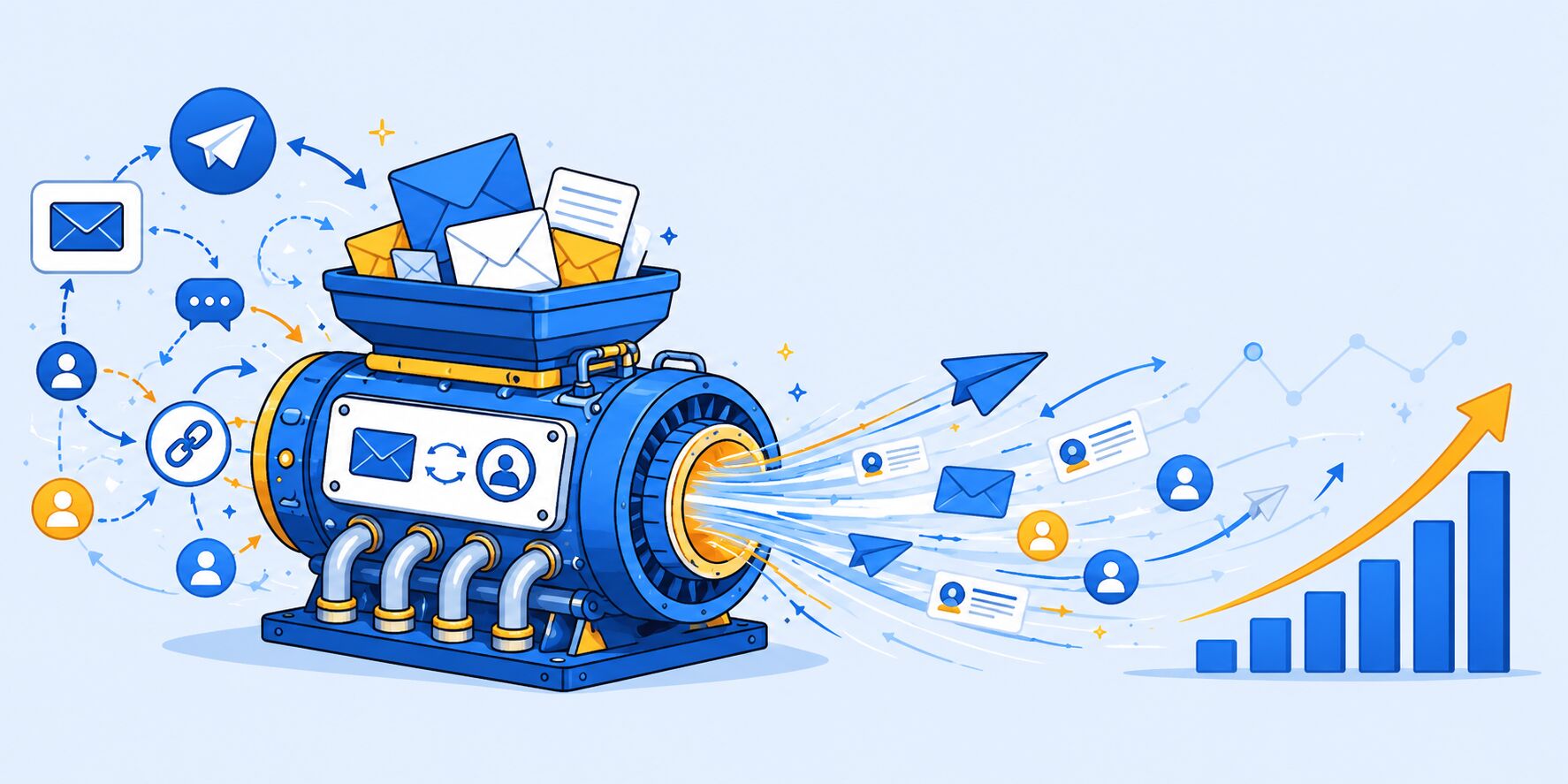
Executing manual follow-ups across thousands of active consumers is logistically impossible for lean founding teams. Consequently, modern email service providers and customer relationship management (CRM) systems—such as Omnisend, integrated with loyalty engines like Smile and Yotpo—have automated this entire infrastructure. These platforms isolate high-engagement segments, ensuring that dormant subscribers who have not interacted with the brand in months are excluded from referral blasts, thereby protecting sender reputation and database health.
The Economic Imperative of Double-Sided Incentives
A critical misstep frequently observed in poorly performing referral setups is the reliance on one-sided reward structures. Behavioral economists have extensively studied the psychological implications of transactional incentives in social networks. When a brand offers a reward exclusively to the person making the referral while leaving the recipient empty-handed, the interaction shifts from a helpful social gesture to a commercial exploitation of personal relationships. This often triggers social friction, causing the consumer to withhold the recommendation entirely.
Conversely, implementing a double-sided reward framework—such as a balanced "Give $10, Get $10" model—fundamentally alters the social dynamic. The referrer is no longer perceived as monetizing their friendship; rather, they are positioned as a benefactor providing genuine economic value to their peer. Meanwhile, the incoming customer receives an immediate financial incentive that reduces the perceived risk of a first-time purchase.
Industry data demonstrates that double-sided incentive programs achieve completion rates that are up to 300% higher than their single-sided counterparts. Crucially, these rewards do not need to be excessively lavish to be effective. While high-dollar cash credits work well, alternative incentives such as expedited free shipping, exclusive product drops, or VIP early access to seasonal collections often perform exceptionally well, particularly for lifestyle and direct-to-consumer (DTC) brands with regular product release cadences.
Eliminating Friction in the Sharing Process
Even with optimal timing and attractive incentives, referral campaigns frequently experience severe drop-off rates due to operational friction. User experience (UX) studies in digital marketing indicate that if completing a desired action requires more than 15 seconds of cognitive effort, conversion rates plummet by over 70%.
To counteract this drop-off, brands must remove every barrier standing between the customer’s intent to share and the actual transmission of the message. This optimization requires three core technical implementations:
- Unique Tracking Links: Automated generation of personalized referral URLs that instantly attribute incoming traffic and manage reward credits without requiring manual promo codes.
- Pre-Written Copy: Providing concise, human-sounding templates that the consumer can send with a single click or modify with minimal effort.
- Omnichannel Share Buttons: Embedding native sharing triggers directly into the communication mediums where consumers actively spend their time, including SMS, WhatsApp, iMessage, and native email clients.
Furthermore, consistency is vital. A common pitfall for emerging brands is announcing a referral program once via a standalone email campaign, resulting in an initial traffic spike followed by complete radio silence. Sustainable referral engines compound over time because they are woven subtly into the fabric of ongoing lifecycle communications—appearing gracefully in post-purchase sequences, order confirmation receipts, and recurring newsletters. This ensures that when a peer naturally asks about a product in casual conversation, the customer’s unique referral link is readily accessible in their memory.
Strategic Segmentation vs. Database Blasting
A widespread malpractice among underperforming digital marketers is the practice of broadcasting blanket referral requests to an entire email database indiscriminately. Sending a high-friction referral ask to a cold subscriber who purchased an item once nearly a year ago and has since ignored every inbound message is not only ineffective; it actively trains the broader audience to skim past future communications.
Sophisticated data segmentation prevents this issue by isolating high-value cohorts. Enterprises must direct their referral advocacy initiatives exclusively toward proven brand champions: repeat buyers, verified product reviewers, highly engaged community members, and customers who have previously interacted warmly with support or marketing teams. By concentrating promotional energy on this hyper-targeted segment, brands maximize their return on marketing investment while preserving the long-term health of their email deliverability metrics.
Industry Implications and Future Outlook
As customer data privacy laws continue to tighten globally and third-party tracking cookies face imminent obsolescence, brands are forced to reevaluate their long-term customer acquisition playbooks. The shift toward zero-party and first-party data collection places immense value on direct communication channels like email and SMS.
Industry experts project that brands mastering automated, value-driven referral systems over the next 24 months will significantly insulate themselves against rising ad platform volatility. By treating word-of-mouth marketing not as an accidental byproduct of a good product, but as a systematically engineered, automated infrastructure, businesses can unlock exponential, capital-efficient growth. Ultimately, the underlying sentiment among commerce leaders is clear: word of mouth is already actively occurring around every brand. The true competitive differentiator lies entirely in whether management has constructed the digital plumbing necessary to capture, nurture, and reward that goodwill at scale.