India’s Open Network for Digital Commerce: Redefining the Global Ecommerce Landscape through Decentralization

The Republic of India, now the world’s most populous nation, stands at a critical juncture in its economic evolution as it seeks to bridge the gap between traditional retail and a rapidly accelerating digital future. While the country’s online commerce penetration remains modest compared to established markets like the United States and China, the underlying fundamentals suggest an imminent and massive shift. With more than 840 million smartphone users and a demographic profile where half the population is under the age of 25, the potential for digital consumption is unparalleled. Central to this transformation is the Open Network for Digital Commerce (ONDC), a government-backed initiative designed to dismantle the "walled gardens" of traditional ecommerce and empower the millions of small, independent merchants that form the backbone of the Indian economy.
The Macroeconomic Landscape and the Digital Shift
India’s retail sector is unique in its composition. Approximately 75% of national consumer goods sales are driven by millions of small, physical mom-and-pop stores known as kiranas. These neighborhood merchants have historically operated outside the digital sphere, relying on local foot traffic and personal relationships. However, as internet connectivity penetrates rural and semi-urban areas, the Indian government has faced the complex challenge of fostering digital transformation without allowing a few dominant global players to monopolize the market.
The strategy adopted by Indian policymakers involves creating "Digital Public Infrastructure" (DPI). This approach was first proven successful with the Unified Payments Interface (UPI), a peer-to-peer digital payment system that has become the global gold standard for instant transactions. Following the success of UPI, the government launched ONDC in late 2021 to apply the same principles of interoperability and open standards to the world of buying and selling.
Understanding the ONDC Framework
Unlike traditional marketplaces such as Amazon India or Walmart-owned Flipkart, ONDC is not a single platform or a central app. Instead, it is an open-source commerce framework—a set of protocols that allow different participants to interact seamlessly. In a traditional ecommerce model, a seller must list their products on a specific platform, and a buyer must use that same platform’s app to find and purchase those products. This creates a "closed-loop" system where the platform controls the data, the search algorithms, and the transaction fees.
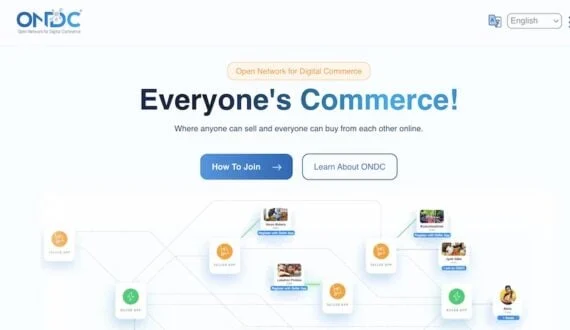
ONDC unbundles these services. It separates the buyer-side experience from the seller-side infrastructure. Under this model, a merchant can list their products on a "seller app" once, and those products become visible to consumers across a multitude of different "buyer apps." This interoperability ensures that a small merchant in a tier-two city can reach a customer in a metropolitan hub without being beholden to the high commission structures of a dominant marketplace.
The Mechanics of Participation: Buyer and Seller Apps
The ONDC ecosystem relies on a network of diverse participants, each fulfilling a specific role in the transaction chain. These roles are categorized primarily into seller apps, buyer apps, and logistics providers.
Seller apps are designed to help merchants digitize their inventory, manage orders, and handle fulfillment. Leading examples in the Indian market include Mystore, CostBo, and GoFrugal. These apps provide the technical interface for kiranas and local brands to enter the digital network.
On the other side of the transaction are buyer apps, which are the customer-facing interfaces where shoppers browse and buy. Major financial and technology players have integrated into the ONDC network as buyer apps to leverage their existing user bases. Paytm, a giant in the fintech space, along with Magicpin and Bajaj Finserv, are among the most popular gateways for consumers to access the network.
Crucially, because the network is open, a consumer using the Paytm app can see products listed by a merchant who is using the Mystore seller app. The transaction is facilitated by the ONDC protocol, which also integrates third-party logistics providers like Delhivery or Shiprocket to handle the physical delivery of goods.
The Economic Incentive: Fees and Transparency
One of the most significant drivers of ONDC adoption is the drastic reduction in operational costs for sellers. In the traditional marketplace model, platforms often charge commissions ranging from 18% to 40% of the transaction value. These high fees frequently price out small-scale merchants or force them to operate at razor-thin margins.
ONDC operates with a significantly lower fee structure, typically ranging between 3% and 10%. This lower barrier to entry allows smaller brands and kiranas to compete more effectively on price. Furthermore, ONDC addresses long-standing concerns regarding algorithmic bias. On traditional platforms, search results are often influenced by the platform’s own private-label brands or by sellers who pay for premium placement. ONDC utilizes a transparent, non-discriminatory sorting algorithm, ensuring that small sellers have a fair chance of being discovered based on relevance and proximity rather than advertising spend.
Another revolutionary aspect of the network is the portability of ratings. In a closed ecosystem, if a seller leaves a platform, they lose their hard-earned customer reviews and reputation. On ONDC, a merchant’s ratings and reputation are portable across the network, providing them with true ownership of their digital identity.
A Chronology of ONDC’s Evolution
The development of ONDC has followed a deliberate and phased rollout to ensure stability and scalability:
- December 2021: The ONDC was incorporated as a section 8 non-profit company, backed by several private and public sector banks.
- April 2022: The pilot phase began in five cities—Delhi NCR, Bengaluru, Bhopal, Shillong, and Coimbatore—focusing initially on grocery and food and beverage sectors.
- September 2022: The network opened to the general public in Bengaluru, marking its first major urban test.
- 2023: The network expanded rapidly, reaching over 500 cities across India. During this year, the category list expanded from groceries to include fashion, electronics, home and kitchen, and even mobility services (like taxi and auto-rickshaw booking).
- 2024 and Beyond: The focus has shifted toward onboarding global FMCG (Fast-Moving Consumer Goods) brands and integrating "quick commerce" capabilities to compete with rapid-delivery startups.
Global Brands and the Strategic Shift
While ONDC was initially envisioned as a tool for the small merchant, it has increasingly attracted the attention of global multinational corporations. Brands such as Unilever, Nestle, PepsiCo, Procter & Gamble, L’Oreal, and Johnson & Johnson have already established a presence on the network. For these global entities, ONDC represents an additional distribution channel that bypasses the high costs of traditional marketplaces and provides direct access to a wider demographic.
Furthermore, many global food brands that utilize quick commerce platforms like Blinkit, Swiggy Instamart, and Zepto are using ONDC to streamline their logistics and reduce dependency on any single delivery partner. For foreign brands looking to enter the Indian market, ONDC offers a relatively low-cost entry point, provided they comply with India’s strict Foreign Direct Investment (FDI) regulations, which limit the extent to which foreign-owned entities can hold inventory.
Official Responses and Stakeholder Analysis
The Indian government, through the Ministry of Commerce and Industry, has been vocal about the strategic importance of ONDC. Minister Piyush Goyal has frequently described ONDC as a "democratization of ecommerce," comparing its potential impact to that of the internet itself. The government views ONDC as a way to curb the monopolistic tendencies of "Big Tech" and ensure a level playing field for domestic entrepreneurs.
However, the transition has not been without skepticism. Industry analysts have pointed out that while the technical framework is sound, the "user experience" on ONDC buyer apps must match the seamless convenience offered by Amazon and Flipkart to achieve mass adoption. Traditional ecommerce giants have also reacted cautiously, with some choosing to integrate certain parts of their services into the network while maintaining their own independent platforms.
Logistics experts have noted that the success of ONDC will ultimately depend on the efficiency of the "last mile." Unlike Amazon, which has a massive, proprietary delivery fleet, ONDC relies on a fragmented network of third-party couriers. Coordinating these disparate parts to ensure timely delivery is a significant technical and operational hurdle.
Broader Implications and Future Outlook
The implications of ONDC extend far beyond the borders of India. As nations around the world grapple with the dominance of large technology platforms, the "India Stack" (the collective name for India’s digital public infrastructure including Aadhaar, UPI, and now ONDC) is being watched as a potential blueprint for other emerging economies.
By 2030, India’s ecommerce market is projected to reach $350 billion. If ONDC successfully captures a significant portion of this growth, it will represent a fundamental shift in how digital economies are structured—moving away from centralized, platform-centric models toward decentralized, network-centric ones.
For the millions of kirana owners, ONDC offers a path to modernization that preserves their independence. For the global brand, it offers a more transparent and cost-effective way to reach a billion consumers. As the network continues to scale, it stands as a bold experiment in whether a government-led protocol can truly disrupt the established order of global digital commerce. The coming years will determine if ONDC can replicate the "UPI moment" for retail, turning a complex network of millions of sellers into a single, unified, and accessible digital marketplace.