Market Breath and Geopolitical Tensions Define Trading Session as Nasdaq Hits New Record High

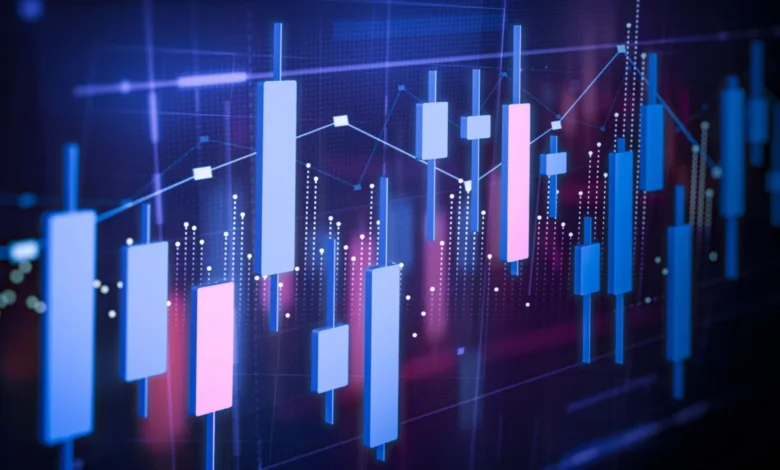
After a robust rally to start the week, U.S. equity markets entered a consolidation phase on Tuesday, balancing strong corporate performance against a backdrop of escalating geopolitical rhetoric and macroeconomic uncertainty. While the Dow Jones Industrial Average and the S&P 500 drifted lower, the tech-heavy Nasdaq Composite bucked the trend, carving out a fresh record closing high of 27,244, driven by a sustained rally in artificial intelligence (AI) infrastructure stocks.
The day’s trading was defined by the tug-of-war between optimism surrounding corporate profitability and the mounting pressures of global instability. Market participants spent the session parsing developments from the United Nations General Assembly, specifically looking for any indication of de-escalation between the United States and Iran. These hopes were tested by President Donald Trump’s address to the U.N., in which he issued a stern warning to the Islamic Republic, threatening to "annihilate" the nation if provocations continued.
The Macroeconomic Landscape: Tailwind vs. Headwind
The market’s current trajectory remains complex, defined by a distinct set of competing pressures. According to Kyle Rodda, a senior financial market analyst at Capital.com, the market is currently navigating a singular, powerful tailwind—extraordinary corporate earnings, particularly in the technology sector—pitted against two significant headwinds: geopolitical volatility and lingering concerns over inflation and the trajectory of interest rates.
"The simple arithmetic at the moment is that the markets are being driven by one big tailwind and two big headwinds," Rodda explained. "We are seeing a divergence where core earnings growth is keeping indices afloat, yet the external environment—characterized by rising oil prices and a lack of clarity on monetary policy—is fueling a cautious sentiment among institutional investors."
The link between oil prices and inflation remains a primary concern for the Federal Reserve. While front-month West Texas Intermediate (WTI) crude futures fell for the fifth consecutive day on Tuesday—following reports from Saudi Arabia that a critical pipeline damaged in a drone attack was nearing restoration—the broader energy market remains significantly elevated, with prices up approximately 11% for the month. Higher energy costs serve as a persistent inflationary tax on the economy, which in turn complicates the Federal Reserve’s interest rate policy, as any sustained inflation spike could delay the anticipated pivot toward more accommodative monetary conditions.
Diplomatic High-Stakes and Trade Policy
As the week progresses, investor attention is shifting toward Washington, D.C., where President Trump is scheduled to meet with Chinese President Xi Jinping. Market strategists suggest that the outcome of this summit could be a decisive catalyst for the next leg of the market’s move.
Jay Woods, chief market strategist at Freedom Capital Markets, noted that Wall Street is searching for concrete agreements that might address the current tariff framework or facilitate improved access to critical minerals essential for high-tech manufacturing. "Any positive developments on that front could lift equities, particularly those in technology, industrial and consumer stocks," Woods stated. "The flipside is that a breakdown in talks could revive trade-war concerns and market volatility, which have been largely sidelined by the current excitement surrounding AI."
The potential for renewed trade friction creates a risk premium that investors are currently pricing into industrial stocks, which have remained more volatile than their tech counterparts throughout the current cycle.
Sandisk and the AI Infrastructure Boom
In the corporate sphere, the semiconductor and data storage sectors continue to lead the charge. Sandisk (SNDK) experienced a significant surge on Tuesday, climbing 6.8% following an initiation of coverage by Rosenblatt Securities analyst Kevin Cassidy. With a new "Buy" rating and a price target of $2,400—representing a 27% implied upside from its current levels—the stock’s performance reflects the broader market’s enthusiasm for AI-enabling hardware.
The thesis behind the bullish outlook for Sandisk centers on the evolution of NAND flash storage. Once considered a commodity, NAND flash is increasingly being viewed as a system-critical component for high-performance AI compute platforms. Cassidy noted that the anticipated shortage of memory chips, combined with the structural demand created by the AI boom, positions Sandisk to benefit from rising average selling prices (ASPs).
The market’s conviction in this trade is high. Data from S&P Global Market Intelligence indicates that among 25 analysts covering the company, 21 maintain a Buy or Strong Buy rating, underscoring a rare degree of consensus in a sector often prone to cyclical fluctuations.
Berkshire Hathaway’s Strategic Pivot into Housing
While technology dominates the growth narrative, the consumer discretionary sector drew headlines following a regulatory filing regarding Lennar (LEN). The homebuilder saw its stock pop 6.4% on Tuesday after it was revealed that Berkshire Hathaway had increased its stake in the company by 2.6 million Class A shares. Berkshire’s total holding now stands at 23.7 million shares, or just over 10% of the company, sparking widespread speculation about a potential full-scale acquisition.
The move is particularly noteworthy given the current climate for residential real estate. The 30-year fixed mortgage rate has recently tested 14-month highs, exceeding 7%, which has acted as a severe drag on affordability. Official data highlights the scale of this struggle, with new home sales dipping 10.5% in July and existing home sales falling 2% between July and August.
However, Berkshire’s investment strategy has historically prioritized long-term fundamental value over short-term market fluctuations. In June, Berkshire CEO Greg Abel reaffirmed the firm’s philosophy regarding the sector, noting that the conglomerate maintains "a long-term belief in the strength of America’s housing market and its underlying fundamentals, which we see as enduring over time."
Whether this investment signals a broader play for the homebuilding industry—which already includes Berkshire-owned Taylor Morrison and Clayton Homes—remains to be seen. Before Tuesday’s jump, Lennar shares had struggled, down 23% for the year to date, making the stock an attractive value proposition for a long-term investor with the capital reserves of Warren Buffett’s firm.
Looking Ahead: The Balance of Risk
As the trading week moves into its final sessions, the focus will remain on the interplay between the "Magnificent Seven" tech giants and the macroeconomic reality of a high-interest-rate environment. The record-setting performance of the Nasdaq suggests that investors are willing to pay a premium for growth, even as geopolitical risks in the Middle East and the uncertainty of trade talks with China loom over the broader S&P 500.
The divergence between the tech-heavy indices and the more traditional Dow Jones reflects a market that is increasingly bifurcated. Technology companies, armed with strong balance sheets and the tailwind of the AI revolution, are effectively insulating themselves from the macroeconomic headwinds that continue to suppress the industrial and consumer segments of the economy.
Market participants will be watching the upcoming U.S. economic data releases, particularly those concerning inflation and manufacturing, for clues on how the Fed might adjust its path. In the meantime, the market remains in a state of watchful waiting—a high-conviction environment for tech, but one that is significantly more cautious regarding the broader implications of global policy shifts. Whether this "breather" on Tuesday leads to a deeper correction or serves as a launchpad for further gains will likely be determined by the diplomatic outcomes in Washington and the ongoing earnings season, which continues to provide the fundamental support necessary to keep equity prices elevated despite the myriad risks facing the global economy.
Related posts: