Mastering Answer Engine Optimization: The Strategic Evolution of Search Visibility in the Age of Artificial Intelligence

The landscape of digital discovery is undergoing a profound transformation as AI-driven answer engines redefine how users interact with information. Between the first quarter of 2025 and the first quarter of 2026, monthly unique visitors to major answer engines surged from 634 million to 904 million—an increase of more than 40%. This shift has moved Answer Engine Optimization (AEO) from a niche technical concern to a core requirement for modern marketing and SEO professionals. While traditional search engine optimization (SEO) remains the bedrock of digital discoverability, the emergence of generative AI platforms—including Google’s AI Overviews, Perplexity, and ChatGPT—requires a more nuanced approach to how content is indexed, structured, and presented.
The Shift from Keyword Matching to Contextual Synthesis
For over two decades, search engines functioned primarily as indexing systems that matched keywords to web pages. Today, the shift toward generative AI marks a transition from a "link-based" model to an "answer-based" model. In this new paradigm, AI systems crawl, parse, and synthesize information to provide direct, conversational responses. Despite this evolution, the underlying infrastructure remains tethered to the traditional web. Google, for instance, utilizes a specialized version of its Gemini model to power AI Overviews, yet this system relies on the same crawling and indexing architecture that has governed Google Search for years.
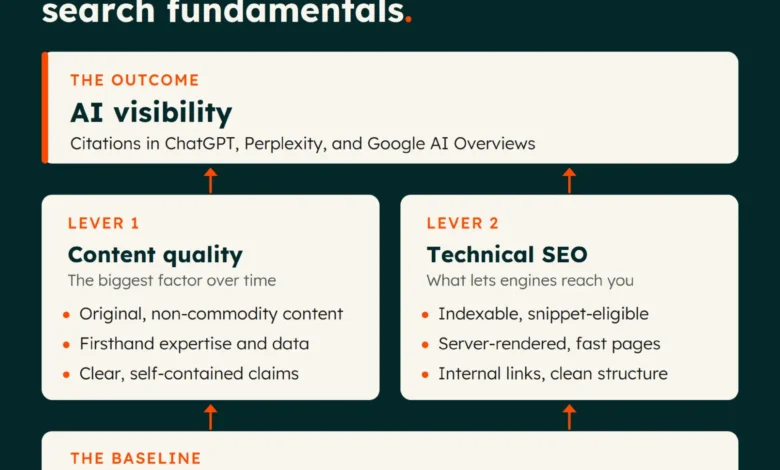
The technical requirement for visibility is straightforward: if a search engine cannot crawl, render, or index a webpage, that page is fundamentally invisible to an AI-driven answer engine. Consequently, the first step in any AEO strategy is a rigorous audit of technical SEO foundations, including site speed, server-side rendering of content, and the elimination of blocking scripts that prevent AI crawlers from accessing primary text.
Chronology of the AEO Transition
The rise of AEO can be traced through several pivotal developments:
- Late 2022: The public release of ChatGPT triggers a widespread re-evaluation of search behavior, shifting user expectations toward direct answers.
- 2024: Major search providers begin integrating LLMs into search results, moving from ten blue links to synthesized, summarized responses.
- Q1 2025: The "answer engine" ecosystem matures, with user traffic reaching 634 million unique visitors.
- Q1 2026: Traffic climbs to 904 million, confirming the permanent integration of AI search into the daily consumer research journey.
This timeline reflects a rapid adoption rate, forcing businesses to adapt their content strategies to accommodate models that prioritize "people-first" content—material that offers genuine, original expertise rather than derivative information.
Data-Driven Insights on Citation Patterns
Recent research underscores the correlation between content quality and citation frequency. According to studies from SE Ranking and Fan Out, pages that incorporate original data points and expert quotes are significantly more likely to be cited by LLMs. For example, content featuring 19 or more unique data points averages 5.4 citations, compared to 2.8 for data-sparse pages.
The mechanism behind this is simple: generative models are programmed to provide accurate, authoritative answers. By offering proprietary data or human-centric perspectives, a brand provides the AI with "non-commodity" content that cannot be replicated by simply scraping public training data. Furthermore, page performance remains a critical variable. Evidence suggests that pages with a First Contentful Paint (FCP) of under 0.4 seconds earn roughly three times the citations of slower pages, suggesting that technical efficiency is a prerequisite for machine-driven synthesis.
The Divergent Strategies of Major Engines
While AEO is often treated as a monolith, different engines exhibit distinct behaviors. Perplexity AI, for instance, acts as a high-volume curator, frequently drawing on a diverse range of sources, including discussion forums like Reddit and LinkedIn. In contrast, ChatGPT tends to be more selective, favoring long-form, authoritative articles.
A notable finding in recent research is the lack of overlap between citation sources. Only about 7.7% of URLs appear in more than one engine for the same query. This implies that a "one-size-fits-all" approach to AEO is ineffective. Marketers must now treat each engine as a distinct channel, tailoring content to the specific preferences of the platform—whether that means increasing the density of professional discussion or prioritizing deep-dive technical documentation.

The Role of Structured Data and Technical Hygiene
Structured data remains the most effective way to provide an engine with a "map" of your content. By utilizing schema markup that accurately reflects the visible text on a page, businesses can reduce the ambiguity that prevents AI from citing their content. However, this is not a shortcut; Google has explicitly warned against "cloaking" or using schema to manipulate rankings. If the metadata does not align with the user-facing content, the engine will disregard the signal, and in some cases, penalize the site for deceptive practices.
Snippet controls—specifically the data-nosnippet attribute and robots meta tags—have also gained importance. These tools allow site owners to exert granular control over which sections of a page are eligible for inclusion in generative summaries. This is particularly vital for organizations that need to protect sensitive information or prevent out-of-context quotes from appearing in AI responses.
Formatting for Machine Extraction
Optimizing for AI requires a departure from traditional "SEO copywriting" in favor of "answer-first" formatting. Research indicates that the most frequently cited passages in AI Overviews originate from the top 30% of a page. By leading with a direct answer—typically within the first 40 to 60 words—a brand maximizes the probability of being selected as the definitive source.
Furthermore, the use of question-led subheadings (H2 or H3 tags) acts as a signal to the model. When a heading perfectly matches a user’s query, the subsequent paragraph is far more likely to be lifted by the engine. Supporting this structure with bulleted lists and tables—which have shown a 43% higher extraction accuracy than prose—creates a "modular" content experience that is inherently friendly to generative AI.
Broader Implications and Future Outlook
The rise of AI search represents a fundamental change in the digital economy. As companies shift resources toward AEO, the value of original research, proprietary data, and subject-matter expertise is rising. Conversely, generic, "repackaged" content is seeing a decline in visibility.
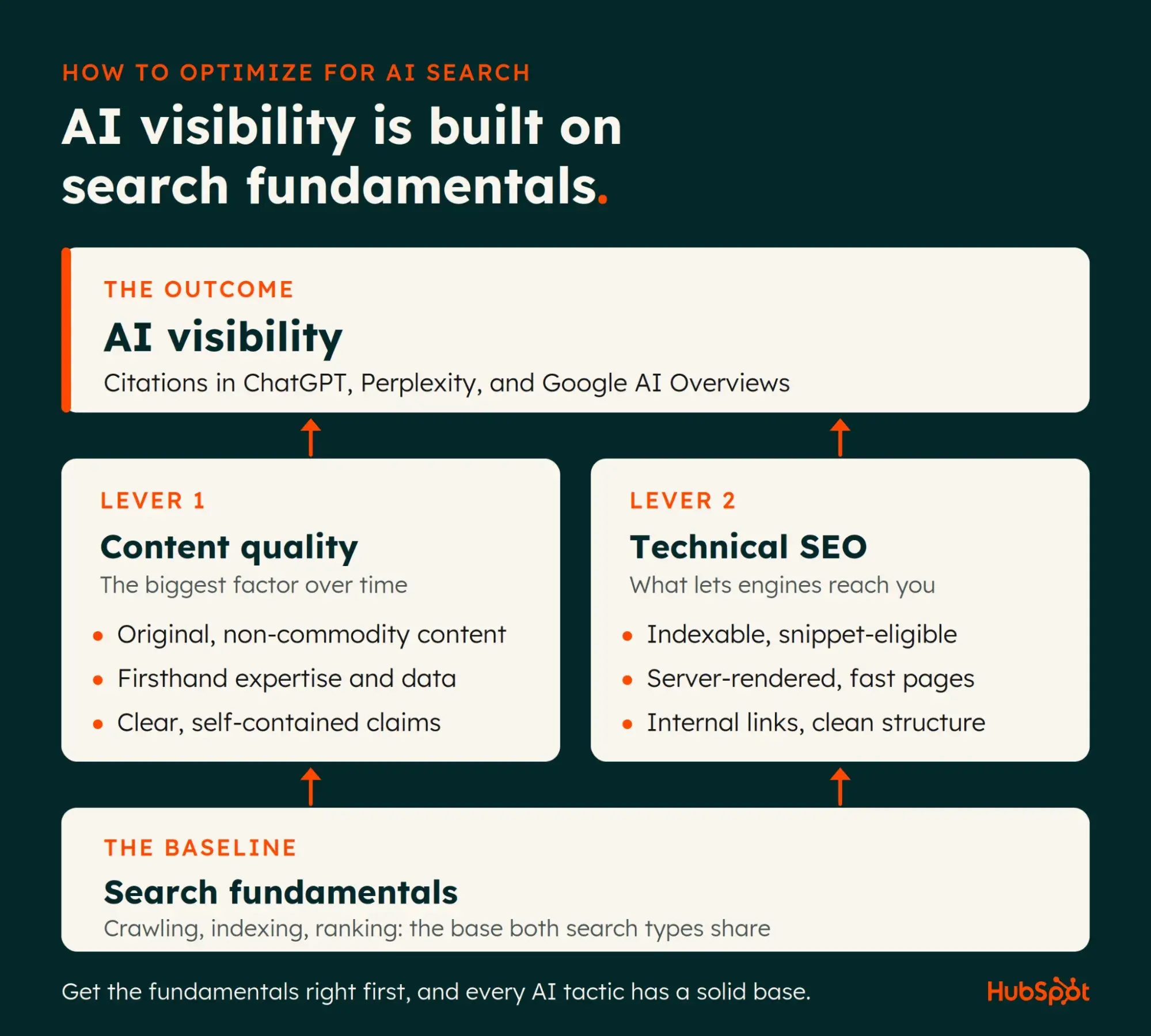
The implication for businesses is clear: the era of "content for the sake of volume" is ending. The future belongs to organizations that can provide high-value, verifiable, and well-structured information. Because AI search platforms are continuously evolving, the most successful strategies will be those built on a repeatable process: entity mapping, answer-first drafting, consistent schema application, and a regular cadence of content refreshes to ensure accuracy and relevance.
As these tools continue to account for a larger share of the search market, the distinction between "SEO" and "AEO" will likely disappear. They are becoming two sides of the same coin. Organizations that master the technical and structural requirements of modern search will not only survive the transition but will secure their place as primary sources for the next generation of digital discovery. In this environment, the brand that provides the most efficient, accurate, and authoritative answer is the brand that wins the user.
Related posts: