Navigating Brand Sovereignty: Protecting Corporate Identity Across Search Engines and Artificial Intelligence Ecosystems

The modern digital landscape has fundamentally transformed how organizations, products, and individuals establish their market presence, shifting the primary battleground from traditional copyright infringement to the nuanced realms of search engine algorithms and generative artificial intelligence. Brand protection in the age of algorithmic discovery extends far beyond traditional trademark monitoring. Today, it requires a comprehensive operational strategy to address identity confusion, unauthorized impersonation, malicious traffic interception, and systemic hallucinations generated by large language models (LLMs). While traditional Online Reputation Management (ORM) focuses heavily on public perception and consumer sentiment, modern brand protection addresses a more fundamental technical requirement: ensuring that human users and artificial intelligence systems can accurately identify the authentic brand, isolate official digital channels, and seamlessly distinguish legitimate entities from sophisticated bad actors.

The evolution of digital threats has exposed vulnerabilities deep within technical infrastructure, moving well beyond cloned websites or fraudulent social media profiles. A prominent example of this structural shift is "slopsquatting," a malicious tactic where threat actors register software packages using names that AI coding assistants and developers are statistically likely to hallucinate. Documented security research highlights alarming incidents where attackers claimed package names such as "unused-imports" on the npm registry, exploiting gaps left by developers attempting to reference legitimate tools. In separate instances, autonomous AI agents and code generators have combined independent software libraries, automatically distributing unverified and potentially hazardous command strings across hundreds of public code repositories. These incidents demonstrate that brand exploitation now targets the underlying infrastructure trusted by developers and autonomous software agents alike.
To mitigate these expanding risks effectively, organizations must implement a rigorous, multi-layered auditing framework. This process begins with an exhaustive inventory of all intellectual and digital assets associated with the brand, including legal corporate names, regional subsidiaries, historical nomenclature, core domains, mobile applications, verified social media handles, executive leadership, and primary product lines. Each identified asset must be paired with verified source documentation and strict temporal tracking, often structured within a knowledge graph to maintain organizational clarity. Furthermore, digital audits cannot be executed effectively through a single lens; they demand granular evaluation across multiple geographical markets and linguistic variations. A brand’s digital footprint in Tokyo will look vastly different from its presence in Dublin or New York, requiring localized testing environments that account for regional search dynamics, mobile layout variations, and localized intent.

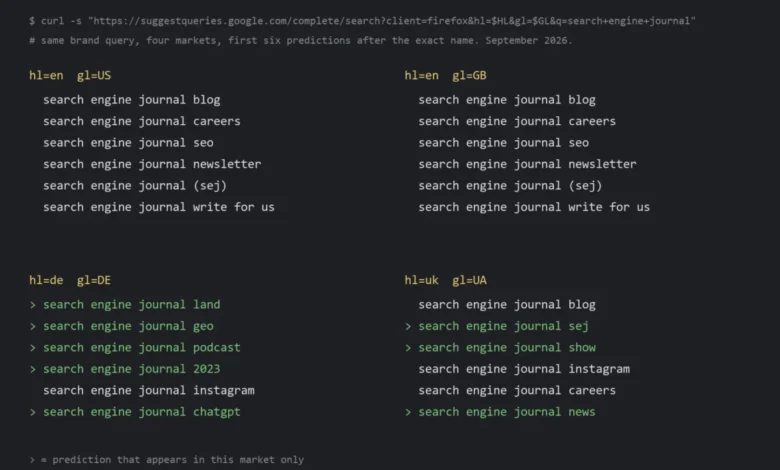
Examining how a brand appears across disparate search surfaces requires a systematic approach to query categorization. Brand protection professionals must analyze navigational queries (exact brand names and login portals), identity queries (ownership and corporate hierarchy), trust queries (reviews and consumer complaints), support inquiries, and common misspellings or typographical variants. This audit must extend across major general-purpose search engines—including Google, Bing, Brave, and DuckDuckGo—as well as vertical search environments such as video platforms, app stores, and regional search engines. Particular attention must be paid to predictive autocomplete algorithms, which frame user intent before a single result is loaded. Threat actors have increasingly leveraged black-hat search optimization techniques to manipulate autocomplete predictions, associating legitimate brands with derogatory or misleading prefixes. Continuous monitoring of suggestion endpoints allows security teams to detect algorithmic anomalies before misinformation influences consumer behavior at scale.
Simultaneously, the integration of generative artificial intelligence into everyday discovery has introduced unprecedented volatility into brand protection strategies. Modern consumers increasingly rely on conversational agents, AI search overviews, and neural retrieval systems to make purchasing and partnership decisions. Auditing these environments requires prompt-engineering frameworks that test both direct informational queries and comparative decision-making prompts across platforms such as ChatGPT, Claude, Perplexity, and Gemini. Empirical data from AI security evaluations reveals that a significant percentage of factual inaccuracies generated by conversational models stem from retrieval failures rather than intrinsic model reasoning errors. If an AI model retrieves outdated or compromised web pages, it will synthesize that misinformation into a confident, authoritative response. Consequently, organizations must audit not only how AI models portray the brand but also verify whether their primary digital properties remain fully accessible to the specific crawler user agents deployed by AI vendors.

When brand protection audits uncover vulnerabilities, organizations must deploy a structured remediation matrix tailored to the specific nature of the infraction. Misleading directory listings, outdated third-party profiles, or general indexing errors require formal correction requests backed by primary evidentiary data. Conversely, malicious activities—such as lookalike domains, phishing support pages, fraudulent mobile applications, and unauthorized trademark usage within sponsored ad placements—demand immediate aggressive containment. Prior to initiating formal takedown requests through registrar dispute policies or ad platform compliance teams, organizations must preserve comprehensive digital evidence, including dated full-window screenshots, complete redirect chains, and specific tracking parameters. Containment must always precede removal; while legal notices and hosting complaints are processed, brands must explicitly publish authoritative warnings across their owned communication channels to prevent consumers from surrendering credentials or capital to malicious imposters.
Proactive defense mechanisms remain the most cost-effective approach to long-term brand sovereignty. Organizations must secure domain name variations across global top-level domains, maintain strict multi-factor authentication protocols for all registrar and hosting accounts, and utilize Certificate Transparency log monitoring to detect the unauthorized issuance of Transport Layer Security (TLS) certificates for lookalike domains. Internal telemetry often provides the earliest warning indicators of emerging threats; spikes in customer support inquiries regarding unverified accounts, anomalous Domain-based Message Authentication, Reporting, and Conformance (DMARC) failure reports, and official webmaster security notices frequently surface long before traditional external audits identify an issue. By systematically reducing surfaces vulnerable to impersonation, rigorously auditing search and AI ecosystems, and maintaining constant vigilance over digital infrastructure, enterprises can safeguard their brand equity and preserve consumer trust within an increasingly complex technological landscape.