Semrush Study Reveals Key Content Qualities Driving AI Citations in ChatGPT, Google AI Mode, and Perplexity

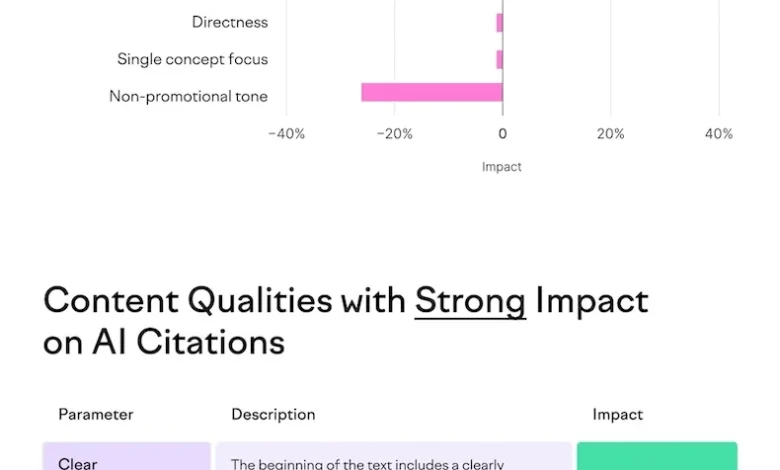
In an increasingly AI-driven digital landscape, understanding the factors that compel generative AI platforms like ChatGPT, Google AI Mode, and Perplexity to cite specific content has become paramount for publishers, marketers, and content creators. A recent in-depth analysis by Semrush, a global leader in online visibility management and content optimization, sheds critical light on this evolving dynamic, identifying five key content qualities that exhibit a strong positive correlation with AI citations. This study serves as a crucial guide for navigating the new frontier of AI-powered search, where the traditional rules of search engine optimization (SEO) are being augmented by the nuanced demands of artificial intelligence.
The findings, distilled from an analysis of thousands of AI citations, point to a clear shift in what constitutes "valuable" content in the eyes of generative AI. The five pivotal qualities identified are: clear summarization, robust EEAT (Experience, Expertise, Authoritativeness, and Trustworthiness) signals, a structured Q&A format, well-organized sections, and the strategic implementation of structured data. These elements collectively suggest that content designed for clarity, credibility, and machine-readability is most likely to be recognized and referenced by AI systems seeking to provide concise, accurate, and trustworthy answers.
The Paradigm Shift: From Blue Links to AI Answers
The digital information ecosystem has undergone a significant transformation with the widespread adoption of generative AI. For decades, traditional search engines primarily functioned as directories, presenting users with a list of "10 blue links" to relevant web pages. Users would then navigate these links to find their answers. However, the advent of sophisticated large language models (LLMs) like OpenAI’s ChatGPT, Google’s Gemini (formerly Bard), and specialized AI answer engines such as Perplexity AI, has introduced a new paradigm. These platforms aim to provide direct, synthesized answers to user queries, often compiling information from multiple sources and presenting it in a conversational or summarized format.
This shift presents both immense opportunities and significant challenges for content creators. While being cited by an AI platform can dramatically increase visibility and establish a source’s authority, it also raises questions about direct website traffic, attribution, and the economic model for publishers whose content fuels these AI responses. The Semrush study directly addresses how content can position itself to thrive in this new environment, emphasizing attributes that foster both human understanding and machine interpretability.
Semrush’s Deep Dive: Methodology and Core Findings
Semrush’s research methodology involved a comprehensive analysis of a vast dataset of AI-generated responses across various platforms. By meticulously correlating content attributes with their likelihood of being cited, the study isolated specific structural and qualitative factors. The objective was to move beyond anecdotal evidence and provide data-backed insights into what AI systems truly value when sourcing information. The five identified qualities are not merely suggestions but statistically significant indicators of AI citation potential.
Deconstructing the Five Pillars of AI Citation
Each of the five identified qualities plays a distinct yet interconnected role in enhancing content’s appeal to AI systems:
-
Clear Summarization: At the core of generative AI’s utility is its ability to condense vast amounts of information into digestible summaries. Content that inherently provides clear, concise summaries of its main points, either at the beginning (e.g., an executive summary, abstract, or TL;DR section) or strategically throughout, significantly aids AI models in extracting key information. These summaries act as signposts for AI, allowing it to quickly grasp the essence of an article without having to process every word. For content creators, this means actively crafting introductory paragraphs that encapsulate the article’s findings, using conclusion sections to recap major takeaways, and employing bullet points or numbered lists to highlight critical data. The easier it is for an AI to identify and reproduce the main points, the more likely it is to be cited as a source for summarized answers.
-
EEAT Signals (Experience, Expertise, Authoritativeness, Trustworthiness): Google’s long-standing emphasis on EEAT in its search quality guidelines has found new resonance in the age of AI. Generative AI platforms, acutely aware of the "hallucination" problem (generating false information), prioritize sources that demonstrate high levels of EEAT. AI models are trained on vast datasets, but their ability to discern quality and credibility is often tied to signals that humans also recognize. This includes content authored by recognized experts, published on reputable domains, supported by research or data, and free from factual errors or misleading claims. Content creators must actively build and showcase their EEAT through author bios, citations to primary sources, transparent methodologies, and consistent publication of high-quality, accurate information. A site’s overall reputation, backlink profile from authoritative sources, and positive user reviews also contribute to its perceived trustworthiness by AI algorithms.
-
Q&A Format: The conversational nature of AI search platforms makes content structured in a question-and-answer format highly appealing. Users often pose questions directly to AI models, and content that directly addresses these questions in a clear, concise manner is ideally positioned for citation. This includes dedicated FAQ sections, articles structured around common user questions, or even headings phrased as questions. By anticipating user queries and providing direct answers within the content, publishers effectively pre-optimize their material for AI consumption. For example, an article titled "What are the common symptoms of X?" followed by a direct answer, is more readily parsed by AI than a narrative piece where the answer is embedded within several paragraphs.
![The Content Qualities Correlated With AI Citations [Infographic]](https://i.marketingprofs.com/assets/images/articles/lg/260409-infographic-lg.jpg)
-
Structured Sections: Beyond Q&A, the overall organizational structure of content plays a vital role. AI models, much like human readers, benefit from content that is logically organized with clear headings (H1, H2, H3), subheadings, bullet points, numbered lists, and short paragraphs. This structured approach breaks down complex information into manageable chunks, making it easier for AI to understand the hierarchy of information and extract specific details. Well-defined sections allow AI to identify distinct topics and subtopics, improving its ability to pull relevant snippets for its answers. This also enhances readability for human users, reinforcing the principle that content optimized for humans often performs well with AI.
-
Structured Data (Schema Markup): This is perhaps the most technical yet profoundly impactful of the five qualities. Structured data, or schema markup, involves adding specific code to a webpage that explicitly tells search engines and AI what the content is about. For instance, schema markup can identify a piece of content as an "Article," a "FAQPage," a "HowTo" guide, or a "Recipe," detailing specific attributes like author, publication date, ingredients, or steps. By providing this machine-readable context, content creators essentially "speak" to AI in its native language, removing ambiguity and enabling AI to accurately interpret and categorize information. Implementing schema markup, particularly for elements like FAQs, reviews, and how-to guides, significantly boosts the likelihood of content being understood and cited by AI models.
Chronology of AI’s Ascent in Search
The journey of AI in search has been a gradual but accelerating process. Google’s early integration of AI capabilities like RankBrain (2015) and BERT (2019) marked initial steps towards understanding the nuances of user queries and content. However, the true inflection point arrived in late 2022 with the public release of OpenAI’s ChatGPT. This immediately spurred a competitive race, with Google rapidly integrating its own generative AI, Bard (now Gemini), into its search ecosystem in 2023. Concurrently, platforms like Perplexity AI emerged, focusing specifically on providing direct, cited answers using generative AI.
Throughout this rapid evolution, a common thread has been the increasing need for AI systems to process and synthesize information from the vast expanse of the internet. Early versions of generative AI faced criticism for "hallucinations" and a lack of source attribution. In response, platforms have begun to prioritize transparency and reliability, making source citation a crucial feature. The Semrush study emerges at a critical juncture, offering actionable insights for content creators grappling with how to adapt their strategies to this fast-evolving environment where direct answers are often preferred over mere links.
Broader Implications for the Digital Ecosystem
The findings from Semrush carry profound implications across the digital landscape:
- Evolution of SEO Strategy: Traditional SEO, focused on keywords, backlinks, and technical optimization, must now integrate "AI optimization." This means a renewed emphasis on semantic SEO, understanding user intent, and designing content not just for crawling but for comprehension and synthesis by AI. The focus shifts from merely ranking to being the authoritative source from which AI draws its answers.
- Content Creation Best Practices: Content creators are challenged to produce material that is not only engaging and informative for human readers but also inherently structured and trustworthy for AI. This necessitates a proactive approach to outlining, summarization, and demonstrating expertise. It also suggests a potential rise in demand for technical SEO specialists skilled in structured data implementation.
- Impact on Traffic and Monetization: A key concern for publishers is whether AI-generated summaries, even with attribution, will reduce direct website traffic. If users get their answers directly from an AI interface, they may not click through to the original source. While the Semrush study focuses on citation, the broader implication is that content must be so compelling and authoritative that users want to explore the source further, or that the AI citation itself drives value (e.g., through brand recognition or establishing thought leadership).
- The Future of Information Discovery: The study underscores a future where information discovery is increasingly mediated by AI. This necessitates a collective effort from publishers, platform providers, and users to ensure the accuracy, ethical sourcing, and transparency of AI-generated content.
Expert Commentary and Industry Reactions
While specific official statements on the Semrush study are still emerging, the findings resonate deeply with broader industry trends and Google’s own directives. A spokesperson from Semrush, commenting on the study’s significance, might emphasize, "Our research unequivocally demonstrates that the future of content visibility lies in clarity, authority, and structure. Content creators who embrace these principles are not just optimizing for today’s search engines, but for the intelligent systems that are reshaping how information is consumed."
Industry analysts suggest that these findings provide a critical roadmap for navigating the current landscape. "Google’s long-standing emphasis on EEAT and helpful content has paved the way for these findings," notes a prominent SEO consultant. "The AI models are simply leveraging the same quality signals that Google has been advocating for years, albeit with a heightened ability to process and synthesize them." Publishers are increasingly recognizing the need to audit their existing content, identifying areas where they can improve summarization, enhance EEAT signals, and implement structured data to increase their chances of AI citation. The challenge remains in balancing the need for AI optimization with the creation of rich, engaging experiences for human readers, ensuring that content remains valuable across all consumption channels.
Conclusion: Navigating the AI-Powered Future of Content
The Semrush study offers a vital framework for understanding how content can achieve prominence in the age of generative AI. The era of passively hoping for organic rankings is giving way to an active strategy of crafting content specifically designed for AI comprehension and citation. By prioritizing clear summarization, bolstering EEAT signals, adopting Q&A formats, organizing content into structured sections, and leveraging structured data, content creators can significantly enhance their chances of being recognized as authoritative sources by platforms like ChatGPT, Google AI Mode, and Perplexity. As AI continues to evolve and integrate more deeply into our information-seeking behaviors, these five pillars will serve as foundational principles for success, ensuring that quality, credible content remains at the forefront of the digital dialogue. The message is clear: the future of content is intelligent, and content must be designed to speak its language.
Related posts: