Google Ads Asset Studio Redefines Digital Marketing Through Generative AI and Automated Creative Workflows

In the rapidly evolving landscape of digital advertising, the integration of artificial intelligence has transitioned from a backend optimization tool to a frontline creative engine, fundamentally altering how brands communicate with consumers. Artificial intelligence now serves as the core infrastructure of Google Ads, utilizing sophisticated data processing and natural language prompts to assist advertisers in extracting maximum value from their digital presence. While AI has long been utilized to refine bidding strategies and predict the specific intent of searchers, the most significant recent advancements have emerged in the realm of creative asset generation. The introduction of Google’s Asset Studio represents a pivotal shift in the industry, addressing the persistent challenges of resource scarcity and technical expertise that have historically hindered small to mid-sized enterprises from competing with larger agencies in visual storytelling.
The Creative Bottleneck in Modern Advertising
For years, the primary barrier to entry for effective digital marketing was not merely the budget for ad spend, but the cost and time required to produce high-quality visual content. Advertisers frequently face a common set of creative challenges: the high cost of professional photography, the technical complexity of video editing, and the need for a constant stream of fresh assets to combat "ad fatigue." In the modern attention economy, where consumer preferences shift rapidly, the ability to iterate on creative concepts in real-time is no longer a luxury but a necessity.
Google’s Asset Studio was designed specifically for this environment. Recognizing that the vast majority of advertisers are business owners or marketing managers rather than professional graphic designers or video producers, Google has consolidated a suite of generative AI tools that allow for the rapid creation, editing, and deployment of images and videos. This democratization of design tools is powered by Google’s latest multimodal AI models, which can interpret text-based instructions and translate them into high-fidelity visual assets tailored for specific advertising formats.

A Chronology of AI Integration in Google Ads
To understand the significance of Asset Studio, it is essential to view it within the broader timeline of Google’s evolution as an advertising platform.
In the early 2000s, Google Ads (then AdWords) was a text-heavy platform where success was determined by keyword density and manual bidding. The 2010s saw the introduction of automated bidding and the expansion into the Display Network, which necessitated more visual assets. However, these assets still required manual creation. The turning point occurred in 2021 with the launch of Performance Max (PMax) campaigns, which utilized AI to determine the best combination of assets to show to users across all of Google’s channels, including Search, YouTube, and Gmail.
By 2023, the explosion of generative AI technology allowed Google to move beyond mere optimization. The company began integrating Gemini, its most capable AI model, into the Google Ads interface. This led to the 2024 rollout of advanced creative tools within Asset Studio, marking a transition from "AI-assisted bidding" to "AI-generated content." This timeline reflects a broader industry trend where the focus has shifted from managing data to managing creative output at scale.
Generative Image Creation: Precision and Iteration

The core functionality of Asset Studio lies in its ability to generate high-quality imagery from simple descriptive prompts. This process allows advertisers to visualize products in contexts that would otherwise require expensive location shoots. For instance, an advertiser specializing in cushioned footwear can utilize prompts to generate a variety of lifestyle images. By requesting a mix of close-ups and action shots, the AI can produce scenes of people wearing the product in various environments.
The power of this tool is best demonstrated through its iterative capabilities. In practical applications, an initial AI-generated image may contain unwanted elements, such as peripheral objects that distract from the primary product. Through refined prompting—such as requesting the removal of a specific item like a coffee mug or adjusting the background atmosphere—the AI can modify the image while maintaining the integrity of the original subject. This "inpainting" and "outpainting" technology allows for a level of surgical precision that previously required hours of manual labor in software like Adobe Photoshop.
Furthermore, Asset Studio addresses the technical requirements of different platforms by providing automated aspect ratio adjustments. This ensures that a single creative concept can be seamlessly resized for Performance Max campaigns, Demand Gen ads, or YouTube Shorts, maintaining brand consistency across various touchpoints.
Transforming Static Products into Lifestyle Narratives
Beyond generating images from scratch, Asset Studio excels at "enlivening" existing product photography. A common struggle for e-commerce retailers is the "white background" problem—having high-quality product shots that lack the emotional resonance of lifestyle photography.

Asset Studio allows advertisers to upload a standard product image and, through a text prompt, place that product into a dynamic setting. For example, a simple image of a t-shirt can be transformed into a shot of a model walking down a metropolitan sidewalk. This capability is powered by advanced computer vision that understands the geometry and lighting of the uploaded object, ensuring that the shadows and reflections in the AI-generated environment match the product perfectly. This results in a compelling lifestyle shot that would typically cost thousands of dollars in production fees, generated in seconds for a fraction of the cost.
The Video Revolution: From Static Photos to Motion Graphics
As consumer attention spans continue to shorten, video has become the most critical medium for engagement. Statistics from Google’s internal data suggest that campaigns including at least one video asset see a significantly higher conversion rate compared to those that rely solely on static images. However, video production remains the most significant hurdle for many advertisers.
Asset Studio bridges this gap by offering tools that convert static images into motion. Advertisers can upload a single photo to generate a five-second clip or two photos for a ten-second video. These are not merely slideshows; the AI applies subtle animations, pans, and zooms to create a sense of professional cinematography.
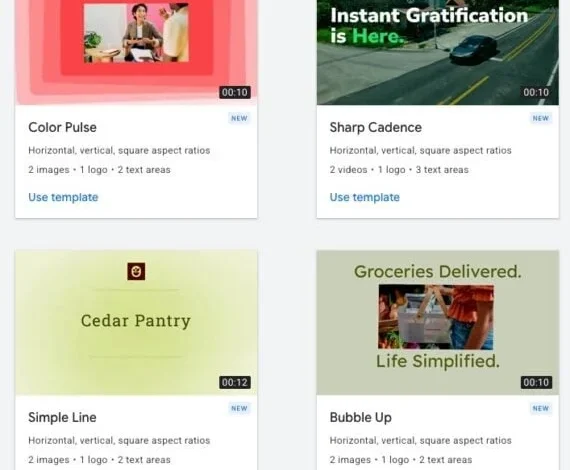
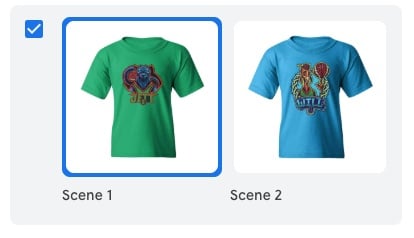
For more complex needs, Asset Studio provides templates that vary in length and asset type. These templates are designed with marketing psychology in mind, featuring default scenes that guide the advertiser through a logical narrative:

- Scene 1: Introduction of the brand or problem.
- Scene 2: Presentation of the solution (the product).
- Scene 3: Call to action.
While these AI-generated videos may not replace high-budget cinematic commercials, they provide the necessary volume of "snackable" content required for modern social media and video platforms.
Optimization through Intelligent Trimming
The final component of the Asset Studio ecosystem is the video trimming tool. Market research consistently shows that shorter videos often outperform longer ones in the digital space, particularly on mobile devices where users are prone to scrolling. Asset Studio allows advertisers to take existing long-form content and automatically trim it to optimized lengths, such as 10 or 15 seconds.
This tool uses AI to identify the most visually engaging and message-critical segments of a video, ensuring that the "hook" is delivered early. This is particularly vital for YouTube’s "Skip Ad" format, where the advertiser has only five seconds to capture interest.
Market Data and Industry Implications

The implications of these tools for the advertising industry are profound. According to a 2023 report by McKinsey & Company, generative AI could add up to $4.4 trillion annually to the global economy, with marketing and sales being one of the primary beneficiaries. By reducing the "cost per creative," Google is enabling a higher volume of A/B testing. Advertisers can now run 50 variations of an ad to see which resonates best with a specific demographic, rather than gambling their entire budget on a single creative direction.
Industry analysts suggest that this shift will change the role of advertising agencies. Instead of spending the majority of their time on execution and production, agencies will likely pivot toward "prompt engineering" and strategic curation. The value will lie in the ability to guide the AI to produce assets that align with a sophisticated brand voice and long-term business goals.
Strategic Analysis and Ethical Considerations
While the benefits are clear, the rise of AI-generated creative assets also introduces new challenges. Brand safety and accuracy are paramount; advertisers must remain vigilant to ensure that AI-generated images do not misrepresent the actual product or include "hallucinations"—visual glitches common in early-stage generative AI.
Furthermore, as the barrier to content creation disappears, the market may see a saturation of AI-generated visuals. To stand out, brands will need to focus on the quality of their prompts and the uniqueness of their creative strategy. The goal is not just to create more content, but to create smarter content that leverages AI to reach the right person with the right message at the right moment.
Conclusion: The Future of AI-Driven Creativity
Google Ads Asset Studio represents a landmark in the journey toward a fully automated advertising ecosystem. By combining generative AI with user-friendly interfaces, Google has provided a solution to the "creative gap" that has long plagued the industry. As these tools continue to mature, the distinction between "human-made" and "AI-assisted" content will likely blur, leading to a new era of digital marketing where the only limit to a campaign’s success is the imagination of the advertiser and the precision of their prompts. In this new paradigm, the speed of iteration becomes the ultimate competitive advantage, allowing brands to move at the speed of culture.