The Comprehensive Guide to Modern Referral Marketing and the Strategic Evolution of Customer Acquisition in 2026


Referral marketing has emerged as a cornerstone of sustainable business growth, defined as a formal customer acquisition strategy that incentivizes existing clients to introduce new customers to a brand. By transforming organic word-of-mouth into a structured, trackable program utilizing unique links, codes, and measurable conversion data, businesses are increasingly moving away from volatile paid acquisition channels toward community-driven growth. As digital advertising costs continue to fluctuate, the precision of referral programs offers a high-yield alternative that capitalizes on the inherent trust between social connections.
Data from the Wharton School of Business and the Journal of Marketing Research indicates that referred customers are approximately 16% more valuable over their lifetime than those acquired through traditional marketing channels. In 2026, as consumer skepticism toward traditional advertising reaches new highs, the "trust transfer" inherent in a personal recommendation has become an invaluable asset for both small-to-medium businesses (SMBs) and enterprise-level corporations.

The Economic Foundations of Referral Success
The efficacy of referral marketing is supported by three primary measurable factors: increased recruitment rates, lower acquisition costs, and higher trust ceilings. A 2024 study published in the Journal of Marketing Research highlighted a significant "downstream" effect: referred customers are 31% to 57% more likely to make referrals of their own compared to non-referred peers. This compounding effect suggests that many firms historically undervalued individual referrals by as much as 20% to 36% by failing to account for these secondary and tertiary acquisition cycles.
From a cost perspective, referral programs typically yield a Customer Acquisition Cost (CAC) that is 25% to 50% lower than paid digital channels. While vendor-reported benchmarks vary, the contribution margin for referred customers remains consistently higher. In a multi-year study of banking customers, those acquired via referral showed a 25% higher contribution margin in their first year. Over a six-year horizon, their lifetime value (LTV) remained 16% higher even after adjusting for demographic variables.
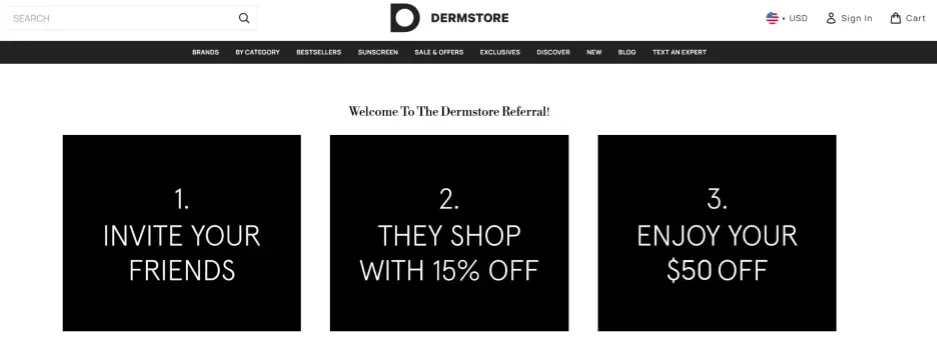
Beyond the raw data, the psychological principle of reciprocity—popularized by social psychologist Robert Cialdini—serves as the engine for these programs. Double-sided reward structures, which provide incentives to both the referrer and the referee, consistently outperform single-sided models. This balance ensures that the existing customer feels the exchange is fair, rather than exploitative of their social circle. Nielsen’s 2021 Trust in Advertising Study, which remains a benchmark in 2026, notes that 88% of global consumers trust recommendations from people they know above all other forms of marketing.
Distinguishing Referral from Affiliate and Influencer Channels
A common point of confusion for marketing departments is the distinction between referral, word-of-mouth, affiliate, and influencer marketing. While all four rely on third-party advocacy, their incentive structures and regulatory requirements differ significantly.
- Word-of-Mouth (WOM): This is purely organic and untracked. It is the result of genuine brand affinity but is nearly impossible to engineer or scale directly.
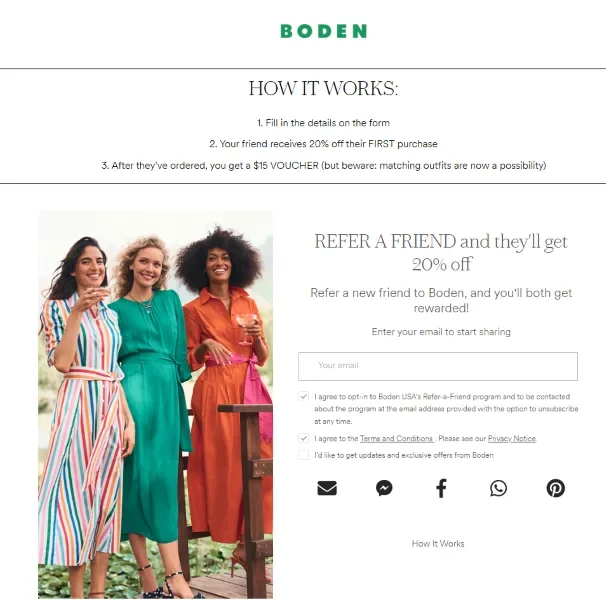
- Referral Marketing: This is customer-led and involves one-to-one sharing. It rewards existing customers for bringing in their personal contacts, typically through cash, credit, or discounts.
- Affiliate Marketing: This is publisher-led. It involves third-party bloggers, deal sites, or media outlets that receive a commission (usually 5% to 30%) for driving public traffic. It is designed for scale rather than personal intimacy.
- Influencer Marketing: This is creator-led. It focuses on reach and brand awareness, often involving flat fees paid to individuals with large social followings.
For most modern businesses, the most effective strategy involves running a referral program and an affiliate program in tandem, though they should be managed under separate budgets and software stacks to ensure accurate attribution.
Strategic Framework: The Eight Pillars of Referral Programs
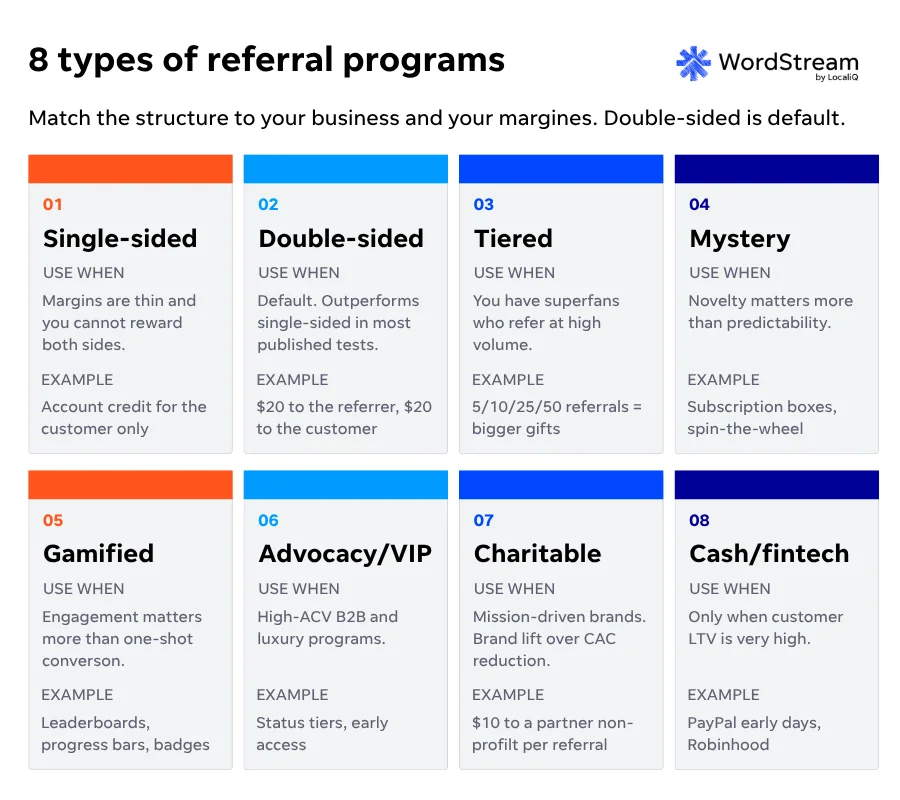
Successful referral programs generally fall into eight structural categories, each designed to solve specific business constraints:
- Double-Sided: The industry standard, offering rewards to both parties.
- Single-Sided: Incentivizes only the referrer; often used when the product itself is the primary draw for the new user.
- Tiered/Milestone: Rewards increase as the referrer reaches specific benchmarks (e.g., 5, 10, or 25 referrals).
- Gamified: Uses leaderboards and badges to encourage competition.
- Advocacy/VIP: Offers non-monetary rewards like early access or exclusive status.
- Charitable: Donates to a cause in the customer’s name for every successful referral.
- Mystery: Provides a randomized reward to add an element of surprise.
- Cash: Common in high-LTV sectors like fintech and automotive.
Operational Chronology: Building a Program from Scratch
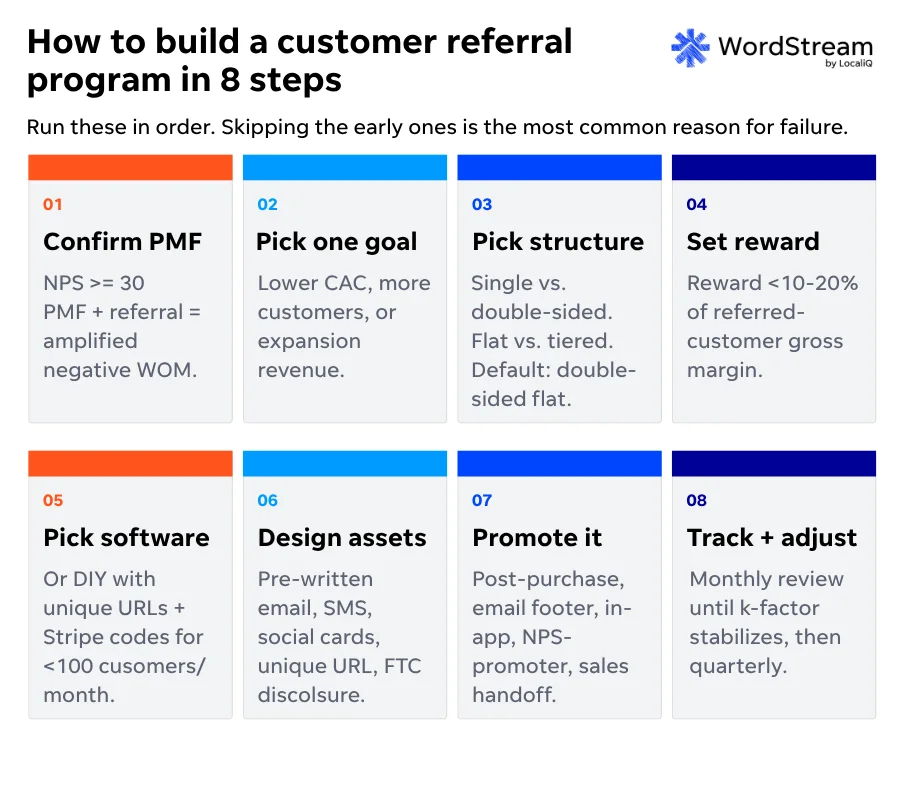
Building a robust referral engine requires a disciplined eight-step approach. Industry experts emphasize that the most common failure point is launching before a brand has achieved "Product-Market Fit."
Phase 1: Validation and Goal Setting
Before writing code or selecting software, a company must confirm a positive Net Promoter Score (NPS). Attempting to amplify a product that customers do not genuinely enjoy will only accelerate the spread of negative sentiment. Once validated, the organization must select a singular primary goal: lowering CAC, increasing total customer volume, or driving expansion revenue.
Phase 2: Reward Calibration
Rewards must be tied to the customer’s lifetime value. A general rule of thumb is that the total incentive should not exceed 10% to 20% of the referred customer’s gross margin. In B2B environments, rewards are often multi-staged, triggering at the "qualified lead" stage and again at the "closed-won" stage.
Phase 3: Integration and Promotion
The selection of software (such as ReferralCandy for Shopify or GrowSurf for B2B SaaS) should follow the strategy, not dictate it. Promotion is the most labor-intensive phase, requiring the "ask" to be placed at high-trust moments: post-purchase confirmation pages, shipping notifications, and successful customer support resolutions.
Analysis of Industry Leaders: Lessons from the Field
Several companies have defined the modern standards for referral mechanics. Dropbox is frequently cited for tying its reward to its primary value metric—storage space—rather than cash. This ensured that users who referred friends became more "sticky" and engaged with the product.
In contrast, PayPal’s early-stage growth relied on pure cash incentives. While expensive, this was justified by an enormous LTV, where each new account represented hundreds of dollars in future transaction fees. Tesla utilized milestone rewards to tap into brand prestige, offering exclusive prizes like a Model X or invitations to launch events, proving that for high-affinity brands, status often outweighs monetary discounts.
Robinhood and Harry’s demonstrated the power of the pre-launch referral. By creating waitlists that allowed users to "jump the line" by referring friends, they generated massive top-of-funnel awareness before their products were even available to the general public.
Regulatory Compliance and FTC Mandates
The legal landscape for referral marketing has tightened significantly. The Federal Trade Commission (FTC) Endorsement Guides, updated in 2023 with increased enforcement in 2024, require "clear and conspicuous" disclosure of any material connection between a brand and an endorser.
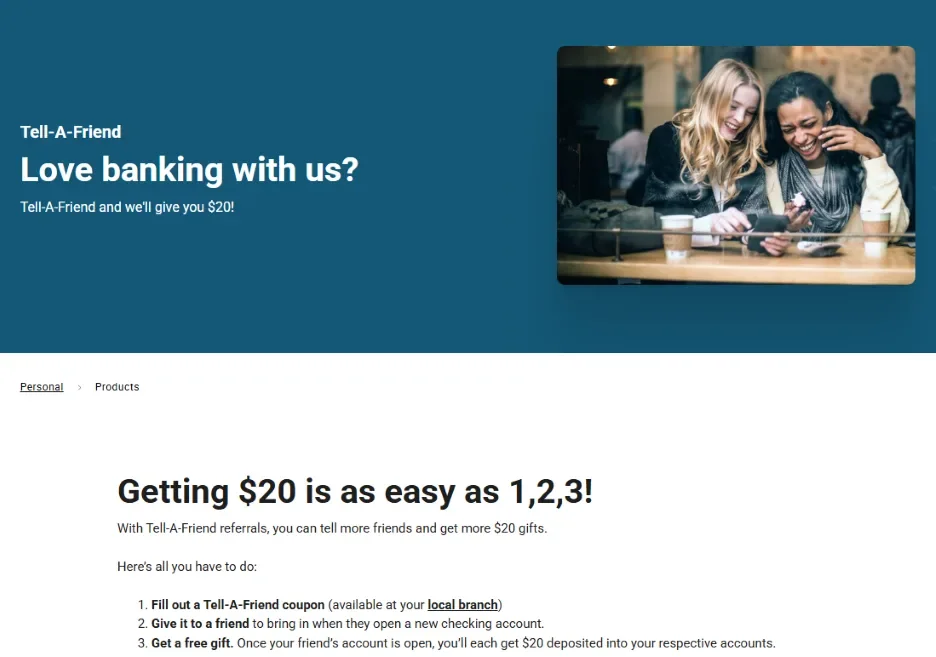
In practical terms, this means that if a customer receives a $20 credit for a referral, any message they send must disclose that benefit. The disclosure must be in plain language, visible without clicking "more," and presented in a font size comparable to the main message. Failure to comply can result in civil penalties reaching into the five-figure range per violation. Companies are now responsible for ensuring that the pre-written share copy they provide to customers includes these necessary legal disclaimers.
Metrics and the Quest for Virality
To evaluate the health of a referral program, organizations track five key metrics:
- Participation Rate: The percentage of eligible customers who share a link.
- Share-to-Conversion Rate: The percentage of shared links that result in a new customer.
- Referral CAC: The total cost of incentives and software divided by new customers.
- LTV Lift: The difference in lifetime value between referred and non-referred cohorts.
- K-Factor: The viral coefficient.
The K-factor is calculated by multiplying the number of invites sent per user by the conversion rate of those invites. A K-factor greater than 1 indicates exponential, viral growth. However, most sustainable businesses operate with a K-factor between 0.1 and 0.5. While not "viral" in the mathematical sense, these programs remain highly profitable and serve as a consistent "additive" growth channel.
B2B vs. B2C: Structural Differences
While the core principles remain the same, B2B referral marketing requires a more complex "partner-style" approach. Unlike the short, high-friction cycles of B2C e-commerce, B2B deals involve longer sales cycles and multiple stakeholders. B2B programs must be integrated directly into the CRM (Customer Relationship Management) system to track referrals through various pipeline stages. Rewards in the B2B sector often include professional perks, such as conference passes or account credits, rather than simple consumer discounts.

Conclusion: The Future of Referral-Led Growth
As we move through 2026, referral marketing is no longer a "set-and-forget" widget but a sophisticated department of demand generation. It functions as a high-fidelity amplifier of brand health. When executed with a focus on unit economics, psychological triggers, and strict legal compliance, it provides a dependable, low-cost acquisition engine that actually improves the quality of the customer base over time. For the modern enterprise, the question is no longer whether to implement a referral program, but how to optimize it to reflect the core values and economic realities of the brand.